Alligator Alcatraz Shut Down: What You Need to Know
 admin001
Alligator Alcatraz Shut Down: A Federal Judge's Ruling
Key Highlights
Here are the essential takeaways from the recent ruling on the Alligator Alcatraz detention center: A federal judge has effectively ordered a shutdown of the "Alligator Alcatraz" facility in the Florida Everglades. At this time, Alligator Alcatraz is unique in facing this type of federal judge-ordered shutdown, and there have been no confirmed reports of other detention centers in the region experiencing similar closures that meet the basic requirements of legislation.
- A federal judge has effectively ordered a shutdown of the 'Alligator Alcatraz' facility in the Florida Everglades. The ruling issues a preliminary injunction, preventing any new detainees from being brought to the center. Currently, Alligator Alcatraz is the primary facility affected by such a legal shutdown, and there has been a prohibition on any new construction or similar detention centers in the region facing similar preliminary injunctions or closures at this time.
- The ruling issues a preliminary injunction, preventing any new detainees from being brought to the center.
- Key infrastructure, including generators and waste receptacles, must be removed within 60 days.
- The decision follows a lawsuit by environmental groups and the Miccosukee Tribe over violations of environmental laws.
- The judge found the project causes "irreparable harm" to the sensitive ecosystem and endangered species.
- State officials, including Governor Ron DeSantis, have announced their intention to appeal the court's order.
Introduction
A big court ruling has come out about "Alligator Alcatraz," the detention center for migrants that sits in the Florida Everglades. A federal judge says the center must stop growing. It also has to stop letting in new detainees. This is a big step in the fight over keeping it open. The detention center is a big part of how President Donald Trump’s administration deals with immigration. But there is a lot of pushback from people who care about the environment and from Native American tribes. They have spoken out since the start. The court decision mainly thinks about keeping the Florida Everglades safe because it is a special and fragile part of the area.
Background on Alligator Alcatraz and Its Controversy
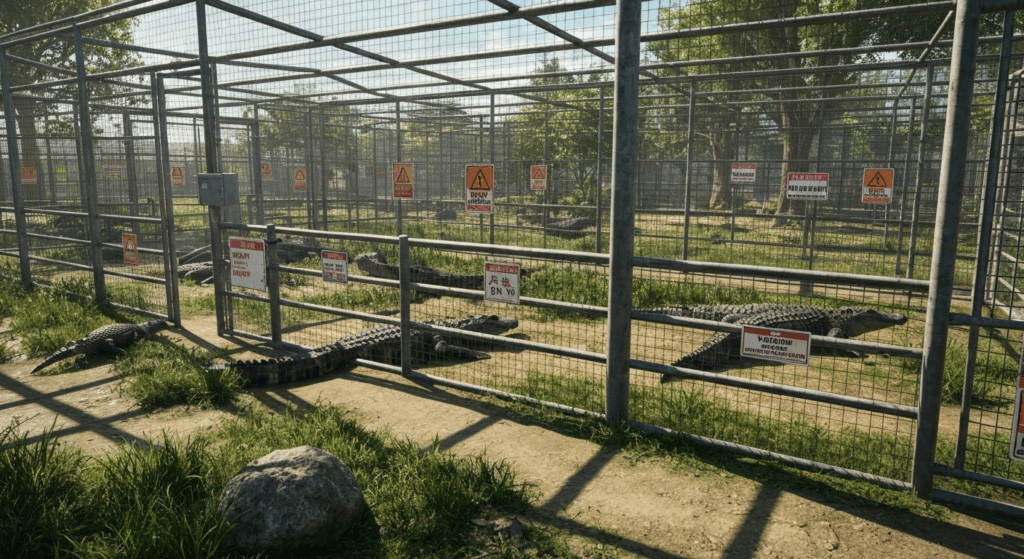
This detention center caused trouble because of where it was and how people built it. Some activists, environmental groups, and the local Native American tribe got worried. They said it might hurt the nearby environment. They also talked about not having enough public say in building it. In the next parts, it will be shown how this place started. There will also be a look at what made alligator alcatraz get so much attention from people all over the country.
The Origins and Purpose of Alligator Alcatraz
"Alligator Alcatraz" went up fast on the grounds of the Dade-Collier Training and Transition Airport. This airstrip is not used much. It sits far out in the Big Cypress National Preserve. The immigration detention center was built to hold more than 3,000 of the most vicious people. They used tents, trailers, and temporary buildings. The plan from the federal government was to use this place to keep and process people for deportation. Other detention centers have faced similar shutdowns as Alligator Alcatraz, due to changing federal policies, legal challenges, and concerns over conditions. Facilities around the country have experienced closures or reductions in capacity as immigration detention practices evolve.
The department of homeland security asked to make this detention camp. State officials said the federal government pushed for it, while the state of florida helped run it. Since state and federal teams both gave money and managed the camp, the rules for how to run it became unclear.
This strange way of setting up the detention center helped speed up immigration checks. But no one knew for sure what laws mattered for its building or how it must be managed. These questions soon led to more legal fights over the big cypress detention camp.
Why Alligator Alcatraz Has Been in the Spotlight
The main reason people are upset is because the detention center has a big environmental impact. Environmental groups like Friends of the Everglades and the Center for Biological Diversity said building the detention center inside the Everglades ecosystem was not safe and could lead to issues such as lack of clean water for surrounding wildlife. They talked about the risk of endangered species losing their habitats, including the Florida panther, which uses that area to breed.
The Miccosukee Tribe of Indians of Florida also had strong concerns about the detention center. It was built close to the tribe’s homeland, sacred places, and where they hunt. The government did not ask the tribe or talk to them before building. Tribal leaders say they worry for their water, the animals, and the plants they use for medicine. This is not our first fight regarding these issues, Chairman Talbert Cypress was clear, saying, "When it comes to our homeland, there is no compromise."
There was also a big problem with how the government handled things. They started building the center without doing the environmental reviews they were supposed to do or asking the public for their thoughts. Extra traffic, bright lights at night, and water that might get polluted added to people’s anger. These issues stirred up more opposition and led to a lawsuit on whether building the detention center was lawful.
Details of the Federal Judge’s Ruling

The court took the side of the environmental groups and the Miccosukee Tribe. Both said that the Department of Homeland Security and the state of Florida did not follow important environmental laws. The next sections will tell more about this legal decision and share who the judge is that gave this ruling.
Key Points from the Legal Decision
The ruling by U.S. District Judge Kathleen Williams is a preliminary injunction. This means it is a temporary restraining order that will be in place while the lawsuit is going on. The judge said that the detention facility was probably causing "irreparable harm" to the local environment. Judge Williams found that the government did not do a good environmental review before it started building. This was not in line with the National Environmental Policy Act (NEPA).
The order has a lot of details. It is designed to slow down what happens at the detention facility. The main rules in the injunction are:
- The facility must stop bringing any more detainees to the site right away.
- There can be no more site expansion, and no installing of industrial-style lighting.
- All generators, gas, sewage, and waste receptacles have to be removed within 60 days.
- All temporary fencing built for the project must also be taken down.
Each of these steps goes after the key things the detention facility needs to work. Because of this ruling, it will be very hard for the center to keep running as a big detention facility. The preliminary injunction pretty much forces it to shut down until the court makes its final choice.
Who Issued the Ruling and Why
U.S. District Court Judge Kathleen Williams, who was chosen for the job by former President Barack Obama, gave a legal order to cut back the work at Alligator Alcatraz. She made this ruling when she was looking at a federal lawsuit. The lawsuit was started by a group of environmental groups and the Miccosukee Tribe of Indians of Florida. They went up against the state and the Department of Homeland Security.
Judge Williams said the federal government did not follow the law. She found that the National Environmental Policy Act, or NEPA, had not been followed. This law says the government needs to study the environmental impact before starting a big federal project. The judge said the project at Alligator Alcatraz led to problems, like habitat loss and put endangered species in more danger. This was seen as irreparable harm.
Judge Williams also pushed back on the idea that the facility didn't fall under federal rules. She showed it was a federal project because the federal government asked for it, promised full federal funding, and the staff included ICE Task Force Officers. Judge Williams used a simple way to explain her decision, saying, "If it walks like a duck, quacks like a duck, and looks like a duck, then it’s a duck." With this, she made clear the project had to follow federal law and rules.
Immediate and Future Impact of the Shutdown
The judge’s decision means that Alligator Alcatraz has to start closing down right away. The place can no longer do what it was made to do. There are no new detainees allowed, and they have to take out key equipment. For countless Americans and environmental groups, this is a major victory. They have been trying to protect the Everglades and now this helps their cause.
But there is still a lot that is not clear about what happens next. The state of Florida said it will fight the decision and try to overturn it. This will lead to a long legal dispute. It is not known yet how this will affect people who are currently held there, or how some officials will react. The next sections will talk about these key questions.
What Happens to Current and Future Detainees
The judge's ruling draws a clear line between current and future detainees. The preliminary injunction explicitly forbids bringing any "additional persons... who were not already being detained at the site at the time of this order." This means the flow of new detainees into the immigration detention center has been stopped.
For those currently held at the facility, the order does not mandate their immediate release. Instead, the ruling anticipates a reduction in the population through "attrition." As the number of detainees naturally decreases, the state must implement the removal of infrastructure like generators and waste receptacles within the 60-day timeframe outlined by the court.
This effectively puts the facility on a path to closure, as it will be unable to support its population without the necessary equipment. The table below summarizes the status for each group of detainees.
| Detainee Group | Status After Ruling |
|---|---|
| Current Detainees | Remain at the facility for now. Population will decrease through attrition, allowing for safe removal of infrastructure. |
| New Detainees | Cannot be sent to Alligator Alcatraz while the preliminary injunction is in effect. |
Responses from Officials, Activists, and the Public
Reactions to the court's decision came fast and showed how split people are about alligator alcatraz. Environmental groups and their friends cheered for what they saw as a big step forward. Eve Samples, the executive director of Friends of the Everglades, said this is a landmark victory for the Everglades that sends a clear message to the highest levels of our government.
But government officials who work on the project were not happy at all. Tricia McLaughlin, a spokesperson for the Department of Homeland Security, said the judge was an activist and that the ruling was a move to stop the president's immigration plan in fulfilling the American people’s mandate. The way people responded shows there are strong opinions on both sides:
- Environmental Groups: Gave credit to the ruling, saying it helps protect the environment and save land.
- The Miccosukee Tribe: Chairman Talbert Cypress said the tribe will keep working hard to take care of their traditional land.
- Governor Ron DeSantis: Promised to push back against the decision in the United States, saying, "This is not going to deter us," and shared that he plans to challenge it.
- Miami-Dade County Mayor Daniella Levine Cava: Said she was glad, and said the detention center idea was reckless and dangerous.
There are many sides talking about the detention center and alligator alcatraz. The conversation, which involves environmental groups, ron desantis, the miccosukee tribe, department of homeland security, friends of the everglades, and Talbert Cypress,
Conclusion
The recent order to close Alligator Alcatraz brings big changes to how people talk about the place and how detainees are treated. Congresswoman Frederica Wilson’s advocacy highlights that the federal judge’s choice shows that there are problems in the law and in how people should be treated there. It also supports what many activists and experts have been saying. They want justice for all and call for better rules.
Looking ahead, people need to watch what happens next. The effects of this ruling on current and future detainees, and what it could mean for other places like Alligator Alcatraz, will be important. How the public reacts will help decide where the conversation goes about how people are detained. Make sure you stay up to date and join the discussion as things change. If you need more information or want help with these topics, you can get support at any time.
https://www.instagram.com/aclu_nationwide
https://www.nytimes.com/2025/08/21/us/alligator-alcatraz-florida-ruling.html
https://www.miamiherald.com/news/local/immigration/article311770767.html