Understanding Venezuela Cartels on United States Strategy
 admin001
Venezuela Cartels on United States Strategy: The Growing Threat
Key Highlights
- The United States, under President Donald Trump, has escalated its strategy against Venezuelan drug cartels, labeling the gang Tren de Aragua a terrorist organization.
- A recent lethal U.S. strike destroyed a boat in the Caribbean alleged to be carrying drugs and operated by the gang.
- The Trump administration accuses Venezuelan President Nicolas Maduro of leading a "narco state," a claim that impacts U.S. national security.
- This aggressive military action raises legal questions and fears of a wider conflict or efforts toward regime change in Venezuela.
- Venezuela has responded by urging citizens to join militias to defend against potential U.S. intervention.
Introduction
The relationship between the United States and Venezuela has grown increasingly tense, with drug trafficking at the center of the conflict. Recent military actions by the U.S. have brought this simmering issue to a boil. With accusations of "narco-terrorism" and the deployment of warships, the situation in the Caribbean is becoming a major point of international concern. This blog explores the rising threat of Venezuelan cartels, the U.S. strategy to combat them, and the significant implications for regional stability.
The Rise of Venezuelan Cartels as a U.S. Security Concern
The Trump administration has intensified its focus on Venezuela, framing the nation as a significant threat to United States national security. This concern is rooted in claims that the country has become a hub for drug traffickers. With cocaine shipments allegedly fueling the overdose crisis in the U.S.
This perspective has driven a more aggressive policy, treating Venezuelan criminal networks not just as smugglers but as "narco-terrorist" organizations. But why does the U.S. view Venezuela as such a major player in the drug trade, and how did these cartels gain so much influence?
Why the U.S. Considers Venezuela a Major Drug Trafficking Threat
The United States of America views Venezuela as a primary threat largely due to official accusations leveled against its highest leadership. The Trump administration claims President Nicolas Maduro is directly involved with drug cartels, effectively turning the country into a narco-state. This belief drives the narrative that Venezuelan drug traffickers pose an imminent threat to American safety.
In 2020, this stance was solidified when a U.S. federal court indicted Maduro on charges of narcoterrorism and conspiracy to import cocaine. The State Department has even doubled the reward for information leading to his arrest to $50 million, accusing him of being "one of the largest narco-traffickers in the world."
According to U.S. officials, this action is part of a broader counter-narcotics strategy. As Secretary of State Marco Rubio explained, the goal is to dismantle networks that Washington frames as "narco-terrorist" organizations, linking foreign policy directly to domestic drug control efforts.
Evolution of Cartel Influence in Venezuela
The influence of criminal organizations in Venezuela has grown significantly in recent years. While the Trump administration directly links the Maduro government to these groups, some intelligence suggests a more complex situation. A classified assessment from the National Intelligence Council found no direct evidence of coordination between senior Maduro administration leaders and the Tren de Aragua cartel.
However, the report did note that the permissive environment in Venezuela has allowed these criminal groups to flourish. This environment, combined with political instability and economic crises, has created fertile ground for cartels to expand their operations, including drug trafficking, extortion, and other illicit activities.
In response, the Trump administration has taken a hardline approach. This includes designating Tren de Aragua as a "Foreign Terrorist Organization," indicting President Maduro, and deploying military assets to the Caribbean. These actions signal a shift from simple interdiction to a more direct and aggressive campaign against cartel activity originating from Venezuela.
Key Venezuelan Cartels and Criminal Networks
When discussing Venezuelan criminal groups, one name stands out: Tren de Aragua. This notorious gang has been specifically targeted by the U.S. government. However, it's not the only organization on Washington's radar. The U.S. has also accused Venezuelan officials of collaborating with another group known as the Cartel de los Soles (Cartel of the Suns).
These drug cartels are accused of trafficking illegal drugs and destabilizing the region. Let's take a closer look at the major players and the expanding role of gangs like Tren de Aragua.
Major Players: Notorious Organizations and Their Leaders
Several notorious organizations and their leaders are at the center of the U.S. campaign against Venezuelan criminal groups. The Trump administration has focused on President Nicolas Maduro, accusing him of being the kingpin of a narco-state and offering a massive reward for his capture.
His close allies, like Diosdado Cabello, Minister of Interior, Justice, and Peace, have also been implicated. They are accused of collaborating with the Cartel de los Soles, another group designated by Washington as a terrorist organization. The gang Tren de Aragua is also a primary target, labeled a "Foreign Terrorist Organization" by Trump.
These accusations paint a picture of a state deeply intertwined with powerful criminal enterprises.
| Organization / Individual | U.S. Allegations |
|---|---|
| President Nicolas Maduro | Indicted for narcoterrorism and conspiracy; accused of being a major narco-trafficker. |
| Diosdado Cabello | Accused of collaborating with the Cartel de los Soles. |
| Cartel de los Soles | Designated a "terrorist" group by Washington. |
| Tren de Aragua | Designated a "Foreign Terrorist Organization"; accused of drug trafficking and murder. |
Tren de Aragua and Its Expanding Regional Role
The gang Tren de Aragua has become a focal point of U.S. strategy in Venezuela. The White House designated the group as a terrorist organization, claiming its members have infiltrated the United States and are conducting hostile actions. The recent U.S. military strike in the southern Caribbean targeted a vessel allegedly operated by members of the Venezuelan gang Tren de Aragua.
This gang is seen as more than just a local nuisance; it's viewed as a transnational criminal threat. Its activities are believed to include:
- Drug trafficking
- Murder
- Irregular warfare
The U.S. has accused Tren de Aragua of serving as a "front" for the Maduro government, though internal intelligence reports have questioned the extent of direct coordination. Regardless, the gang's expansion has made it a symbol of the growing criminal influence emanating from Venezuela and a primary target for U.S. action.
U.S. Strategy Against Venezuelan Cartels
The United States has adopted a multi-pronged strategy to confront what it calls the "narco-terrorist" threat from Venezuela. This approach combines diplomatic and economic pressure with direct military action. The goal is to disrupt the operations of drug cartels and pressure the Maduro regime, which the U.S. holds responsible.
This strategy is being advanced through sanctions, high-profile indictments, and, more recently, armed force. What specific diplomatic measures has the U.S. taken, and how far is it willing to go with its military operations?
Diplomatic Pressure and Sanctions on the Maduro Regime
A key pillar of the U.S. strategy is applying sustained diplomatic pressure on the Maduro regime. Washington has not had a formal diplomatic relationship with Venezuela since 2019 and does not recognize Maduro's presidency as legitimate. This political isolation is reinforced by harsh economic sanctions designed to cripple the government.
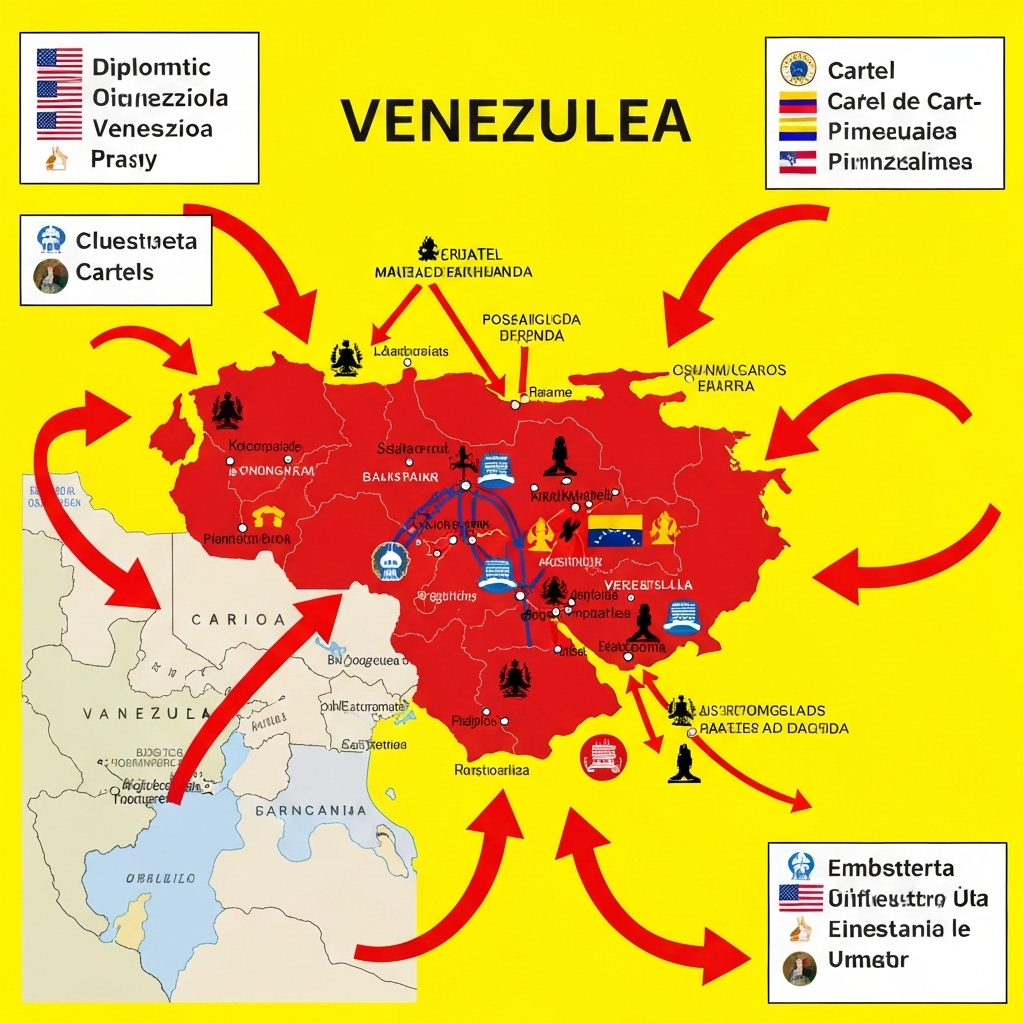
The Trump administration has sent clear warnings to Venezuelan leaders. The doubling of the reward for Maduro's arrest to $50 million serves as a direct message. Furthermore, Defense Secretary Pete Hegseth stated, "The only person that should be worried is Nicolas Maduro."
Adding to this pressure, the Department of Homeland Security announced it would end the Temporary Protected Status (TPS) for over 256,000 Venezuelan migrants, citing national security and public safety concerns. This move further isolates the Maduro regime and its citizens residing in the U.S.
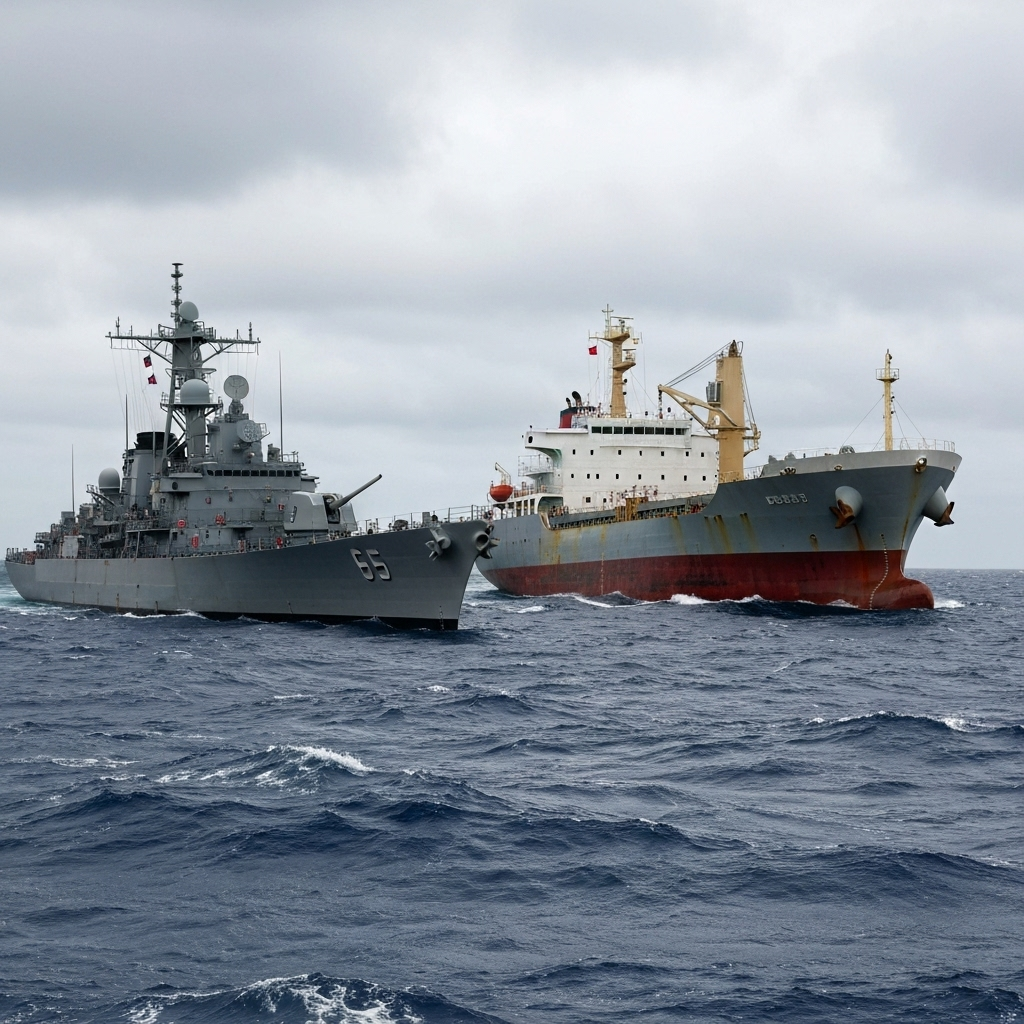
The U.S. has recently escalated its strategy with direct military action. This shift was highlighted by a lethal strike on a vessel in the southern Caribbean, which President Trump claimed belonged to the Tren de Aragua cartel. This attack, which reportedly killed 11 people, marks a significant change from previous interdiction methods.
U.S. officials have defended this aggressive posture. Secretary of State Marco Rubio argued that simply intercepting boats has not been a sufficient deterrent. His stark warning was: "What will stop them is when you blow them up." This approach is backed by a major deployment of military assets, including:
- At least eight warships sent to the region.
- An Amphibious Ready Group with 2,200 Marines.
This kinetic action in international waters demonstrates a new willingness to use deadly force against suspected drug traffickers. The outcome of the recent strike was the complete destruction of the vessel and the death of its crew, sending a chilling message to other cartels.
Implications and Controversies of U.S. Actions
The assertive U.S. military actions are not without controversy and significant risks. Experts have raised serious questions about the legality of carrying out a lethal strike on a foreign vessel in international waters, potentially violating the United Nations Convention on the Law of the Sea.
These actions fuel speculation about the ultimate goal of the U.S. strategy. Is it solely about stopping drugs, or could these operations be a prelude to a wider intervention aimed at regime change in Venezuela? The implications for regional stability and national security are profound.
Impact of U.S. Intervention on Cartel Activities
The intended impact of the recent U.S. military intervention is to create a strong deterrent. President Trump stated that after seeing the strike, "a lot of other people won't be doing it again." The administration's belief is that this level of lethal force will instill fear and disrupt cartel activities far more effectively than previous methods.
However, the actual effect on the overall flow of narcotics is yet to be seen. Critics point out that the main cocaine trafficking routes into the United States have historically passed through other countries like Colombia and Mexico. While Venezuela is a transit corridor, it is not listed as the primary source in recent DEA reports.
Therefore, while the strike certainly had a fatal impact on one specific vessel, its broader strategic success in halting cartel operations remains unclear. The move is meant to send a chill through criminal networks, but whether it significantly alters the drug trade is an open question.
Many experts believe the U.S. anti-cartel strategy could indeed spark a wider conflict and may be laying the groundwork for regime change. Venezuelan officials, including President Nicolas Maduro, have accused the U.S. of seeking to justify an intervention under the guise of fighting drug trafficking.
This aggressive posture places the U.S. on a path that could lead to direct confrontation. According to terrorism studies lecturer Cesar Alvarez, "When you look at the decisions on designating these transnational criminal syndicates as terrorists, it's not just to send a message. You can clearly see that the decisions have some real implications for potential operation." Key factors increasing this risk include:
- The U.S. designation of cartels as "terrorist" organizations.
- The deployment of a significant military force to the Caribbean.
- The open discussion of lethal force by top U.S. officials.
In response, Maduro has called on his supporters to enlist in civilian militias to defend the country, raising the stakes for any potential U.S. military action on the Venezuelan mainland.
Conclusion
In summary, the escalating influence of Venezuelan cartels poses significant challenges for U.S. security and foreign policy. The strategies implemented to combat these threats not only reflect the complexities of the situation but also highlight the intricate balance between effective intervention and the potential for unintended consequences. Understanding the dynamics of cartel operations and the implications of U.S. actions is essential for navigating this multifaceted issue. As the landscape continues to evolve, staying informed is crucial. If you have more questions or need further insights, feel free to reach out for a discussion.
Frequently Asked Questions
Has the U.S. destroyed cartel-operated vessels from Venezuela?
Yes. President Trump recently announced that the U.S. used military force to conduct a lethal strike on a boat in the southern Caribbean. He claimed the vessel was operated by the Tren de Aragua cartel and was carrying drugs. The strike, conducted in international waters, resulted in 11 reported deaths.
Could American actions against Venezuelan cartels lead to increased regional instability?
Yes, there is a significant risk. Experts and Venezuelan officials fear that the aggressive U.S. military posture could be a pretext for forcing regime change. This could provoke a wider conflict, drawing in other nations and severely increasing regional instability, all under the banner of protecting United States national security.
How does the U.S. coordinate anti-cartel efforts with neighboring countries?
The U.S. has historically partnered with allies in South America and Latin America for anti-cartel interceptions. However, the recent shift to unilateral lethal strikes has drawn criticism. For instance, Colombian President Gustavo Petro condemned the attack as "murder," highlighting a potential breakdown in coordination with neighboring countries on interdiction methods.
https://www.nytimes.com/2025/08/08/us/trump-military-drug-cartels.html