How AI Improved in Police Activities: A Game Changer
 admin001
How AI Improved in Police Activities: A Game Changer

Here's a quick look at how artificial intelligence is changing the game for law enforcement:
- AI technology is revolutionizing police work, from investigations to crime prevention.
- Predictive policing uses data to help agencies allocate resources more effectively.
- AI tools can analyze vast amounts of digital evidence, accelerating case resolutions.
- The use of AI raises important questions about ethics, privacy, and bias.
- Responsible implementation with community trust is key to enhancing public safety.
- Modern AI helps solve complex cases and even cold cases with new insights.
Artificial intelligence is no longer the stuff of science fiction; it's a powerful tool being used in our daily lives and is now making a significant impact on law enforcement. From your smartphone to your shopping cart, AI is everywhere, and its integration into policing is quietly revolutionizing the sector. This technology is transforming how police prevent crime, conduct investigations, and make decisions, blending cutting-edge tech with traditional police work to improve public safety for everyone.
The Evolution of AI in Policing
The journey of artificial intelligence in policing has been a long and steady one. For more than 30 years, law enforcement professionals have considered how new technologies could streamline their work, boost efficiency, and ultimately create safer communities. The evolution of AI systems has reached a point where they can replicate certain human thought processes, leading to significant advancements.
This transformation started with early AI applications and has grown into the sophisticated systems used today. These tools are changing traditional policing methods by analyzing massive amounts of data, identifying patterns, and detecting threats in ways that were previously impossible. This evolution marks a new era for law enforcement. We'll now look at how these technologies started and where they are today.
Early Adoption and Fundamental Technologies
The first steps toward integrating AI into police work involved fundamental technologies that laid the groundwork for today's innovations. Law enforcement agencies began experimenting with AI’s ability to analyze large datasets and recognize patterns. One of the earliest impacts came in the late 1990s, when facial recognition technology was used to identify subjects in London.
A milestone in early AI adoption was the trial of automated license plate reader (ALPR) technology in the United Kingdom in 2002. Although primitive by modern standards, the results were remarkable. Over 13 months, UK police used ALPR systems to intercept over 180,000 vehicles, leading to nearly 13,500 arrests.
This early use of AI technology proved its value, resulting in about 10 times more arrests than officers made without it. By analyzing historical crime data and live information, these systems demonstrated how AI could significantly improve police efficiency and effectiveness in investigations and patrols.
Recent Breakthroughs and Modern Capabilities
Modern AI capabilities have advanced far beyond those early systems. Today’s AI offers powerful tools that have become integral to daily police operations. For instance, in 2019, the New York City Police Department used facial recognition technology to identify a suspect who placed fake bombs in a subway station. By comparing images from surveillance footage to an arrest database, detectives identified the person in just one hour.
This progress is not limited to major cities. In November 2023, San Diego installed 500 smart streetlights and ALPR cameras. In just two months, this AI network assisted in 22 serious cases, leading to the recovery of 12 stolen vehicles and 11 arrests. This shows how AI helps manage digital evidence and speed up case resolution.
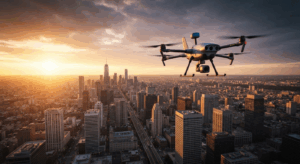
Furthermore, the Chula Vista Police Department’s drone program has completed over 20,000 flights, providing critical information to officers in dangerous situations. These modern capabilities demonstrate how police agencies are using AI tech like drones and advanced analytics to enhance patrol, investigation, and public safety.
Key Areas Where AI Enhances Police Work
Artificial intelligence is making a tangible difference across several key areas of policing. For law enforcement professionals, AI’s ability to process and analyze information at incredible speeds is a game-changer for public safety. This isn't about replacing officers but empowering them with better tools and insights.
From predictive policing analytics that forecast criminal activity to automated systems that scan hours of footage in minutes, AI helps agencies become more proactive and efficient. Let’s explore how these tools are specifically applied in crime prediction and data surveillance.
Crime Prediction and Prevention Tools
One of the most discussed applications of AI in policing is predictive policing. This approach uses algorithms to analyze large datasets, including historical crime data and other factors, to forecast where and when crimes are most likely to happen. This insight strengthens crime prevention by allowing police to allocate their resources more strategically.
By increasing patrols in high-risk areas identified by AI, forces can theoretically deter crime before it occurs. For example, a trial in Kent, England, saw street violence fall by 6% after implementing such a system. While the technology has evolved and faces debate, its potential is clear. These tools can help in several ways:
- Identifying crime hotspots in public spaces.
- Forecasting potential spikes in specific types of crime.
- Optimizing patrol routes for maximum coverage and visibility.
Ultimately, predictive policing tools offer a data-driven strategy to make communities safer. As the technology and our understanding of its ethical use improve, it will likely become an even more valuable asset for crime prevention.
Automated Surveillance and Data Analysis
Automated surveillance and data analysis represent another major area where AI is transforming police work. AI-powered tools can monitor and analyze vast amounts of information from sources like CCTV cameras and drones much faster than humans can. This technology is used for everything from finding missing persons to identifying suspects in public spaces.
These systems use video analytics to spot suspicious activity or recognize faces and license plates, improving activities like traffic enforcement and investigations. For example, AI speed cameras can detect if a driver is using a smartphone, and drones with neural networks can help find missing people in large areas. However, this increased capability also brings concerns about privacy and civil liberties that must be carefully managed.
Here’s a look at some common AI surveillance tools and their functions:
| AI Surveillance Tool | Primary Function |
|---|---|
| Facial Recognition Technology | Identifies individuals by comparing images to a database. |
| Automated License Plate Readers (ALPR) | Scans license plates to find stolen vehicles or wanted persons. |
| AI-Powered Drones | Provides aerial views and searches large areas for missing people. |
| AI Speed Cameras | Detects traffic violations like phone use or not wearing a seatbelt. |
AI-Driven Improvements in Investigations
When it comes to solving crimes, the sheer volume of digital evidence can be overwhelming for investigators. AI technology is providing a crucial advantage in managing this data, especially in complex cases. From phone records and social media posts to hours of video, AI helps make sense of it all.
By automating the tedious work of sifting through evidence, AI frees up investigators to focus on what they do best: solving crimes. This technology helps connect the dots in complex investigations and brings new efficiency to the entire process. The following sections will detail how AI accelerates case resolution and helps crack cold cases.
Accelerating Case Resolution
One of the most significant benefits of AI technology in law enforcement is its ability to accelerate case resolution. In the past, investigators would spend countless hours manually reviewing digital evidence. Now, AI can analyze surveillance footage in minutes and use natural language processing to scan case files and social media posts for key information.
This improved efficiency means leads can be identified and pursued much faster. For example, one former homicide investigator noted a high-profile case took over a year to solve. With AI tools, a key suspect’s vehicle could have been identified from footage much earlier, potentially cutting the investigation timeline by months.
AI also assists with tasks like redacting sensitive information from video and audio recordings, which is necessary for legal proceedings and public transparency. By handling these time-consuming tasks, AI technology allows investigators to build stronger cases more efficiently and bring justice to victims sooner.
Solving Complex and Cold Cases
Beyond active investigations, AI is breathing new life into complex and cold cases. These cases often stall due to a lack of new leads or an overwhelming amount of old evidence. AI’s advanced pattern recognition capabilities are perfectly suited for this challenge.
AI systems can perform deep data analysis on large datasets from cold cases, uncovering subtle connections and patterns that may have been missed by human investigators. By linking seemingly unrelated pieces of digital evidence, AI can generate new leads and provide a fresh perspective on a case that has been dormant for years.
This ability to synthesize information from various sources helps investigators and prosecutors build more robust cases. AI can flag critical concepts, sentiments, or images within case files, guiding the investigation in a new direction. This makes it a powerful ally in the pursuit of justice for victims and their families, no matter how much time has passed.
Responsible Integration of AI in Law Enforcement
As powerful as AI is, its integration into law enforcement must be handled with great care. The responsible use of AI is not just a best practice; it's essential for maintaining public trust. Police leaders, policymakers, and technology developers must work together to ensure these tools serve the community without compromising civil liberties.

This means establishing clear guidelines, promoting transparency, and engaging in open discussions about the technology's potential risks and benefits. Thoughtful governance is required to build a framework where AI enhances safety while respecting the rights of every community member. Let's look at how to ensure ethical use and address key concerns.
Ensuring Ethical Use and Community Trust
Building community trust is the cornerstone of integrating AI into policing responsibly. The ethical use of this technology hinges on transparency and open dialogue. Police agencies can foster this by holding community meetings and town halls to explain how AI is being used and to answer questions from the public.
When law enforcement engages with community members, it helps ensure that AI is deployed in a way that promotes the public interest. A great example of this is the Data Ethics Advisory Committee used by the West Midlands Police in the UK. This independent committee, made up of experts in law, ethics, and computer science, advises the police on the design and deployment of AI tools.
Research has shown that this kind of independent scrutiny supports more responsible and ethical AI use without hindering police operations. "Leaders across the globe should discuss how AI could be used as a regional investigative standard, never losing sight of being fully transparent about the AI integration process," as noted by Lt. Frank Giaime. This approach builds confidence and ensures fairness.
Addressing Privacy, Bias, and Legal Concerns
The deployment of AI in policing is not without its challenges. Significant concerns around privacy, bias, and other legal issues must be addressed. The use of automated surveillance technologies, from street cameras to smartphone data analysis, raises valid questions about civil liberties and the potential for a surveillance society.

Another critical issue is algorithmic bias. If the historical data used to train AI systems reflects societal biases, the AI may unfairly target minority communities. This can lead to discrimination and erode public trust. Misidentifications from facial recognition systems have already sparked debates about the fairness and accuracy of these tools.
These legal concerns have had real-world consequences. In one case, a court ruled that a police force's use of facial recognition technology was unlawful. To move forward, policymakers and police leaders must create clear frameworks that govern the use of AI, ensuring accountability and protecting individual rights while still harnessing the technology's benefits.
AI has undeniably transformed policing, offering innovative tools and strategies that enhance efficiency and effectiveness in law enforcement. From crime prediction to automated surveillance, the integration of AI technologies is not just about improving technical capabilities but also about fostering a stronger relationship between police and the communities they serve. As we continue to explore and embrace these advancements, it’s essential to prioritize ethical considerations and community trust. By doing so, we can ensure that AI remains a positive force for change in policing, making our streets safer while respecting individual rights. If you'd like to learn more about the impact of AI on law enforcement, feel free to reach out with your questions!
Frequently Asked Questions
How does AI help officers make better decisions in real time?
AI systems enhance real-time decision-making by rapidly analyzing large datasets and digital evidence. An officer can receive critical information from AI’s ability to scan surveillance footage or cross-reference data, providing immediate context during an incident. This allows for faster, more informed, and ultimately safer responses in the field.
Which police activities have seen the most benefit from AI?
Several law enforcement activities have greatly benefited from AI technology. Predictive policing helps with efficient resource deployment, while the automated analysis of surveillance footage and digital evidence dramatically speeds up investigations. These tools also strengthen crime prevention strategies by providing data-driven insights to stop crime before it happens.
How does AI improve public engagement and trust in policing?
AI can improve public trust when police prioritize transparency and fairness. By engaging with community members about how AI systems are used and establishing independent ethical oversight, agencies demonstrate accountability. This commitment to responsible use helps assure the public that AI is being deployed equitably to enhance safety for everyone.
Notes:
- Rob Toews, “5 AI Predictions for the Year 2030,” Forbes, March 10, 2024.
https://www.forbes.com/sites/robtoews/2024/03/10/5-ai-predictions-for-the-year-2030/ - Haque, R., Saxena, D., Weathington, K., Chudzik, J., & Guha, S. (n.d.). Are We Asking the Right Questions?: Designing for Community Stakeholders’ Interactions with AI in Policing.
https://doi.org/10.1145/3613904.3642738 - Chris Chiancone, “The Role of Artificial Intelligence in Law Enforcement,” LinkedIn (post), October 3, 2023.
https://www.linkedin.com/pulse/role-artificial-intelligence-law-enforcement-chris-chiancone-cne-ciso/ - Pete Fussey, “Eastern Promise? East London Transformations and the State of Surveillance,” Information Polity 17, no. 1 (January 2012): 21–34.
https://content.iospress.com/articles/information-polity/ip00396 - Tim Dees, “Research Review: Identifying the Benefits of ALPR Systems,” Police1, November 4, 2019.
https://www.police1.com/police-products/license-plate-readers/articles/research-review-identifying-the-benefits-of-alpr-systems-yT0sgK4A49t021kX/ - Craig McCarthy, “How NYPD’s Facial Recognition Software ID’ed Subway Rice Cooker Kook,” New York Post, August 25, 2019.
https://nypost.com/2019/08/25/how-nypds-facial-recognition-software-ided-subway-rice-cooker-kook/ - “Tech-Driven Crime Reduction: San Diego Sees Results from Smart Streetlight and ALPR Systems,” Police1, February 24, 2024.
https://www.police1.com/police-products/license-plate-readers/articles/tech-driven-crime-reduction-san-diego-sees-results-from-smart-streetlight-and-alpr-systems-g9mD5nK8m9d6A4p8/ - CBS 8 San Diego, “Chula Vista Marks Milestone with 20K Drone Flights,” YouTube video, 2:53, July 19, 2023.
https://www.youtube.com/watch?v=Jm2qifA7d9U - Marcelo Blanco, “Virtual Assistants in Blue: The Rise of the Machines in Policing,” Police1, March 29, 2024.
https://www.police1.com/police-products/police-technology/articles/virtual-assistants-in-blue-the-rise-of-the-machines-in-policing-E9gUfF2I7F7hB0c6/ - Ralph Losey, “Prosecutors and AI: Navigating Justice in the Age of Algorithms,” From the EDRM Blog, August 27, 2023.
https://www.edrm.net/2023/08/prosecutors-and-ai-navigating-justice-in-the-age-of-algorithms/https://cellebrite.com/https://www.police1.com/vision/virtual-assistants-in-blue-the-rise-of-the-machines-in-policinghttps://www.youtube.com/channel/UCvWP8PzAUCV0IOoppJZVLUghttps://www.northumbria.ac.uk/about-us/our-staff/o/marion-oswald/https://www.instagram.com/emergencyservicestimesuk/https://www.scotland.police.uk/