Key Insights: Most Common Crime Investigation Terms
 admin001
Understanding the Most Common Crime Investigation Terms
Key Highlights
- Crime investigation uses specific language from law enforcement that is vital for understanding the legal system.
- The entire process often starts at a crime scene, where investigators gather various types of evidence.
- Modern crime scene investigation heavily relies on forensic evidence, such as DNA, to link individuals to a crime.
- Grasping concepts like "probable cause" and "chain of custody" is necessary for a successful criminal prosecution.
- Knowing key terms demystifies the procedures from the initial arrest to the final trial.
- Legal terms like "warrant" and "reasonable doubt" are fundamental pillars of the justice process in the United States.
Introduction
Have you ever watched a crime show or followed a news story and felt lost in the jargon? The world of criminal law and investigation has its own unique language. From the initial law enforcement response to the final verdict in court, specific terms shape the entire process. Understanding this vocabulary is the first step to making sense of the complex and fascinating legal system. This guide will break down the most common crime investigation terms in a simple, straightforward way.
Foundations of Crime Investigation Terminology
The vocabulary used in criminal cases is the foundation upon which investigations are built. These terms provide a universal language for law enforcement professionals, attorneys, and judges, ensuring everyone is on the same page from the crime scene to the courtroom.
This shared understanding prevents confusion and ensures that procedures are followed correctly. As we explore these terms, you will see why a clear definition matters and how this specific vocabulary directly influences the outcome of an investigation.
Why Understanding Key Terms Matters
If you follow true crime stories or just want to comprehend the daily news, knowing key investigation terms is essential. Words like "allegation," "warrant," and "indictment" are used frequently, but their precise meanings can be unclear. A basic grasp of this language helps you follow along and understand the complexities of the criminal justice system.
Think of this guide as a simplified primer. The definitions provided here are designed to be a starting point for your learning. While some terms have additional layers of complexity depending on state or local laws, this information gives you a solid foundation.
Understanding these terms empowers you to be a more informed citizen. It allows you to critically evaluate information related to criminal cases and appreciate the structured process law enforcement follows when handling sensitive information and pursuing justice.
How Crime Investigation Vocabulary Shapes Casework
The specific vocabulary used in investigations is more than just jargon; it is a critical tool that shapes how criminal cases are handled. For law enforcement officers, using precise language ensures that every action is clear, justified, and documented correctly. Terms like "probable cause" and "chain of custody" have exact legal meanings that dictate what officers can and cannot do.
This precision is vital when dealing with evidence. The way evidence is described, cataloged, and handled can determine whether it's admissible in court. A simple mistake in terminology could jeopardize weeks or even months of investigative work.
Ultimately, a shared vocabulary creates a framework for consistency and fairness. It ensures that every step of the investigation, from the initial report to the final trial, is conducted according to established legal standards, protecting the rights of all individuals involved and upholding the integrity of the justice system.
Crime Scene Basics
The crime scene is where the story of an investigation begins. It is the initial and most critical source of information, holding the clues that law enforcement will use to piece together what happened. Proper crime scene investigation is a methodical process that requires careful attention to detail.
From defining the boundaries of a scene to understanding the roles of the people who work there, the basics are fundamental. Next, we will cover the definition of a crime scene, the responsibilities of an investigator, and the different types you might encounter.
Definition of Crime Scene
What exactly is a crime scene? In the simplest terms, a crime scene is the physical location where a crime occurred or is suspected to have occurred. It could be a house, a car, a public park, or even a digital space. This area contains the initial evidence of the event and is the starting point for any criminal investigation.
The scene of a crime is considered sacred ground by law enforcement. The primary goal upon arrival is to secure and preserve it in its original state as much as possible. This is because every object and every trace could be a piece of the puzzle.
Investigators treat the crime scene as a delicate environment where every detail matters. The evidence found here, whether it's a fingerprint, a weapon, or a footprint, provides the first leads that will guide the entire investigative process.
Role of Crime Scene Investigator (CSI)
The crime scene investigator, or CSI, is a specialist with a very important job. What is the role of a ‘crime scene investigator’? Their primary responsibility is to systematically process a crime scene to locate, document, and collect evidence. This is a meticulous and highly technical task that forms the backbone of all criminal investigations.
Unlike what you might see in movies, the work of a CSI is slow and methodical. They use a variety of tools and techniques to photograph, sketch, and log every potential piece of evidence. Their goal is to create a complete and accurate record of the scene as it was found.
A CSI’s work is crucial because it directly impacts the success of a case. The evidence they collect is analyzed by forensic experts and used to reconstruct the crime, identify suspects, and ultimately provide facts for the legal proceedings. They are the guardians of the evidence for law enforcement.
Types of Crime Scenes (Primary vs Secondary)
Not all crime scenes are the same. Investigators often classify them as either primary or secondary. The primary crime scene is the location where the initial crime was committed. For example, in a homicide case, this would be the place where the victim was killed.
A secondary crime scene is any other location related to the crime but not where the main act took place. This could be where a body was moved to, where a getaway car was abandoned, or where a weapon was discarded.
Both types of scenes are vital to an investigation. While the primary scene often contains the most physical evidence, secondary scenes can provide crucial links and additional clues. Law enforcement officers must identify and process all related scenes to build a complete picture of the events.
Core People in Investigations
An investigation involves more than just law enforcement officers. Several key individuals play distinct roles, and understanding these roles is crucial to following a case. The terms used to describe these people—like suspect, witness, and accomplice—have specific meanings in the eyes of the law.
Knowing the difference between these roles helps clarify who is who in a criminal proceeding. Let’s look at what defines a suspect, the importance of a witness, and what it means to be an accomplice to a crime.
Who is a Suspect?
So, what is the definition of ‘suspect’ in criminal investigations? A suspect is a person whom law enforcement believes may have committed a crime. This belief is typically based on preliminary evidence or information gathered during the early stages of an investigation.
It is important to remember that a person is only a suspect. They have not been formally charged with a crime. The term simply identifies them as a person of interest who requires further investigation.
As more evidence is gathered, a suspect’s status can change. They might be cleared and ruled out, or the evidence against them could become strong enough for law enforcement to make an arrest and for them to become a criminal defendant. The term "suspect" marks a crucial, but not final, point in the justice process.
The Role of Witnesses
A witness is a person who has seen, heard, or knows something relevant to a crime. Their role is to provide information that can help law enforcement understand what happened. This information, known as testimony, can be one of the most powerful forms of evidence in a criminal case.
Witnesses can come in many forms. An eyewitness is someone who directly saw the crime take place. An expert witness is a specialist, like a forensic scientist, who can provide professional insight into the evidence. There are also character witnesses who can speak to the personality of the defendant.
The information provided by witnesses helps investigators build a timeline, corroborate physical evidence, and identify potential suspects. Although testimony can be flawed, it remains a cornerstone of the criminal justice system, offering a human perspective to the facts of a case.
What Makes Someone an Accomplice?
What does ‘accomplice’ mean in a criminal case? An accomplice is a person who knowingly and voluntarily helps another person commit or conceal a crime. They are a partner in the commission of a crime, even if they were not the one who carried out the main illegal act.
For example, someone who drives the getaway car during a robbery or helps hide a weapon after a crime is considered an accomplice. Their assistance can occur before, during, or after the crime has been committed.
Being an accomplice is a serious offense. In many jurisdictions, an accomplice can face the same charges and penalties as the principal offender. This is because the legal system recognizes that their participation directly contributed to the crime, making them culpable and subject to criminal prosecution.
Collection and Handling of Evidence
Once a crime scene is secured, the next critical step is the collection and handling of evidence. This process is governed by strict protocols to ensure that every item is preserved correctly. From the tiniest fiber to the largest object, how evidence is managed can make or break a case.
Forensic science plays a huge role here, but so does simple, careful procedure. We will now examine the meaning of forensic evidence, the different types of evidence you’ll encounter, and the unbreakable rule of the chain of custody.
Forensic Evidence – Meaning and Use
Can you explain the meaning of ‘forensic evidence’ in crime investigations? Forensic evidence is any evidence that is analyzed using scientific methods. It is a broad category that includes everything from DNA and fingerprints to ballistics and digital files. This type of evidence is highly valued because it is objective and can provide powerful connections between a suspect, a victim, and a crime scene.
The use of forensic evidence has revolutionized modern law enforcement. Instead of relying solely on eyewitness accounts, investigators can use science to uncover facts that are not visible to the naked eye. For instance, DNA can place a suspect at a scene, or a chemical analysis can identify a poison.
Experts such as forensic scientists and medical examiners are the ones who analyze this evidence. Their findings are presented in detailed reports and can be used in court to support or refute claims, making forensic evidence a cornerstone of the criminal justice system.
Trace, Biological, and Physical Evidence
Evidence comes in many forms, and investigators categorize it to better understand its value. The three main categories are trace, biological, and physical evidence. Each type provides a different kind of clue.
Trace evidence refers to minute materials that are transferred during the commission of a crime. Think of a strand of hair, a fiber from clothing, or a chip of paint. This type of evidence is crucial for linking a suspect to a scene. In contrast, biological evidence comes from a living source. It includes things like blood, saliva, and skin cells, which are rich sources of DNA. Finally, physical evidence is the broadest category, encompassing any tangible item or object connected to the crime.
Here are some examples of each:
- Trace Evidence: Gunshot residue, glass fragments, soil.
- Biological Evidence: Blood, semen, hair follicles.
- Physical Evidence: A weapon, a tool, a piece of clothing.
- Forensic science techniques are used to analyze all these types of evidence.
Understanding Chain of Custody
What does the term ‘chain of custody’ mean in criminal casework? The chain of custody is the chronological paper trail that documents the life of a piece of evidence. It records every single person who has handled the evidence, from the moment of its collection to its presentation in court.
This detailed log shows who had the evidence, when they had it, and what they did with it. The purpose is to prove that the evidence has not been tampered with, contaminated, or switched. It is essentially a guarantee of authenticity.
Maintaining an unbroken chain of custody is non-negotiable for law enforcement. If there is a gap or a mistake in the documentation, a judge may rule the use of evidence as inadmissible. This could destroy a prosecutor's case, which is why every step of the process is followed with extreme care.
Investigation Principles and Practices
A successful investigation is not a matter of luck; it is a structured process guided by established principles and practices. These methods ensure that all leads are explored logically and that the information gathered is reliable and legally sound. From the basic questions every investigator asks to the legal standards they must meet, these principles are the bedrock of the criminal justice system.
Let’s explore some of these core concepts, including the five essential questions of an investigation, the meaning of probable cause, and the methods used to preserve crucial evidence.
The 5 W’s of Investigation
At the heart of every investigation are five simple questions, known as the 5 W's. These questions form the framework that law enforcement uses to gather facts and understand the entirety of a criminal event. They guide the inquiry from the very beginning and help ensure that no critical detail is overlooked.
Answering these questions helps investigators create a comprehensive narrative of the crime. Each "W" provides a different piece of the puzzle, and together, they build a complete picture for a potential criminal law proceeding.
The 5 W's are:
- Who: Who was involved? This includes the victim, the suspect, and any witnesses.
- What: What happened? This details the specific crime that was committed.
- Where: Where did the crime take place? This identifies the crime scene.
- When: When did the crime happen? This establishes a timeline of events.
- Why: Why was the crime committed? This explores the motive behind the act.
Probable Cause Explained
How is the term ‘probable cause’ used in crime investigations? Probable cause is a legal standard required for law enforcement to make an arrest, conduct a search, or obtain a warrant. It refers to a reasonable belief, based on facts and circumstances, that a crime has been, is being, or is about to be committed.
This standard is more than a mere suspicion, but it is less than the absolute certainty needed for a conviction. To establish probable cause, an officer must be able to point to specific, objective facts that support their belief. For example, seeing a weapon in someone's car could establish probable cause for a search.
Probable cause is a critical protection against unreasonable intrusions by the government. It ensures that law enforcement cannot act on a whim. This standard is a cornerstone of the Fourth Amendment and serves as a crucial gatekeeper in criminal cases, triggering many of the most significant steps in the justice process.
Preservation and Documentation Methods
Preserving and documenting a crime scene is one of the most important aspects of a successful crime scene investigation. The goal is to capture the scene in its original condition, creating a permanent record that can be referred to throughout the case. This process ensures that crucial physical evidence is not lost, altered, or contaminated.
Documentation comes in three main forms: notes, photography, and sketches. Investigators take detailed written notes about everything they see and do. Photographs and videos provide a visual record of the scene and the location of evidence from various angles.
Sketches are then created to show the layout of the scene and the precise location of each piece of physical evidence in relation to other objects. Together, these methods create a multi-layered record that provides a complete and accurate picture for analysis and later presentation in court.
Crime Scene Procedures
When law enforcement arrives at a crime scene, they follow a series of strict, systematic procedures. These steps are designed to ensure the safety of everyone present, prevent the contamination of evidence, and begin the process of crime scene investigation on solid footing. Every action taken is deliberate and purposeful.
Following these established protocols is not just a matter of good practice; it is essential for maintaining the integrity of the investigation and the documentation of evidence. We will now walk through the key procedures, from securing the scene to conducting a systematic search.
Securing the Scene
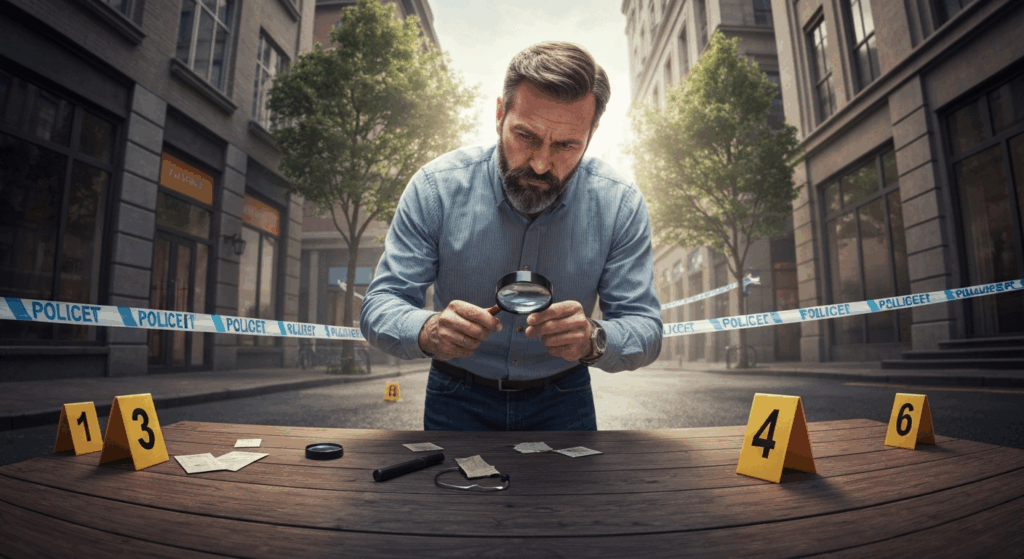
The very first step at any crime scene is to secure it. This responsibility usually falls to the first law enforcement officer to arrive. Securing the scene means establishing a perimeter, typically with crime scene tape, to control who enters and exits the area.
The primary purpose is to prevent the contamination or destruction of evidence. Any unauthorized person entering the scene could accidentally leave their own DNA, move an object, or trample over a footprint, potentially compromising the entire investigation. It also ensures the safety of officers and the public.
Once the perimeter is set, a single entry and exit point is established, and a log is kept of everyone who crosses the line. This strict control is maintained until the crime scene has been fully processed by investigators, protecting the integrity of all potential evidence.
Documentation and Photography
After the scene is secure, the next critical phase is documentation. This involves creating a detailed and permanent record of the crime scene and all the physical evidence within it. This record is vital for both the immediate investigation and for any future court proceedings.
Photography is a key component of this process. Investigators take a series of photos, starting with wide-angle shots of the entire scene and moving to close-ups of each piece of evidence. These images capture the original location and condition of everything before it is collected.
Alongside photography, investigators create detailed notes and sketches. Notes describe the scene, the evidence, and the actions taken, while sketches provide a map of the area with precise measurements showing the position of each item. This multi-faceted documentation ensures no detail is lost.
Systematic Search Techniques
To ensure that no piece of evidence is missed, law enforcement uses systematic search techniques to comb through a crime scene. Instead of wandering randomly, investigators follow a predetermined pattern to cover every inch of the area. The choice of pattern often depends on the size and nature of the scene.
Common search patterns include the grid method, where the area is searched back and forth in one direction and then again in a perpendicular direction. The spiral method, starting from the center and moving outward (or vice versa), is useful in open spaces. Other patterns include the zone method for large areas and the line search for outdoor scenes.
The goal of these techniques is to be thorough and methodical. By following a system, the crime scene investigation team can be confident that they have made every effort to locate all potential evidence, no matter how small or hidden it may be.
Important Legal Terms in Investigations
As an investigation progresses, it begins to overlap with the legal world. At this stage, a new set of terms becomes important. These words relate to the rules and procedures of criminal law that govern how law enforcement can act and how a case moves forward. Understanding them is key to seeing how an investigation transitions into a legal case.
We will now look at some of the most critical legal terms, including the purpose of warrants, the significance of Miranda rights, and the high standard of "beyond a reasonable doubt."
Warrants: Types and Purposes
Can you clarify what a ‘warrant’ means in crime investigations? A warrant is a legal document, a type of judicial order, issued by a judge or magistrate that authorizes law enforcement to perform a specific act. It is a crucial check on power, ensuring that actions like searches and arrests are based on probable cause, not just an officer's hunch.
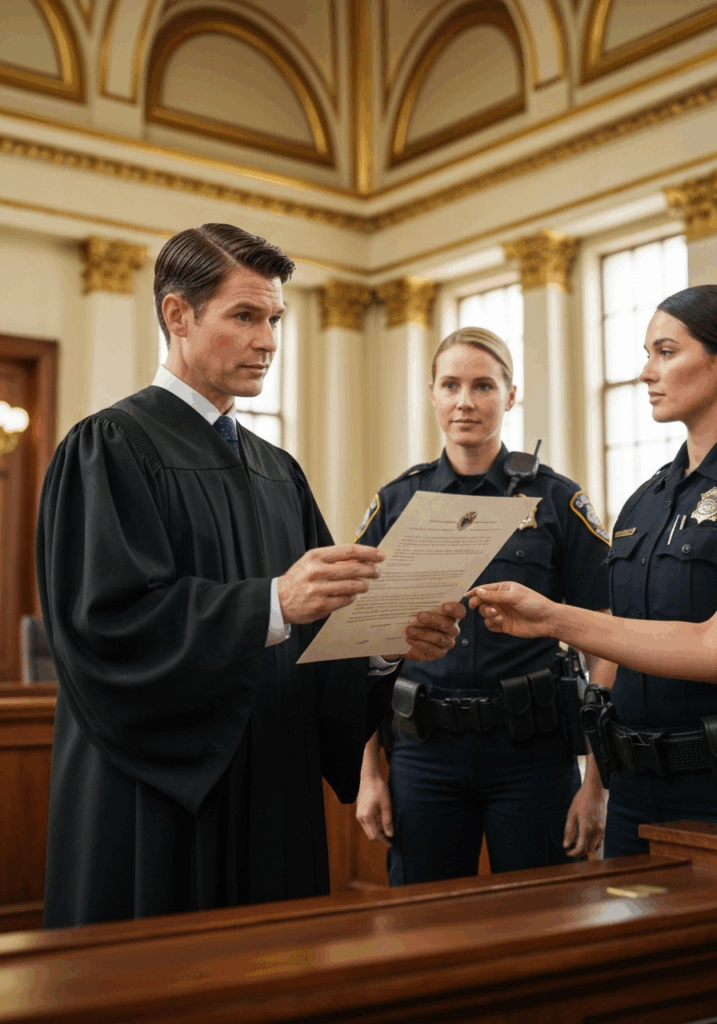
To get a warrant, an officer must submit an affidavit—a sworn statement—to a judge detailing the facts and evidence that justify the requested action. If the judge agrees that probable cause exists, they will sign the warrant, making it a legal command.
There are several types of warrants, each with a distinct purpose. The two most common are a search warrant, which allows officers to search a specific location, and an arrest warrant, which authorizes them to take a person into custody.
| Warrant Type | Purpose |
|---|---|
| Search Warrant | Authorizes law enforcement to search a specific person or place for evidence of a crime. |
| Arrest Warrant | Authorizes law enforcement to arrest and detain a specific individual suspected of a crime. |
| Geo-fence Warrant | Allows law enforcement to identify all active mobile devices within a defined geographic area. |
Miranda Rights and Their Significance
What does ‘Miranda rights’ refer to in the context of criminal justice? You have likely heard the phrase, "You have the right to remain silent." This is the beginning of the Miranda warning, a set of rights that a law enforcement officer must read to a person who is in custody and about to be interrogated.
These rights stem from the landmark 1966 Supreme Court case Miranda v. Arizona. They inform a criminal defendant of their constitutional protections, including the right to remain silent to avoid self-incrimination and the right to have an attorney present during questioning.
The significance of Miranda rights is immense. They are designed to protect individuals from being coerced into giving a confession and to ensure that they are aware of their legal options. If an officer fails to read these rights before a custodial interrogation, any statements the person makes may be inadmissible in court.
What Does “Beyond a Reasonable Doubt” Mean?
What does ‘beyond a reasonable doubt’ mean in legal proceedings? "Beyond a reasonable doubt" is the highest legal standard of proof required to convict a defendant in a criminal case. It means that the prosecution must present evidence so compelling that there is no other logical explanation that can be derived from the facts except that the defendant committed the crime.
This standard does not mean absolute certainty. There can still be some doubt, but it cannot be a "reasonable" one. A reasonable doubt is one that a logical, thoughtful person might have after carefully considering all the evidence.
This high bar is a cornerstone of the American legal system, rooted in the principle that a person is innocent until proven guilty. It places the burden of proof squarely on the prosecution and is designed to protect against wrongful convictions in criminal cases where a person's liberty is at stake.
Most Common Crime Investigation Terms
Beyond the crime scene, law enforcement employs several key processes to gather information and build a case. These methods are designed to uncover facts, confirm suspicions, and prepare for a potential criminal trial. They are the active, hands-on parts of an investigation that often happen behind the scenes.
These processes range from talking to people to analyzing evidence in a lab. Let's examine some of the most common ones: the difference between an interview and an interrogation, the use of surveillance, and the procedures for analyzing evidence.
Interview vs Interrogation
While they may sound similar, an interview and an interrogation are two very different processes used by law enforcement. An interview is a non-accusatory conversation intended to gather information. It is typically conducted with witnesses or victims who may have helpful details about the crime. The tone is conversational, and the person is free to leave at any time.
An interrogation, on the other hand, is a formal and accusatory process. It is conducted with a suspect who is in custody, and its primary goal is to obtain a confession or other incriminating statements. The questioning is more structured and psychologically focused.
The distinction is crucial. During an interrogation, a suspect has the right to an attorney and the right to remain silent, as outlined in the Miranda warning. These rights do not typically apply during a non-custodial interview.
Surveillance and Stakeouts
Surveillance is the process of closely and secretly watching a person, place, or object to gather information about their activities. Law enforcement officers use surveillance to monitor suspects, identify their associates, and discover evidence of criminal behavior. This can involve anything from following a person to monitoring their online activity.
A stakeout is a specific type of surveillance where officers watch a particular location, waiting for a crime to be committed or for a suspect to appear. For example, officers might stake out a warehouse they believe is being used for drug trafficking.
Both tactics are essential tools in crime scene investigation and intelligence gathering. They allow officers to observe behavior in real-time and collect evidence that might not be obtainable through other means. However, these methods are also subject to legal restrictions to protect individual privacy.
Evidence Analysis Procedures
After evidence is collected from a crime scene, it is sent to a forensic laboratory for analysis. This is where the science of an investigation truly comes to life. Trained forensic science experts use specialized equipment and procedures to examine the evidence and uncover the information it holds.
For example, a biologist will perform DNA profiling on a blood sample, a chemist will analyze a suspicious substance, and a firearms examiner will study the ballistics of a bullet. Each law enforcement officer and specialist follows strict protocols to ensure the accuracy and reliability of their findings.
The results of this analysis are compiled into a report that is given back to the investigators. This report can confirm or deny theories, link a suspect to a crime, or provide new leads to follow. Evidence analysis is often the key to solving complex cases.
Courtroom and Trial Terminology
When an investigation leads to an arrest and charges, the case moves into the courtroom. This is where the legal system takes over, and a whole new set of terminology comes into play. These terms describe the formal procedures that determine a person's guilt or innocence. From the initial charges brought by a grand jury to the classification of a crime as a felony, this vocabulary is essential.
Let’s explore the key terms you’ll hear during the trial phase, including arraignment, plea agreements, and the difference between a felony and a misdemeanor.
Arraignment and Indictment
Before a criminal trial can begin, a defendant must be formally charged with a crime. This often happens through an indictment, a formal accusation issued by a grand jury after it has reviewed the evidence and determined there is probable cause to proceed.
Once a person is indicted, the next step is the arraignment. This is the defendant's first official appearance in court. During the arraignment, the judge reads the formal charges against the defendant and informs them of their rights, such as the right to an attorney.
The arraignment is also where the defendant enters their plea. They can plead guilty, not guilty, or, in some cases, "nolo contendere" (no contest). This plea sets the stage for the next phase of the legal process, whether it's a plea negotiation or preparation for a full criminal trial.
Plea Agreements
The vast majority of criminal cases in the United States do not go to trial. Instead, they are resolved through plea agreements, also known as plea bargains. A plea agreement is a negotiated deal between the prosecution and the criminal defendant.
In a typical plea agreement, the defendant agrees to enter a guilty plea to a specific charge in exchange for some concession from the prosecutor. This could be a recommendation for a lighter sentence, a reduction of the charges to a less serious offense, or the dismissal of other related charges.
Plea agreements are a controversial but essential part of the legal system. They help to move cases through the courts more efficiently and provide a degree of certainty for both sides. However, they also involve the defendant waiving their right to a trial.
Felony vs Misdemeanor
Crimes are generally classified into two main categories: felonies and misdemeanors. The distinction is based on the seriousness of the offense and the potential punishment. A felony is the more serious of the two. It is a crime that is punishable by more than a year in a state or federal prison.
A misdemeanor, on the other hand, is a less serious offense. The maximum punishment for a misdemeanor is typically up to one year in a local jail. Fines and probation are also common penalties for misdemeanors.
The classification of a crime has significant consequences. A felony conviction can result in the loss of certain civil rights, such as the right to vote or own a firearm.
- Examples of Felonies: Murder, robbery, drug trafficking.
- Examples of Misdemeanors: Petty theft, reckless driving, simple assault.
- Aggravated assault is often a felony, while simple assault is a misdemeanor.
Identification and Classification Methods
In modern investigations, science provides some of the most powerful tools for identifying individuals and linking them to a crime. These methods rely on the unique characteristics of a person or object to make a match. From the classic fingerprint analysis to the cutting-edge creation of DNA profiles, these techniques provide objective evidence that is difficult to dispute.
Let's explore some of the most common scientific methods used in criminal investigations, including fingerprint analysis, DNA profiling, and ballistics.
Fingerprint Analysis
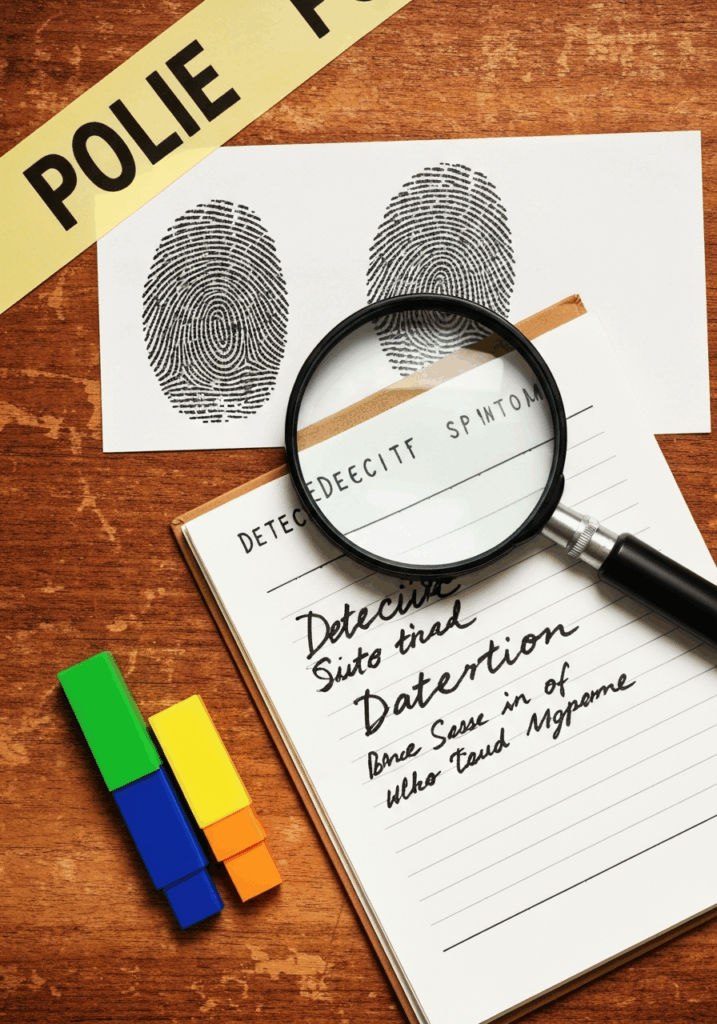
Fingerprint analysis is one of the oldest and most reliable methods of identification used in crime scene investigation. The principle is simple: every person has a unique set of friction ridges on their fingers, and these patterns do not change throughout their life.
When a person touches a surface, they can leave behind a latent print—an impression made by the oils and sweat on their skin. Investigators use special powders and chemicals to make these invisible prints visible. The collected prints are then compared to a database of known fingerprints to find a match.
Because no two people have the same fingerprints, a match is considered powerful physical evidence. It can place a specific person at a crime scene, linking them directly to that location and making it a cornerstone of forensic science.
DNA Profiling
DNA profiling has revolutionized forensic science since its introduction. This technique allows investigators to create a unique genetic blueprint, or a DNA profile, from a tiny biological sample like blood, saliva, or hair. Like a fingerprint, each person's DNA is unique (with the exception of identical twins).
Once a DNA profile is generated from evidence found at a crime scene, it can be compared to the DNA profile of a suspect. A match can provide incredibly strong evidence linking that person to the crime. Law enforcement agencies across the country contribute to a national database called CODIS (Combined DNA Index System).
This system allows labs to compare DNA profiles from different crime scenes and offenders, helping to solve cold cases and identify serial criminals. DNA profiling provides objective, scientific proof that is highly persuasive in court.
Ballistics and Firearm Analysis
When a gun is used in a crime, ballistics and firearm analysis become critical. Ballistics is the science that studies the firing, flight, and effects of projectiles. In a criminal investigation, this involves examining bullets and cartridge casings to link them to a specific firearm.
When a gun is fired, it leaves microscopic markings on the bullet and casing. These markings are unique to that particular weapon, much like a fingerprint is unique to a person. A firearms examiner can compare these markings under a microscope to determine if a bullet found at a crime scene was fired from a suspect's gun.
This type of physical evidence is invaluable. It can prove that a specific weapon was used in a crime, connecting a suspect who owns or possessed that weapon directly to the event.
Types of Evidence Used in Trials
In a courtroom, not all evidence is created equal. The information presented to a judge or jury is categorized based on its nature and how it proves a fact. Understanding these different types of evidence is key to understanding how a lawyer builds their case and how a jury reaches its verdict. The main categories are direct evidence and circumstantial evidence.
Let's break down the most common classifications of evidence you will encounter in a trial, including the difference between direct and circumstantial, and the concepts of inculpatory and exculpatory evidence.
Direct vs Circumstantial Evidence
The two primary categories of evidence are direct and circumstantial. Direct evidence is information that, if believed, directly proves a fact without the need for any inference or conclusion. The classic example is an eyewitness who testifies that they saw the defendant commit the crime.
Circumstantial evidence, also known as indirect evidence, is information that suggests a fact but does not directly prove it. Instead, it requires the jury to make an inference. For example, a witness testifying that they saw the defendant running from the crime scene is circumstantial evidence. It suggests the defendant's involvement, but it doesn't prove it.
While direct evidence may seem more powerful, circumstantial evidence can be just as compelling, especially when many pieces of it point to the same conclusion. Many convictions are based entirely on a strong collection of circumstantial evidence gathered by law enforcement.
Inculpatory and Exculpatory Evidence
Evidence can also be classified based on what it suggests about the defendant's guilt or innocence. Inculpatory evidence is any evidence that tends to prove guilt. It incriminates the defendant, linking them to the crime.
On the other hand, exculpatory evidence is evidence that tends to prove innocence. It can clear a defendant of guilt or cast doubt on the prosecution's case. Prosecutors have a legal and ethical obligation to disclose any exculpatory evidence they find to the defense.
Understanding these terms helps clarify the role of evidence in criminal cases.
- Inculpatory Evidence: A suspect's fingerprints on the murder weapon.
- Exculpatory Evidence: An alibi that places the suspect elsewhere at the time of the crime.
- Both types of evidence are crucial for ensuring a fair trial.
Hearsay Evidence in Court
Hearsay is a term you often hear in courtroom dramas, usually when a lawyer objects. Hearsay is a statement that was made outside of court and is then offered in court to prove the truth of the matter asserted. For example, if a witness testifies, "My friend told me he saw the defendant do it," that testimony is hearsay.
The reason hearsay is generally not allowed in criminal cases is because it is considered unreliable. The person who originally made the statement is not in court to be cross-examined, and their credibility cannot be tested. The law prefers firsthand testimony from witnesses who can be questioned under oath.
While the rule against hearsay is strict, there are many exceptions. For example, a "dying declaration" or an "excited utterance" may be admissible. However, the general principle remains that courts want to hear directly from the source, not from someone repeating what they were told.
Investigation Outcomes and Decisions
After the investigation, the trial, and all the legal arguments, a criminal case comes to a conclusion. This outcome determines the fate of the defendant and marks the end of the legal process, at least for the time being. The primary outcomes are a conviction, which leads to sentencing, or an acquittal, which means the defendant is found not guilty.
But even then, the story may not be over. Let's look at the different outcomes of an investigation, from conviction and sentencing to the possibility of an appeal.
Conviction and Sentencing
A conviction is a formal declaration that a defendant is guilty of a crime. This can happen in one of two ways: the defendant pleads guilty, or a judge or jury finds them guilty after a trial. Once a conviction is entered, the case moves to the sentencing phase.
During sentencing, the judge determines the appropriate punishment for the crime. The sentence can range from probation and fines to a lengthy prison sentence, depending on the severity of the offense and the defendant's criminal history. A probation officer may be assigned to supervise the individual if they are not incarcerated.
The judge considers various factors when deciding on a sentence, including sentencing guidelines, the nature of the crime, and any mitigating or aggravating circumstances. The sentence is the final penalty imposed by the court for the criminal act.
Acquittal and Case Dismissal
An acquittal is a judgment that a defendant is not guilty of the crime they were charged with. This happens when the prosecution fails to prove the defendant's guilt beyond a reasonable doubt. An acquittal means the defendant is legally free and cannot be tried again for the same crime, a principle known as double jeopardy.
A case can also end with a dismissal. A judge might dismiss a case for various reasons, such as insufficient evidence, a violation of the defendant's rights, or a failure to follow proper legal procedures. A dismissal effectively ends the case, though in some situations, the prosecution may be able to refile charges later.
Both an acquittal and a dismissal result in the defendant being cleared of the charges. They are crucial safeguards in the legal system, ensuring that a person cannot be punished unless the state can meet its high burden of proof according to state law. The case may be reviewed by a court of appeals.
Appeals Process
A conviction does not always mean the case is over. A defendant who has been found guilty has the right to file an appeal. An appeal is a request for a higher court, known as an appellate court, to review the proceedings of the lower court for errors of law.
The defendant is not arguing their innocence on appeal. Instead, they are arguing that a significant legal mistake was made during their trial that affected the outcome. This could be anything from an incorrect ruling by the judge to ineffective assistance from their own lawyer.
The appellate court reviews the trial record and written arguments from both sides. It can either affirm the lower court's decision, reverse it and order a new trial, or remand the case back to the lower court with instructions. This process can continue all the way up to the state or U.S. Supreme Court.
Conclusion
In summary, understanding common crime investigation terms is crucial for anyone interested in the field, whether you're a budding investigator or just curious about how the legal system operates. By familiarizing yourself with the essential vocabulary, you can gain insights into the complexities of criminal cases and the procedures involved. From grasping the importance of evidence handling to knowing the roles of various individuals in investigations, this knowledge empowers you to appreciate the meticulous work that goes into solving crimes. Embracing these terms not only enhances your comprehension but also fosters informed discussions about crime and justice in our society. If you have any questions or need further clarification on specific terms, feel free to reach out!
Frequently Asked Questions
Which crime investigation term is most misunderstood?
One of the most misunderstood terms is "probable cause." Many people confuse it with the "beyond a reasonable doubt" standard needed for a conviction. Probable cause is a lower standard of proof used by law enforcement to justify an arrest or search, while proving guilt in criminal cases requires much more evidence.
How are forensic terms different from legal terms in investigations?
Forensic terms relate to the scientific analysis of evidence from a crime scene, such as "DNA profiling" or "ballistics." Legal terms, like "arraignment" or "warrant," refer to the procedures, standards, and rules within the legal system that govern a criminal prosecution. One is about science; the other is about law.
Why is chain of custody so critical in criminal cases?
Chain of custody is critical because it guarantees the integrity of physical evidence. An unbroken chain proves that the evidence presented in court is the same evidence collected at the crime scene and has not been tampered with. A flawed chain can make the use of evidence inadmissible, potentially destroying a case.
Glossary of Essential Crime Investigation Terms
This article serves as a foundational glossary for the essential terms used in criminal justice. By explaining the vocabulary of law enforcement, from the crime scene to the criminal prosecution, it helps to demystify the complex process of investigating and trying cases involving physical evidence and legal standards.
https://dictionary.law.com/Default.aspx
https://en.wikipedia.org/wiki/Homicide
https://constitutioncenter.org/interactive-constitution/amendment/amendment-v