US Military Action Over Venezuela: Risks and Consequences
 admin001
Understanding US Military Action Over Venezuela: Risks Ahead
Key Highlights
- The United States has increased its military presence in the Caribbean. Launching airstrikes on alleged drug boats near Venezuela since September. Although this escalation has led to speculation about possible further actions, there are no official plans for a US invasion of Venezuela that have been publicly announced. The Trump administration has labeled the Venezuelan government a "narcoterrorist cartel," linking President Maduro to drug trafficking.
- The Trump administration has labeled the Venezuelan government a "narcoterrorist cartel," linking President Maduro to drug trafficking.
- President Donald Trump has suggested military action could expand to land targets within Venezuela very soon.
- This potential armed conflict raises significant legal questions, as critics argue it lacks congressional authorization and may violate international law.
- A massive naval buildup, including an aircraft carrier, suggests the United States is preparing for more than just counternarcotics operations.
Introduction
Tensions between the United States and Venezuela are reaching a fever pitch, sparking concerns about a potential military conflict. With a major US military buildup in the Caribbean and escalating rhetoric from Washington. Many are questioning the motives and potential consequences of military action. Is the US truly on the verge of war with Venezuela? This article explores the recent events, the political motivations behind them, and what it could all mean for the region and the world.
Historical Context of US-Venezuela Relations
The relationship between the United States and Venezuela has been strained for decades, long before the current crisis. Since Hugo Chavez came to power, the Venezuelan government has positioned itself as an opponent of US influence in Latin America, aligning with adversaries like Cuba and Russia. This has created a foundation of mistrust that continues today. While there have been periodic reports and speculation about potential US military intervention in Venezuela. There are no official publicly disclosed plans for a US invasion of Venezuela at this time. Official statements from US government agencies emphasize support for diplomatic and economic measures over military action.
Under the Trump administration, pressure for regime change has intensified as Venezuela grapples with economic collapse, rampant crime, and an autocratic government. While President Donald Trump initially explored talks with President Maduro. The focus has shifted back to a more aggressive stance, bringing the threat of armed conflict to the forefront. The current status of relations is highly volatile, with a significant US military presence signaling a readiness for action.
Diplomatic tensions and previous interventions
The Trump administration has made its goal of regime change in Venezuela clear. During Donald Trump's first term, his government used a mix of overt and covert tactics to pressure President Maduro to step down. Now, in his second term, that pressure has escalated into direct military posturing.
This aggressive approach includes a significant buildup of US military forces in the Caribbean. The administration has also designated parts of the Venezuelan government as a terrorist organization, a move that attempts to legally justify future actions. President Trump even reportedly told Maduro in a phone call that he could save himself by leaving the country.
These actions raise serious questions under international law. Unilateral military threats and actions against a sovereign nation are highly controversial. Critics argue that the administration's push for regime change, backed by military force, sidesteps diplomatic norms and legal frameworks designed to prevent such conflicts. The recent US military actions near Venezuela, including vessel strikes, have only amplified these concerns.
Evolving security concerns in the region
The United States is framing its potential military action against Venezuela around key security concerns, primarily drug trafficking. The administration accuses the Maduro regime of being deeply involved in the narcotics trade, effectively running a "narcoterrorist cartel." This narrative positions Venezuela as a direct threat to American safety by allegedly flooding the US with drugs.
Venezuela has become a major transit point for cocaine heading to the US and Europe, and organized crime is widespread. This reality fits into the Trump administration's broader priorities, which include cracking down on drug trafficking, migration, and socialism in Latin America. The combination of these issues makes Venezuela a symbolic target.
However, some of the administration's claims are disputed. While the Venezuelan government has documented ties to crime, experts doubt that President Maduro is personally directing drug shipments. The focus on these security concerns provides a justification for a potential armed conflict, even if the full picture is more complex.
Recent US Military Actions in the Caribbean
The US military has dramatically increased its activity in the Caribbean Sea, signaling a serious intent toward Venezuela. This isn't just a routine patrol; it's the largest military buildup in the region since the Cold War. The deployment includes an array of powerful military assets, from advanced drones to guided-missile destroyers.
Most notably, the presence of the aircraft carrier USS Gerald R. Ford and its strike group suggests preparation for a major air campaign. These recent actions go far beyond simple counternarcotics and point toward a readiness for significant military strikes. We will explore the specifics of these actions, from airstrikes to naval deployments.
Airstrikes on alleged drug trafficking vessels
Since September, the US military has been conducting a series of deadly airstrikes against alleged drug boats in the Caribbean and Eastern Pacific. This campaign, dubbed Operation Southern Spear, marks a significant escalation in American counternarcotics strategy.
These strikes have been lethal. More than 20 boats have been destroyed, resulting in over 80 deaths. The impact of these boat strikes has been severe, raising humanitarian and legal alarms. The operation has been defended by officials as a necessary fight against drug traffickers, but it has drawn sharp criticism.
Adding to the controversy are reports of a "second strike" authorized to kill survivors of an initial attack. This action, if true, is considered a severe violation of the laws of armed conflict. The strikes represent a shift from treating traffickers as criminals to treating them as enemy combatants.
- Operation Southern Spear: A US military campaign involving airstrikes on alleged drug boats.
- Casualties: Over 80 people have been killed in more than 20 boat strikes.
- Controversy: The use of lethal force without an opportunity to surrender has been widely condemned.
Deployment of naval assets near Venezuelan waters
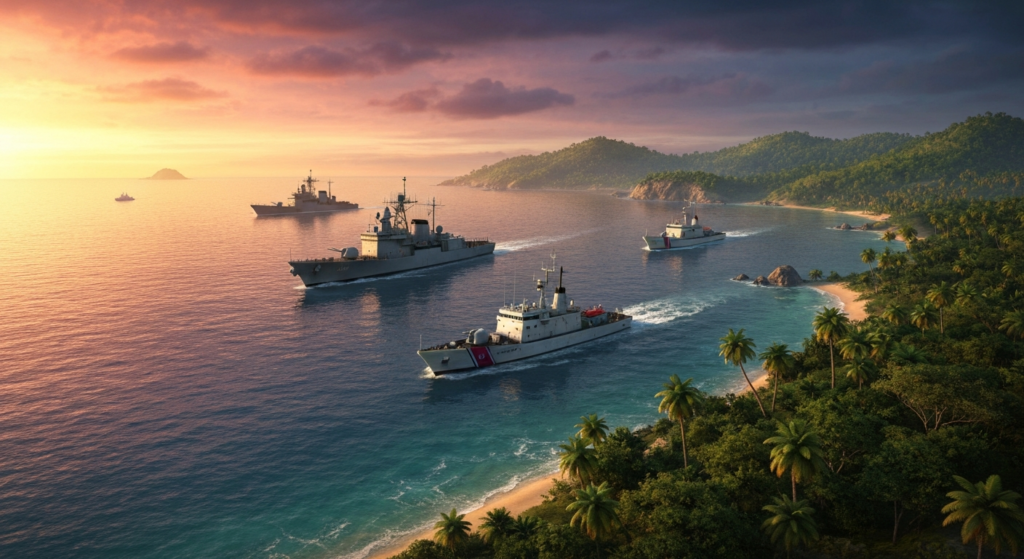
The deployment of significant naval assets in the Caribbean Sea is one of the clearest signs of the US military's intentions. The centerpiece of this force is the USS Gerald R. Ford, one of the world's most advanced aircraft carriers. An asset like an aircraft carrier is not typically used for chasing drug boats; it is designed for projecting power and conducting large-scale air campaigns.
This naval armada, positioned in international waters near Venezuela, includes thousands of troops, fighter jets, and guided-missile cruisers. Special Operations helicopters have also been reported flying missions close to the Venezuelan coast. This level of firepower far exceeds what would be needed for a simple counternarcotics mission.
Military analysts suggest that the presence of the aircraft carrier is a "use it or lose it" situation. These assets are in high demand globally, so its deployment to the Caribbean Sea implies that the administration has a limited window to act if it plans to use it. This massive military presence is a key part of the recent US actions near Venezuela.
Joint military exercises with regional partners
The massive military buildup in the Caribbean involves a high level of coordination among different branches of the US armed services. While the administration hasn't announced formal joint military exercises with other nations, the scale of the operation requires seamless integration of naval, air, and special operations forces.
This military buildup serves as a powerful message to the entire Latin America region. The presence of such a formidable force demonstrates American military capability and resolve. It puts both allies and adversaries on notice that the United States is willing to use its military might to achieve its objectives in the Western Hemisphere.
The coordination among the armed services is crucial for the success of any potential operation, whether it remains a counternarcotics campaign or escalates into a broader conflict. The recent actions showcase a well-orchestrated military presence, ready to execute complex missions on short notice, which is a major component of the US military's recent activities near Venezuela.
Political Motivations Behind Military Considerations
The push for military action against Venezuela appears to be driven by key figures in the White House. President Donald Trump has been vocal about his desire to see President Maduro removed from power, and his recent statements have only fueled speculation of an impending conflict.
A significant influence in this policy is Secretary of State Marco Rubio, a longtime critic of the Maduro regime. His hardline stance likely plays a role in the administration's aggressive posture. We will examine the specific positions of the US government and the ongoing congressional debates that shape these policy decisions.
US government stance on the Maduro administration
The US government's official stance is that the Maduro administration is not just a corrupt government but a criminal enterprise. The Trump administration has designated the "Cartel de los Soles," a network of Venezuelan officials involved in crime, as a terrorist organization. Crucially, it identifies President Maduro as the leader of this cartel.
This designation is a key part of the justification for potential military action. By labeling the Venezuelan state itself a terrorist organization, the administration attempts to create a legal and moral basis for intervention. President Trump and the Secretary of State have used this framing to argue that a military response is necessary to combat narcotrafficking.
This position allows the administration to sidestep traditional diplomacy and pursue a more aggressive path toward regime change. It reframes the conflict from a political dispute to a fight against a criminal threat, which helps explain why the United States is considering such drastic measures against the Maduro administration.
Congressional debates and policy drivers
The administration's aggressive posture toward Venezuela has not gone unchallenged in Washington. Congressional debates have revealed deep concerns among lawmakers from both parties. The House and Senate Armed Services Committees have pledged to conduct vigorous oversight of the military operations in the Caribbean.
Lawmakers have questioned the legality of the boat strikes and the administration's broader strategy. For instance, Senator Mark Kelly, a former Navy pilot, has expressed serious concerns about the reported "second strike" on survivors, stating it would be an unlawful order. He and other Democrats have reminded military personnel of their obligation to refuse illegal commands.
This pushback from Congress highlights a key policy driver: the constitutional separation of powers. Many lawmakers feel the administration is waging war without the required authorization from Congress. Figures like Marco Rubio continue to advocate for a hard line, but the growing chorus of concern from foreign affairs and military experts in Congress shows that US lawmakers are deeply divided on the issue.
Legal Justifications for US Military Intervention
The Trump administration's potential military intervention in Venezuela rests on a shaky legal foundation. Officials have tried to justify the actions by framing them as part of the war on terror, even though the context is very different. This approach has been met with skepticism from legal experts.
The administration's arguments touch on both international law and US domestic statutes, but many believe they stretch these laws to their breaking point. We will now look at how the principles of sovereignty and the specific US laws regarding foreign military operations play into this complex legal debate.
International laws concerning sovereignty
A core principle of international law is the sovereignty of nations, which generally prohibits one country from using military force against another without justification like self-defense or authorization from the United Nations. The US actions against Venezuela appear to challenge this principle directly.
The boat strikes, in particular, have raised alarms. Attacking civilian ships in international waters and giving them no chance to surrender is considered a serious violation of the laws of armed conflict. Furthermore, reports of a "second strike" to kill survivors are especially forbidden under international law, as it amounts to executing combatants who are no longer a threat.
The administration justifies these actions by designating drug cartels as terrorist organizations. However, this designation does not automatically authorize military force under international law, especially without a direct, imminent threat comparable to a major terrorist attack. Critics argue this legal rationale is a dangerous precedent that undermines the global legal order.
US domestic statutes regarding foreign military operations
Under US domestic statutes, the power to declare war belongs to Congress. The president's authority to order military action unilaterally is limited, especially for prolonged conflicts. The Trump administration has not sought an Authorization for the Use of Military Force (AUMF) from Congress for its operations against Venezuela.
Instead, administration lawyers are reportedly trying to find a separate legal justification. They have told Congress that the current authority for the boat strikes does not cover strikes on land in Venezuela. To get around this, they are seeking a new legal opinion from the Justice Department that would allow them to bypass congressional debates.
This move is highly controversial, as it sidesteps the constitutional role of the armed services committees and Congress as a whole. Treating drug traffickers as enemy combatants rather than criminals with due process rights is a legal stretch that many in Congress and the legal community find troubling.
Impact of US Military action over Venezuela
The US military strikes in the Caribbean have already had a deadly impact. While the administration frames them as targeting drug traffickers, these actions have resulted in significant casualties and raised serious humanitarian concerns. The full consequences of these boat strikes are still unfolding.
A broader armed conflict would have an even more devastating effect on Venezuela. The potential for damage to infrastructure and the impact on daily life for millions of people are immense. Let's examine the known outcomes of the strikes so far and the potential effects of an escalated conflict.
Casualties and humanitarian outcomes
The immediate impact of the US military strikes has been the loss of life. Operation Southern Spear has led to dozens of casualties, with the administration providing little information about the identities of those killed. This lack of transparency has fueled concerns about human rights and due process.
The most disturbing humanitarian outcome surrounds the report of a "double-tap" strike, where a second attack was ordered to kill survivors. This practice is a clear violation of the laws of armed conflict and has been condemned as a potential war crime. It suggests a policy of lethal force with no regard for surrender or injury.
These actions have created a chilling effect, treating individuals on these boats not as criminal suspects but as enemy combatants to be eliminated. The humanitarian outcomes are stark, turning a law enforcement issue into a battlefield with significant casualties.
| Metric | Details |
|---|---|
| Operation Name | Operation Southern Spear |
| Number of Boats Struck | Over 20 |
| Estimated Casualties | More than 80 people killed |
| Key Controversy | Reports of a "second strike" to kill survivors, a potential violation of international law. |
| Human Rights Concern | Lack of due process and treating suspects as enemy combatants. |
Effects on Venezuelan infrastructure and daily life
While the military strikes have so far been limited to the sea, a wider armed conflict would have a devastating effect on Venezuela's already fragile infrastructure. An air campaign could target drug labs, airstrips, and camps used by armed groups, but such attacks risk collateral damage and further destabilizing the country.
The biggest impact on daily life would likely be a new wave of mass migration. A US government war game predicted that overthrowing the Venezuelan government could create a power vacuum, leading to widespread chaos and violence. This would undoubtedly trigger another exodus of refugees, adding to the millions who have already fled.
For ordinary Venezuelans, the threat of military strikes adds another layer of fear and uncertainty to their already difficult lives. An escalation could disrupt essential services, worsen shortages, and put countless civilians in harm's way, transforming a political crisis into a full-blown humanitarian catastrophe.
Venezuelan Government and Public Response
The Venezuelan government has consistently condemned the US threats as acts of aggression. Officials in Caracas have used the military buildup to rally nationalist support and portray the United States as an imperialist power seeking to control Venezuela's oil reserves.
Meanwhile, public sentiment within Venezuela is deeply divided. Years of economic hardship and political repression have left many desperate for change, but the prospect of a foreign military intervention is a frightening one. We will explore the official statements from the leadership and the complex feelings of the Venezuelan people.
Official statements from Venezuelan leadership
The official statements from the Venezuelan leadership have been defiant in the face of US threats. President Nicolás Maduro and his government have consistently denounced the US military presence in the Caribbean as a violation of their sovereignty. They have used state media and social media to broadcast a message of resistance against American aggression.
President Maduro confirmed he had a phone call with President Trump, though he did not share details. This communication highlights the complex mix of confrontation and back-channel talks. The Venezuelan leadership likely uses these interactions to gauge US intentions while publicly maintaining a strong, anti-imperialist stance.
The government also points to US feuds with other leftist leaders in the region, such as Colombia's President Gustavo Petro, as evidence of a broader American campaign against progressive governments in Latin America. These official statements aim to frame the conflict as ideological, rallying domestic and international support against US intervention.
Public sentiment and protests within Venezuela
Public sentiment in Venezuela is far from uniform. After years of suffering under the Maduro regime, many Venezuelans are desperate for a change in leadership. This has led some prominent opposition figures, like Maria Corina Machado, to publicly support President Trump's aggressive actions, hoping they will finally lead to Maduro's downfall.
However, many other citizens fear the consequences of a US military intervention. They worry that an armed conflict would lead to widespread bloodshed, chaos, and a deeper humanitarian crisis. The memory of past US interventions in Latin America fuels a deep-seated suspicion of American motives, even among those who oppose Maduro.
This division is clear on social media and in the diaspora of Venezuelan migrants. While some call for intervention to end the human rights abuses at home, others organize protests against it, fearing it will only bring more suffering.
- Support for Intervention: Some opposition members and citizens believe it's the only way to oust Maduro.
- Fear of Conflict: Many worry about civilian casualties and the chaos that could follow an attack.
- Historical Skepticism: A general distrust of US military involvement in the region influences public opinion.
Arguments For and Against US Military Action
The debate over a potential US military action in Venezuela is intense, with strong arguments on both sides. Proponents, including some US officials, argue that intervention is necessary to dismantle a corrupt, drug-trafficking regime and restore democracy. They see it as a decisive way to address a growing security threat.
On the other hand, opponents raise serious criticisms about the legality, morality, and strategic wisdom of such a move. They warn of a potential quagmire, a humanitarian disaster, and the violation of international law. We'll examine the key points from both supporters and critics of intervention.
Support for intervention from US officials and allies
Support for military action against Venezuela is primarily voiced by US officials within the Trump administration and their allies. President Trump and Secretary of State Marco Rubio have been the most vocal proponents, framing intervention as a necessary step to combat drug trafficking and remove a hostile, autocratic regime.
Their argument centers on the idea that the Maduro government is a "narcoterrorist cartel" that poses a direct threat to the United States. They contend that diplomatic and economic pressures have failed, leaving military action as the only viable option for achieving regime change. This view is echoed by some in the international studies community who favor a more assertive US foreign policy.
This position has also found support among some members of the Venezuelan opposition. Frustrated by years of failed negotiations and increasing repression, they see American military might as the last, best hope for liberating their country.
- National Security: Proponents argue it's necessary to stop drug trafficking from Venezuela.
- Regime Change: The goal is to oust the corrupt and autocratic Maduro government.
- Last Resort: Supporters believe all other options, like sanctions and diplomacy, have failed.
Criticisms and risks highlighted by opponents
Opponents of military action highlight a wide range of criticisms and risks. First and foremost are the legal and ethical issues. Many experts argue that a unilateral strike would violate international law and the US Constitution, which gives Congress the power to declare war. The boat strikes have already drawn condemnation for infringing on human rights and the laws of armed conflict.
Strategically, critics warn that an intervention could easily turn into a prolonged and costly quagmire. A US government war game predicted that Maduro's overthrow could lead to a chaotic power vacuum, with various factions fighting for control. This would likely worsen the humanitarian crisis and trigger an even larger wave of refugees.
Furthermore, opponents question the administration's true motives. The pardon of a convicted Honduran drug lord by President Trump has led many to doubt that the fight against narcotrafficking is the real reason for targeting Venezuela. They fear the push for armed conflict is driven more by politics than a coherent strategy.
International Reactions and Involvement
The escalating threats against Venezuela have not gone unnoticed by the international community. Nations across Latin America and international organizations are watching the situation with growing concern. The prospect of a US military intervention in the region is a highly sensitive issue with deep historical roots.
The reactions have been mixed, reflecting the complex political landscape of the hemisphere. While some may quietly welcome the pressure on Maduro, many others fear the destabilizing effects of an armed conflict. Let's explore the positions of neighboring countries and the views of organizations like the United Nations.
Positions of Latin American countries and organizations
Latin American countries have historically been wary of US military intervention in the region, and the current situation is no exception. Many leaders have publicly and privately urged for a diplomatic solution, fearing that an armed conflict would have disastrous consequences for regional stability.
The Trump administration's foreign affairs approach has created a fractured response. While President Trump has allied with some conservative leaders, he has feuded with leftist presidents like Colombia's Gustavo Petro. This has made it difficult for regional organizations to form a unified stance against US military threats.
Most governments in Latin America are likely to condemn any unilateral military action as a violation of international law and national sovereignty. They would prefer to see a solution negotiated by Venezuelans themselves, without the interference of outside military forces, a position often supported by regional organizations.
Views from international organizations and the UN
International organizations, including the United Nations, typically view unilateral military threats with extreme caution. The UN Charter is built on the principle of respecting national sovereignty and resolving disputes peacefully. A US military strike on Venezuela without UN Security Council authorization would almost certainly be seen as a violation of international law.
Human rights organizations have already raised alarms about the boat strikes and the potential for an escalated armed conflict. They are concerned about the lack of due process for the victims and the risk to civilians in any wider military operation. The "second strike" reports are particularly troubling from a human rights perspective.
Overall, international organizations are likely to advocate for de-escalation and a return to diplomacy. They would emphasize the need to protect human rights, uphold international law, and prevent a humanitarian crisis that would inevitably result from a full-blown armed conflict.
Consequences for Regional Stability
A US military intervention in Venezuela would send shockwaves across South America, threatening regional stability that is already fragile. The consequences would extend far beyond Venezuela's borders, impacting neighboring countries, migration patterns, and trade relationships throughout the hemisphere.
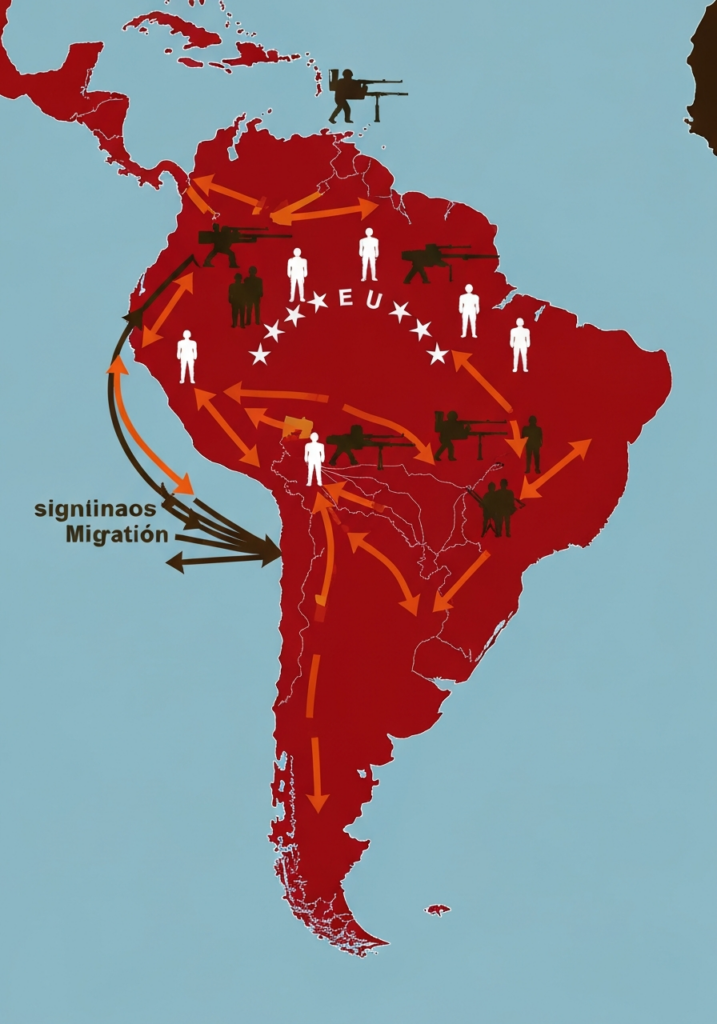
The current military buildup is already a source of tension, but an actual conflict would create a new and unpredictable reality. The fallout from such an event could reshape the political and social landscape of the region for years to come. Let's look at the specific implications for neighboring countries and the potential shifts in migration and trade.
Implications for neighboring countries in South America
Neighboring countries in South America would bear the immediate brunt of a conflict in Venezuela. The primary concern is the potential for a massive and sudden increase in migration. Millions of Venezuelans have already fled to countries like Colombia, Brazil, and Peru, and a war would trigger an even larger exodus that could overwhelm their resources.
The political implications are also significant. A US intervention could destabilize the entire region, influencing everything from foreign policy alignments to domestic politics. It could become a major issue in a future presidential election in a neighboring country, as leaders would be forced to take a stance on American military action.
Furthermore, there is a risk of the conflict spilling over borders. Armed groups operating in Venezuela could be displaced or become more active in neighboring territories, creating new security challenges for countries that are already struggling with their own internal problems. This would seriously undermine regional stability.
Potential changes to migration and trade
An armed conflict would drastically alter migration patterns from Venezuela. The country is already the source of the world's largest refugee crisis, and military action would undoubtedly accelerate the flight of Venezuelan migrants. This would place immense pressure on neighboring countries and the United States, including territories like Puerto Rico.
Trade in the region would also be severely disrupted. Venezuela's oil-dependent economy is already in shambles, but a conflict would halt what little production and commerce remain. The instability would likely affect shipping lanes in the Caribbean, disrupt regional supply chains, and create economic uncertainty for Venezuela's trading partners.
Ultimately, the goal of restoring regional stability could be undermined by the very actions intended to achieve it. A war could create a failed state on the continent, leading to decades of instability that would affect migration, trade, and security for the entire Western Hemisphere.
Future Outlook for US-Venezuela Relations
The future of US-Venezuela relations is highly uncertain and hangs precariously in the balance. The current path is one of escalating threats and military posturing, which could easily lead to an armed conflict. The administration seems determined to force regime change, and its patience for other options appears to be wearing thin.
However, the possibility of de-escalation still exists. The high risks associated with military action could push the administration toward a different approach. The key question is whether diplomatic solutions can prevail over the drumbeat of war. We will explore the ongoing threats and the potential for either escalation or resolution.
Ongoing threats and potential diplomatic solutions
The most immediate of the ongoing threats is the significant US military presence in the Caribbean, which keeps the possibility of an attack on the table. President Trump's rhetoric continues to be aggressive, reinforcing the idea that military action is not just a bluff. These threats are designed to maximize pressure on the Maduro regime to collapse.
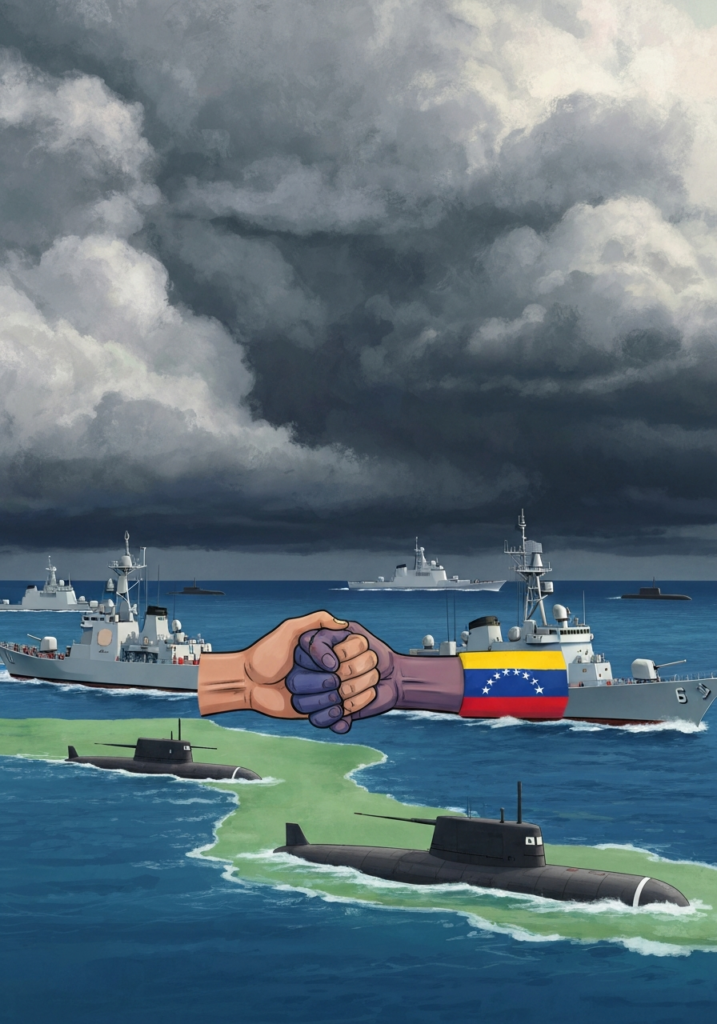
Despite this, potential diplomatic solutions have not been completely abandoned. Earlier in the Trump administration's second term, there were talks about deals involving detained US citizens and access to Venezuela's oil fields. These discussions show that a path to negotiation exists, even if it is currently overshadowed by military threats.
However, any diplomatic solution would require a major shift in foreign affairs policy. The administration's focus on regime change and its controversial interpretation of international law make a peaceful resolution difficult. For now, the ongoing threats seem to outweigh the slim hopes for diplomacy.
Possibility of escalation or resolution
The situation could move in two very different directions: escalation or resolution. Escalation would likely take the form of an air campaign targeting Venezuelan military assets, drug infrastructure, or even senior officials. The current military buildup provides the means for such an operation, and the administration's rhetoric suggests the will is there.
A resolution, however, could look different. President Trump could declare victory after the boat strikes, claiming to have crippled the cartels, and then draw down the military presence. This would be similar to the US campaign against Houthi rebels in Yemen, which ended with a ceasefire before turning into a quagmire.
The choice between these two paths is a risky one. If the military buildup is a bluff and Maduro does not step down, Trump's authority could be weakened. On the other hand, a full-blown armed conflict carries immense risks. The possibility of further escalation remains high as long as the forces are in place.
Conclusion
In conclusion, the complexities surrounding US military action in Venezuela highlight a myriad of risks and consequences that could ripple across the region. From historical tensions to the current political dynamics, understanding these factors is crucial for grasping the broader implications of military interventions. While some argue that such actions are necessary for regional stability, others warn of the humanitarian costs and potential escalation of conflict. As this situation continues to evolve, staying informed about the developments in US-Venezuela relations is essential. If you have any questions or need further insights on this topic, feel free to reach out!
Frequently Asked Questions
What recent actions has the US military taken near Venezuela?
The US military has conducted Operation Southern Spear in the Caribbean Sea, launching deadly military strikes against alleged drug boats. It has also deployed a massive naval force, including the USS Gerald R. Ford aircraft carrier, guided-missile destroyers, and thousands of troops, in the largest regional buildup since the Cold War.
Is there evidence of an official plan for a US invasion of Venezuela?
There is no public evidence of an official plan for a ground invasion of Venezuela, which experts consider unlikely. However, the significant military buildup and rhetoric from President Trump and the Secretary of State suggest that an air campaign or targeted strikes to achieve regime change is a distinct possibility.
How do international organizations view US military threats against Venezuela?
International organizations like the United Nations generally view the threats with alarm. They are concerned that unilateral military action would violate international law and national sovereignty. Human rights groups have condemned the boat strikes and warned that an armed conflict would lead to a severe humanitarian crisis.
https://www.nytimes.com/interactive/2025/10/29/us/us-caribbean-pacific-boat-strikes.html
https://www.reuters.com/graphics/USA-CARIBBEAN/MILITARY-BUILDUP/egpbbnzyrpq
https://www.nytimes.com/2025/11/18/us/politics/trump-covert-action-venezuela.html
https://www.theguardian.com/world/2025/dec/01/trump-maduro-ultimatum-relinquish-power-venezuela
https://www.miamiherald.com/news/nation-world/world/americas/venezuela/article312768769.html
https://www.proquest.com/docview/3276683648
https://www.cbsnews.com/news/poll-venezuela-u-s-military-action-trump
https://www.bbc.com/news/articles/cdjzw3gplv7o
https://www.cbsnews.com/news/venezuela-maduro-says-no-way-us-can-invade-warships-deployed
https://www.bbc.com/news/articles/cd9kgqwnk8wo
https://www.miamiherald.com/news/nation-world/world/americas/venezuela/article312357717.html