Police Drones Technology: Revolutionizing Law Enforcement
 admin001
Police Drones Technology: Transforming Modern Law Enforcement
Key Highlights
- Police drones are transforming how law enforcement agencies operate, significantly improving public safety.
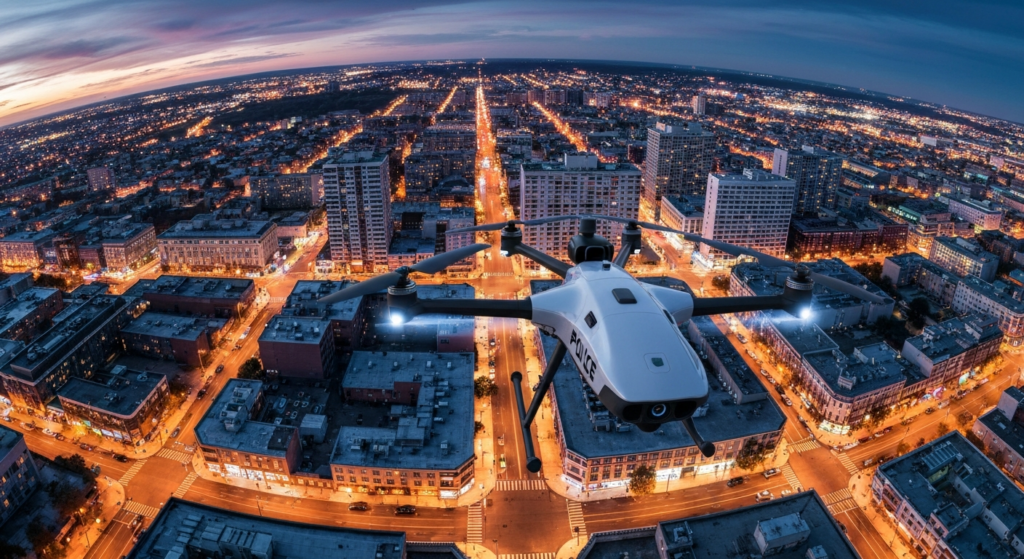
- This drone technology enhances situational awareness for officers, providing a bird's-eye view of incidents.
- Drone as First Responder (DFR) programs are drastically cutting down emergency response times.
- Drones assist in a wide range of applications, from search and rescue to crime scene investigation.
- Modern police drones come equipped with advanced features like thermal imaging and real-time video streaming.
- Clear regulations and training are essential for the responsible and effective use of drones in policing.
Introduction
Welcome to the world of modern law enforcement, where new tools are constantly changing the game. Among the most impactful innovations are police drones. This advanced drone technology is more than just a flying camera; it's a powerful asset that provides officers with unparalleled aerial perspectives. From emergency responses to routine patrols, these unmanned aerial vehicles are becoming indispensable for police work, helping to enhance officer safety and improve how situations are managed on the ground.
The Evolution of Police Drone Technology in the United States
The use of police drones in the United States has grown from a niche concept to a widespread practice. What started with a few pioneering law enforcement agencies has now become a key component of modern policing. This journey reflects rapid advancements in technology and a growing recognition of the value these unmanned aircraft systems bring.
As drone adoption increased, so did the variety of applications. Today, a police department might use drones for everything from surveillance and search and rescue to reconstructing traffic accidents. This evolution showcases a strategic shift towards leveraging technology for more effective and safer law enforcement.
Early Adoption and Milestones in Law Enforcement
The story of law enforcement drones began in the early 2000s, but it wasn't until the next decade that the new technology became more accessible. One of the pioneering police agencies was the Mesa County Sheriff’s Office in Colorado. In 2013, they started using unmanned aircraft systems for search and rescue missions and crime scene investigations, proving the immense value of an aerial perspective.
This early success served as a powerful example for other departments. By the end of 2016, around 167 police departments across the country had acquired drones. Their initial focus was on tasks like traffic accident reconstruction, surveillance, and monitoring large events.
These first steps were crucial in demonstrating how law enforcement drones could provide critical information that was previously difficult or impossible to obtain. This laid the groundwork for the widespread adoption that would follow in the years to come.
Growth and Expansion Across Police Departments
The initial success of early drone programs sparked a period of rapid growth. Just two years after the 2016 count, the number of police departments with a drone program more than doubled. This surge was fueled by falling costs of aerial vehicles and a clearer understanding of their benefits in law enforcement use.
By 2022, over 1,000 police departments in the U.S. had integrated drones into their operations. This expansion shows no signs of slowing down, with projections indicating a significant increase in the number of public safety drones by 2025. This trend highlights a fundamental shift in policing tactics.
The increasing adoption reflects how valuable these tools have become. Drones offer a versatile solution for various operational needs, making them a staple for the modern police department and a force multiplier for officers on the ground.
Key Legislative Moments Shaping Police Drone Use
The expansion of police drone use didn't happen in a vacuum. Key legislative and regulatory developments were essential to guide this new frontier in law enforcement. The Federal Aviation Administration (FAA) plays a central role in establishing the rules of the sky for all unmanned aircraft, including those used by police.
A significant moment was the creation of the FAA’s UAS Integration Pilot Program (IPP). This program was designed to help integrate drones into national airspace safely. It allowed select agencies, like the Chula Vista Police Department, to test advanced operations, such as flying beyond the visual line of sight (BVLOS).
These programs and the resulting regulations were game-changers. They provided a framework for law enforcement to innovate responsibly, leading to groundbreaking initiatives like Drone as First Responder (DFR) programs and shaping the future of drone use in public safety.
Types of Drones Used by Police Departments
Not all law enforcement drones are created equal. Just as a police department has different vehicles for different tasks, it also utilizes various types of unmanned aircraft systems. The choice of drone often depends on the specific mission, from navigating tight urban spaces to covering vast rural areas.
This specialization in drone technology allows agencies to select the perfect tool for the job. Whether it's a small, agile quadcopter or a long-endurance fixed-wing model, each type offers unique capabilities. Let’s look at some of the most common types of drones you’ll find in a police department’s fleet.
Multirotor Drones for Urban Operations
When you picture a drone, you're likely thinking of a multirotor drone. These are the most common types used by a police department, especially for urban operations. Their ability to take off and land vertically, hover in place, and maneuver in tight spaces makes them incredibly versatile for city environments.
These drones are ideal for providing a quick eye in the sky over a specific location. A police department can use them to monitor a protest, get a view of a barricaded suspect situation, or assess a traffic accident without needing a runway or large open space. This agility is crucial for effective public safety responses in crowded areas.
Key features of multirotor drones include:
- Vertical Takeoff and Landing (VTOL): Allows deployment from confined spaces.
- Hovering Capability: Provides a stable, persistent aerial view of a target area.
- High Maneuverability: Enables navigation around buildings and other obstacles.
Fixed Wing Drones for Extended Surveillance
Unlike their multirotor cousins, fixed-wing drones look and fly more like traditional airplanes. While they can't hover, their design makes them exceptionally efficient for covering large areas, making them a key asset for certain law enforcement agencies.
Their primary advantage is extended flight time and range. A fixed-wing drone can stay in the air for hours, making it perfect for missions that require long-duration surveillance. This could include patrolling long stretches of a border, searching for a missing person in a vast wilderness, or monitoring large-scale public events from a high altitude.
Advantages of fixed-wing drones include:
- Extended Flight Time: Can fly for several hours on a single battery or fuel source.
- Greater Range: Capable of covering much larger geographical areas.
- High Speed: Can travel to a target area more quickly than multirotor models.
Tethered Drones: Persistent Monitoring Solutions
For situations that require a constant, long-term aerial presence, tethered drones offer a unique solution. These aerial vehicles are physically connected to a ground station by a thin cable, which provides continuous power and a secure data link. This simple but brilliant design overcomes the battery life limitations of other drones.
Police agencies use tethered drones for persistent monitoring of a single location. Think of a large music festival, a critical infrastructure site, or a long-lasting crime scene. The drone can stay airborne for days if needed, providing an unbroken stream of aerial footage to command centers.
Benefits of tethered drones are:
- Virtually Unlimited Flight Time: Power is supplied through the tether, eliminating the need for battery swaps.
- Secure Data Connection: The physical link is difficult to jam or intercept.
- Stationary Monitoring: Ideal for providing a continuous overwatch of a specific area.
Essential Features of Modern Police Drones
Modern law enforcement drones are packed with sophisticated features that make them powerful tools for public safety. This isn't just about flying; it's about the data and capabilities these drones bring to the table. From seeing in the dark to streaming high-definition video in real time, this drone technology gives officers critical advantages.
These features transform a simple drone into a multi-purpose public safety device. Advancements in sensors, cameras, and software are continually pushing the boundaries of what's possible. Let's explore some of the most essential features that define the capabilities of today's police drones.
Thermal Imaging and Night Vision Capabilities
One of the most powerful features of modern law enforcement drones is the ability to see in complete darkness or through smoke and fog. Thermal imaging cameras don't rely on visible light; instead, they detect heat signatures, creating a picture based on temperature differences. This is a game-changer for nighttime operations.
With a thermal camera, officers can easily spot a suspect hiding in the woods at night, find a missing person suffering from hypothermia, or identify hotspots in a fire. This capability dramatically enhances situational awareness when visibility is low, making missions safer and more effective. Night vision is another key component, amplifying ambient light to see in low-light conditions.
Common uses for these capabilities include:
- Fugitive Searches: Locating suspects by their body heat in dark or concealed areas.
- Search and Rescue: Finding missing persons by detecting their heat signatures.
- Firefighting Support: Identifying the hottest parts of a fire to guide response efforts.
Real-Time Video Streaming Advances
Getting an eye in the sky is one thing, but sharing that view instantly is what truly boosts situational awareness. Advances in real-time video streaming allow drone footage to be sent directly to command centers, patrol cars, and officers' mobile devices. This gives everyone involved a common operating picture.
This real-time capability allows for better decision-making and coordination. A commander can see what the drone sees and guide ground units accordingly, or an officer en route to a call can get a live view of the scene before they even arrive. This flow of information helps law enforcement agencies respond more strategically and safely.
Key benefits of real-time video include:
- Live Situational Awareness: Provides immediate insight into unfolding events.
- Improved Coordination: Allows command staff to direct field units with accurate, up-to-the-minute information.
- Enhanced Officer Safety: Lets officers assess threats from a safe distance before engaging.
Payload Delivery and Accessory Integration
The versatility of modern police drones is greatly enhanced by their ability to carry different payloads and accessories. This new technology allows a single drone to perform multiple functions simply by swapping out its equipment. This modularity makes drones a highly adaptable tool for various missions.
Some police drones are designed for payload delivery, capable of dropping off a medical kit to an injured person or a phone to a hostage negotiator. Others can be fitted with powerful accessories like loudspeakers to broadcast messages to a crowd or searchlights to illuminate an area at night. For instance, the BRINC LEMUR 2 can even break glass to create an entry point for communication.
Examples of accessory integration include:
- Loudspeakers: For communicating with crowds or individuals from the air.
- Searchlights: To provide powerful illumination for nighttime operations.
- Two-Way Communication Systems: Enabling direct conversation with people on the ground.
How Police Drones Improve Public Safety
The integration of drones into law enforcement isn't just about using cool technology; it's about tangible improvements to public safety. By providing better situational awareness and faster response times, drones are helping officers protect communities more effectively than ever before. You may even see them used in police drills to practice for real-world scenarios.
From helping in a large-scale disaster to securing a local parade, the applications are vast. Drones act as a force multiplier, allowing departments to do more with their existing resources. Let's examine some specific ways these aerial tools are making a difference.
Emergency Response Support
In the critical moments of an emergency, information is everything. Drones provide a rapid and safe way to gather crucial data during disaster response and other urgent situations. After a natural disaster like a hurricane or earthquake, drone operations can quickly survey the damage over large areas.
This aerial view helps law enforcement agencies and first responders understand the extent of the devastation, identify passable routes for emergency vehicles, and locate people who need help. For rescue missions in collapsed buildings or flooded areas, a drone can go where it's too dangerous for people to venture, providing eyes on the scene without risking lives.
Drones support emergency response by:
- Assessing Damage: Providing a quick overview of affected areas after natural disasters.
- Locating Victims: Using thermal cameras to find people trapped in rubble or hard-to-reach places.
- Coordinating Resources: Helping command centers direct rescue teams more efficiently.
Enhancing Crowd Control and Event Security
Managing large crowds at concerts, sporting events, or protests is a major challenge for public safety officials. Police drones provide invaluable aerial views that help with both crowd control and event security. From high above, officers can monitor crowd density, watch for signs of trouble, and manage the flow of people.
This bird's-eye perspective allows for a proactive approach. Instead of reacting to problems after they escalate, police can spot potential issues—like bottlenecks or disturbances—and intervene early. In New York City, for example, the NYPD uses drones to monitor major events like the New Year's Eve celebration in Times Square, ensuring a safer experience for millions.
Drones enhance event security by:
- Monitoring Crowd Dynamics: Watching for surges, crushes, or other dangerous movements.
- Identifying Potential Threats: Spotting suspicious behavior or packages from a safe distance.
- Improving Communication: Using onboard loudspeakers to direct crowds or provide information.
Accelerating Search and Rescue Missions
When someone goes missing, every second counts. Drones have revolutionized search and rescue operations, helping a police department cover more ground in a fraction of the time. Whether searching for a lost hiker in the mountains or an elderly person with dementia who has wandered from home, drones drastically improve response times.
A single drone can search an area that would take a large ground team hours to cover. Equipped with high-resolution and thermal cameras, they can spot missing persons from the air, even in dense woods or at night. This speed and efficiency can be the difference between a successful rescue and a tragic outcome.
Drones accelerate rescue operations by:
- Covering Large Areas Quickly: Searching vast, difficult terrain much faster than ground crews.
- Operating in All Conditions: Using thermal cameras to continue the search day and night.
- Reducing Risk to Rescuers: Surveying dangerous areas before sending in teams on foot.
Common Applications of Drones in Law Enforcement
The use of drones in law enforcement has expanded far beyond a few niche tasks. Today, these versatile tools are employed in a wide array of drone operations, becoming a standard part of police work. The ability to quickly obtain aerial footage provides a unique advantage in numerous situations.
This widespread adoption is driven by the clear benefits to operational effectiveness and officer safety. By providing a new perspective, drones help police handle everything from routine traffic management to high-stakes tactical situations with greater intelligence and safety. Let's explore some of the most common applications.
Surveillance and Reconnaissance Operations
One of the primary applications for law enforcement drones is surveillance and reconnaissance. Drones provide a covert and safe way to monitor a location or track a suspect without alerting them to the police presence. This enhances situational awareness while keeping officers out of harm’s way.
In tactical situations, such as a hostage-taking or a barricaded suspect, a drone can provide crucial intelligence on the suspect's location and movements. This information allows a SWAT team to plan their approach more strategically, reducing risks for everyone involved. For reconnaissance operations, a drone can quickly survey an area before officers move in.
Drones are used in surveillance for:
- Monitoring Public Events: Keeping a watchful eye on large gatherings for safety.
- Tracking Suspects: Following individuals or vehicles from a distance.
- Gathering Intelligence: Providing real-time views of high-risk locations before an operation.
Crime Scene Investigation Enhancements
Documenting a crime scene is a meticulous process, and police drones are making it more thorough and efficient. By capturing high-resolution photos and videos from the air, drones can create a comprehensive and detailed record of the entire scene. This drone footage provides a perspective that is impossible to get from the ground level.
This aerial view can be crucial for evidence collection. Investigators can spot patterns, relationships between pieces of evidence, or items that might have been missed by ground-based observers. Many law enforcement agencies now use this footage to create accurate 3D models of a crime scene for analysis and courtroom presentations.
Drones help at a crime scene by:
- Comprehensive Documentation: Capturing the entire scene in high-resolution detail.
- Identifying Evidence: Providing an aerial perspective that may reveal overlooked clues.
- Creating 3D Models: Reconstructing the scene for detailed analysis and presentation.
Traffic Accident Reconstruction
Investigating a serious traffic accident can shut down a road for hours, causing major backups and frustration. Drones are significantly speeding up the process of traffic accident reconstruction. A police department can deploy a drone to capture detailed aerial views of the entire scene in a fraction of the time it would take with traditional methods.
The data collected by the drone can be used to generate highly accurate 3D maps and models of the accident. This allows investigators to take precise measurements and analyze the scene from any angle back at the office, rather than holding up traffic. The Daytona Beach Police Department, for example, has used this method to reduce on-site investigation time and reopen roads more quickly.
Benefits of drones in accident reconstruction include:
- Faster Data Collection: Capturing the entire scene in minutes instead of hours.
- Increased Accuracy: Creating precise 3D models for detailed analysis.
- Reduced Road Closures: Minimizing traffic disruptions and congestion points.
The Drone as First Responder (DFR) Program
Utilizing drone technology as part of the First Responder (DFR) program significantly enhances operational efficiency and situational awareness for police departments. By deploying unmanned aircraft systems, law enforcement agencies can gather critical information rapidly during emergencies, leading to faster response times. First responders benefit from aerial views that aid in assessing crime scenes, natural disasters, and large events. This innovative approach not only promotes officer safety by keeping them out of harm’s way but also strengthens community engagement by bolstering public safety efforts.
Foundations and Objectives of DFR Initiatives
DFR initiatives aim to enhance situational awareness and operational efficiency for law enforcement agencies. By integrating drone technology into first responder programs, police departments optimize their response capabilities during critical incidents. Objectives include speeding up response times, improving officer safety, and ensuring public safety through innovative aerial surveillance. The use of unmanned aircraft systems allows for real-time data collection, enabling law enforcement officers to gather crucial information quickly. Overall, these programs represent a commitment to adapting to modern challenges and improving community engagement during emergencies.
FAA Approvals and Regulatory Considerations
Launching a DFR program isn't as simple as just buying a drone. These advanced drone operations require special approvals from the Federal Aviation Administration (FAA). A key regulatory hurdle is the rule that typically requires pilots to maintain a direct visual line of sight with their drone. DFR programs need to fly Beyond Visual Line of Sight (BVLOS) to be effective over a wide area.
The Chula Vista Police Department pioneered its program under the FAA's UAS Integration Pilot Program (IPP), which granted them the necessary waivers to operate BVLOS. This was a landmark approval that paved the way for other agencies.
Since then, the FAA has continued to refine the process, recognizing the public safety benefits of DFR. The expansion of these programs highlights a major shift in regulatory thinking.
| DFR Program Evolution | Regulatory Milestone |
|---|---|
| 2018 | Chula Vista PD launches the first DFR program under the FAA's IPP. |
| 2020 | The FAA grants additional BVLOS waivers to other law enforcement agencies. |
| 2023 | The FAA introduces streamlined processes for obtaining BVLOS waivers. |
Impact on Response Times and Community Safety
Rapid deployment of police drones significantly reduces response times in emergency situations. By utilizing advanced technology like thermal imaging and real-time data collection, law enforcement can quickly assess situations from above, allowing for informed decisions and effective resource allocation. This enhanced situational awareness not only improves operational efficiency but also fosters community safety. For instance, in scenarios like active shooter events or large public gatherings, drones provide vital aerial views that help protect first responders while ensuring the safety of civilians.
Training Police Officers in Drone Operation
Putting a powerful tool like a drone in the hands of police officers requires comprehensive training. Safely and effectively conducting drone operations is about more than just learning to fly. Officers must understand certification requirements, best practices, and the legal and ethical considerations of aerial surveillance.
This training ensures that law enforcement can leverage the full potential of drone technology while maintaining public trust. As the technology evolves, ongoing education and technology updates are also crucial. Let's look at what goes into preparing an officer to be a certified drone pilot.
Certification Requirements and Best Practices
Before a police officer can pilot a drone for their department, they must meet specific certification requirements. Most law enforcement agencies require their pilots to obtain an FAA Part 107 certificate, which is the standard for commercial drone pilots. This ensures they have a solid understanding of airspace rules, weather, and safe flight operations.
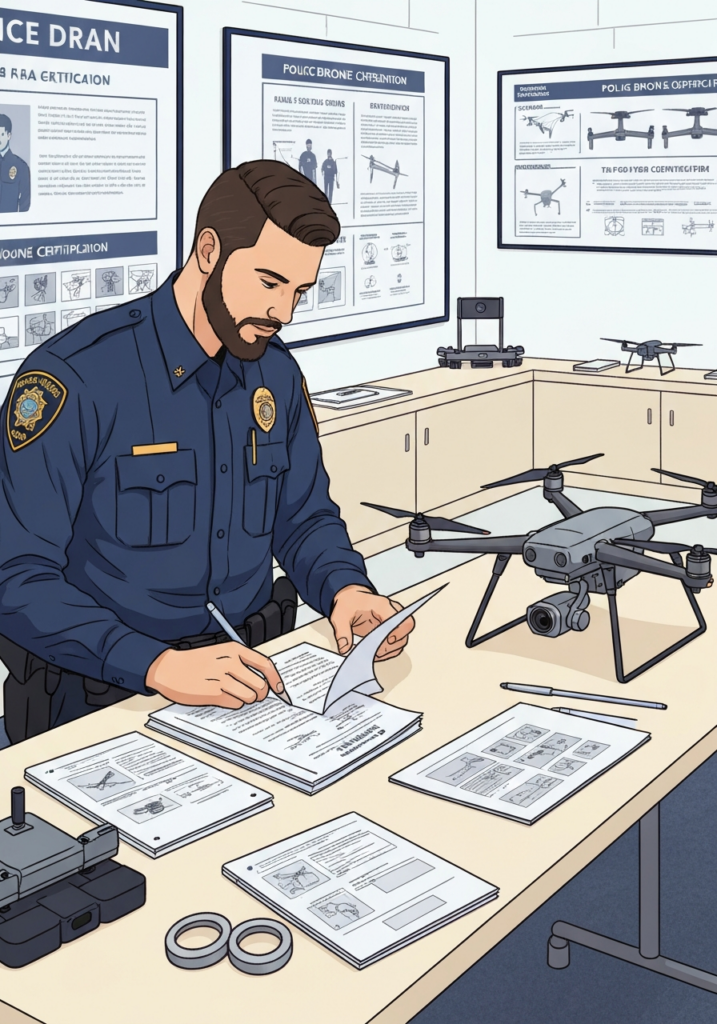
Beyond the FAA license, a successful drone program relies on establishing clear internal policies and best practices. A police department will develop its own standard operating procedures (SOPs) that dictate when and how drones can be used. This ensures consistency, accountability, and compliance with local and state laws.
Key components of certification and best practices include:
- FAA Part 107 Certification: The baseline requirement for drone pilots.
- Departmental SOPs: Clear guidelines for drone use, data storage, and reporting.
- Community Transparency: Policies for informing the public about the drone program.
Simulation Exercises and Scenario-Based Learning
Flying a drone in an open field is one thing; operating it during a high-stress police incident is another. That's why scenario-based learning and simulation exercises are critical components of training for law enforcement. These methods allow police officers to practice using the drone in realistic situations without any real-world risk.
Simulators can replicate complex environments and challenging conditions, preparing pilots for anything they might encounter in the field. Scenario-based learning might involve mock exercises, such as finding a suspect in a building or monitoring a simulated protest. This hands-on practice builds muscle memory and decision-making skills.
Training scenarios often include:
- Tactical Operations: Simulating support for a SWAT team during a raid.
- Search and Rescue: Practicing search patterns to find a hidden object or person.
- Emergency Response: Navigating the drone in chaotic, simulated disaster environments.
Ongoing Education and Technology Updates
The world of drone technology is constantly changing. New drones, sensors, and software are released all the time, and regulations can evolve. For this reason, training for a drone program can't be a one-and-done event. Ongoing education is essential to keep police officers' skills sharp and their knowledge current.
Law enforcement agencies must have a plan for continuous training. This includes regular flight practice to maintain proficiency and periodic classroom sessions on technology updates, new tactics, and changes in the law. This commitment to ongoing education ensures that the department's drone program remains effective, safe, and compliant.
Elements of ongoing education include:
- Recurrent Training: Regular practice flights and knowledge tests.
- Technology Updates: Briefings on new hardware, software, and capabilities.
- Legal and Policy Reviews: Staying current on the rules governing drone use.
Privacy, Ethics, and Regulations for Police Drones
The power of police drones comes with important responsibilities. The use of this technology naturally raises questions about privacy, ethics, and the potential for surveillance. For law enforcement agencies, balancing the public safety benefits of drones with the protection of civil liberties is a critical task. It's a conversation that involves community leaders, policymakers, and the public.
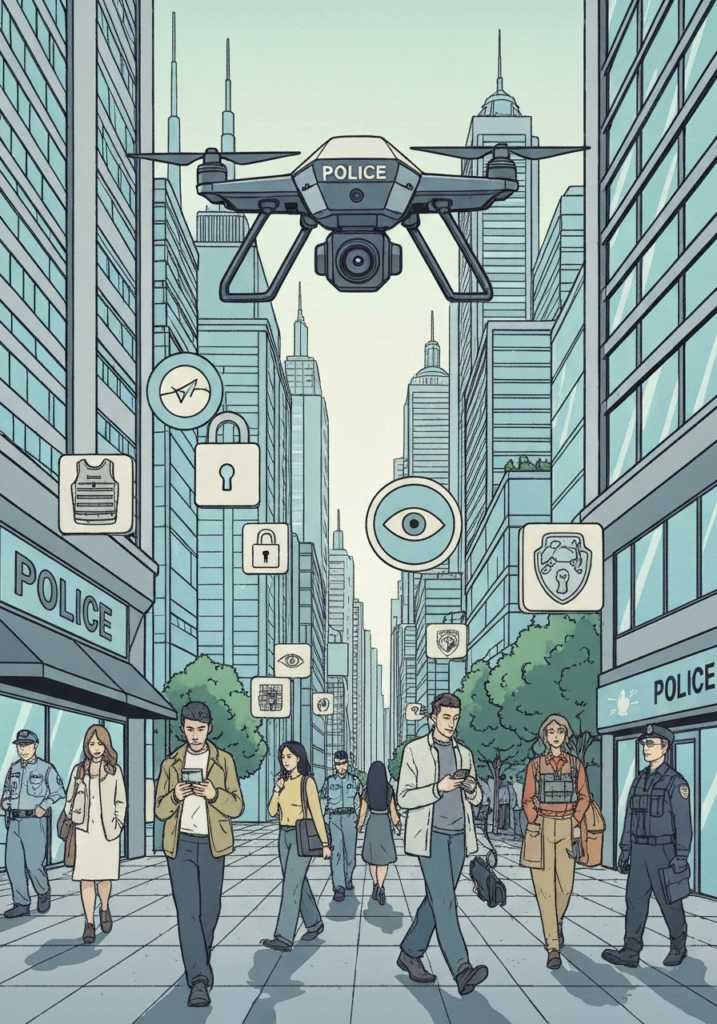
To address these concerns, a strong framework of regulations and transparent policies is essential. These rules govern how and when drones can be used, what happens to the data they collect, and how agencies are held accountable. This framework is key to building and maintaining public trust, which is the foundation of any successful police drone program. Exploring the policies in place helps to understand this balance.
Federal and State Policies Governing Drone Use
The use of drones by a police department is governed by a multi-layered system of regulations. At the national level, the Federal Aviation Administration (FAA) sets the rules for flight safety, airspace, and pilot certification. However, the FAA generally does not regulate how the collected data is used for surveillance purposes.
That role often falls to state and local governments. Many states have passed their own laws regarding drone use by law enforcement agencies, addressing privacy concerns directly. These state policies may require a warrant for surveillance in many situations, limit how long data can be stored, and mandate public reporting on drone usage to ensure transparency.
Key regulatory considerations include:
- Warrant Requirements: Many states require a warrant for using drones in a way that infringes on a reasonable expectation of privacy.
- Data Retention Policies: Rules on how long drone footage can be kept and for what purpose.
- Public Transparency: Mandates for agencies to publish their drone policies and usage logs.
Conclusion
In conclusion, police drones are revolutionizing modern law enforcement by enhancing operational efficiency and public safety. From surveillance and emergency response to crowd control, these high-tech tools provide invaluable support to officers on the ground. As technology continues to advance, the integration of features like thermal imaging and real-time video streaming will further empower law enforcement agencies. However, with this innovation comes responsibility, requiring adherence to privacy regulations and ethical considerations. It’s crucial for police departments to invest in ongoing training for officers to ensure they are well-equipped to operate these devices effectively. If you're interested in exploring how police drones can benefit your community, feel free to reach out for more information.
Frequently Asked Questions
What are the newest advancements in police drone technology in 2024?
In 2024, the newest advancements in law enforcement drones focus on improved AI, smaller and more powerful sensors, and enhanced real-time data streaming. This new technology is making drone technology more autonomous and capable of providing even more valuable information for public safety, all while becoming easier to deploy.
How do police drones help with crime scene investigations?
Police drones enhance crime scene investigations by providing aerial views, allowing for quick assessments of large areas. They collect detailed imagery and data, improving evidence documentation and scene analysis. This technology aids investigators in making informed decisions and increases efficiency in the overall investigative process.
What regulations guide police drone operations in the US?
Police drone use in the U.S. is guided by Federal Aviation Administration (FAA) regulations for flight safety and pilot certification. Additionally, many state and local laws impose further regulations on law enforcement, often requiring warrants for surveillance and mandating public transparency to address privacy concerns for any police department.
https://www.axon.com/blog/one-click-drone-requests
https://www.faa.gov/uas/programs_partnerships/completed/integration_pilot_program
https://www.bbc.co.uk/news/uk-england-sussex-26544168
https://www.faa.gov/uas/commercial_operators/operations_over_people
https://www.youtube.com/channel/UCvWP8PzAUCV0IOoppJZVLUg
https://www.dronepilotgroundschool.com/public-safety-drone
https://www.instagram.com/flocksafety
https://www.bbc.co.uk/news/uk-29717771
https://www.police1.com/drones/key-considerations-for-a-law-enforcement-drone-policy