Exploring Police Action Into Riots: Key Insights
 admin001
Understanding Police Action into Riots: A National Debate
Key Highlights
- The First Amendment protects the right to a peaceful protest, but this protection doesn't extend to violence or property damage.
- Law enforcement responses differ significantly between peaceful protests and riots to ensure public safety.
- Police use specific crowd control tactics, including dispersal orders and non-lethal tools like tear gas, to manage violent crowds.
- The use of force by police during riots is a point of national debate, with criticisms of excessive force and civil rights violations.
- Recent events have increased scrutiny on policing tactics, leading to calls for greater accountability and policy reform.
- Successful crowd control often involves unified command, joint training between agencies, and clear communication.
Introduction
The line between a peaceful protest and a riot can sometimes feel blurry, sparking a nationwide conversation about the role of law enforcement. While the First Amendment guarantees your right to assemble peacefully, what happens when a demonstration turns violent? This is where police action, crowd control, and public safety intersect, creating a complex and often controversial situation. Understanding the difference in police responses—from monitoring a peaceful protest to intervening in riots—is crucial for recognizing how constitutional rights are balanced with the need to maintain order.
The Right to Protest and Its Importance in US Society
Your First Amendment rights are a cornerstone of American democracy, protecting free speech and the ability to hold public demonstrations. These gatherings are a powerful way for citizens to voice concerns, advocate for change, and hold leaders accountable. It's a fundamental aspect of human rights within the United States.
However, the dynamic changes when a protest is no longer peaceful. Law enforcement agencies must differentiate between lawful assembly and unlawful, violent acts. This distinction is why police responses vary so much; one scenario involves protecting rights, while the other involves stopping criminal behavior and restoring public safety.
Constitutional Foundations and Freedoms
The U.S. Constitution, specifically the First Amendment, provides the legal foundation for your right to protest. This amendment guarantees the freedom of assembly and free speech, allowing you to gather publicly and express your views without government interference, as long as it's done peacefully.
These constitutional rights are essential, but they are not absolute. The protection ends where unlawful actions begin. For instance, if a demonstration involves violence, property destruction, or poses a direct threat to public safety, it is no longer shielded by the First Amendment.
This is the critical point where law enforcement's role shifts. Police responses vary between peaceful protests and riots because their legal obligations change. For peaceful events, the goal is to facilitate the exercise of constitutional rights. During riots, the priority becomes enforcing the law and protecting people and property from harm.
Intersections Between Public Assembly and Law Enforcement
When you participate in or observe a public assembly, you'll notice a police presence. The role of law enforcement during a peaceful protest is primarily to ensure public safety for everyone involved—protesters, counter-protesters, and the general public. Officers are there to manage traffic, keep pathways clear, and create a secure environment where people can exercise their rights.
The situation becomes more complex when a peaceful protest escalates. The police must determine the precise moment a gathering crosses the line into an unlawful assembly or a riot. This decision dictates their subsequent actions and is why responses differ so dramatically.
For a peaceful event, the police presence might be minimal and focused on facilitation. In contrast, once a protest becomes violent, law enforcement's mission pivots to crowd control and dispersal to prevent further harm. This shift is a necessary, albeit challenging, part of balancing civil liberties with public order.
Defining Riots Versus Peaceful Protests
A peaceful protest is a lawful public demonstration where participants express their views without violence. Law enforcement typically monitors these events to ensure safety. In contrast, a riot is characterized by unlawful behavior, such as violence, vandalism, and throwing objects at officers, which necessitates a more direct response.
When a crowd’s actions become criminal, police may declare an unlawful assembly and issue dispersal orders. If these orders are ignored, law enforcement may proceed with crowd control measures and mass arrests to restore order and protect the community from harm.
Legal Definitions and Gray Areas
Legally, a peaceful protest is protected activity. However, when a gathering becomes disruptive or violent, it can be classified as an unlawful assembly. A riot is a more severe classification, legally defined by tumultuous conduct that creates a grave risk of causing public alarm or damage.
There are, however, gray areas. A few individuals engaging in violence within a larger, peaceful crowd can complicate the police response. Deciding whether to target specific agitators or disperse the entire group is a critical judgment call for the on-scene commander. This is why a federal law enforcement officer might act differently than a local one, depending on jurisdiction and the specific threat.
Ultimately, police responses vary because the legal status of the gathering changes. An event that starts as a protected First Amendment activity can lose that protection once it descends into violence. Law enforcement's duty then shifts from protecting speech to enforcing laws against criminal acts, which justifies a more forceful intervention.
Common Triggers and Escalation Points
Civil unrest can escalate into rioting due to several common triggers. The transition from a peaceful gathering to a violent one often happens quickly, prompted by specific actions from either the crowd or law enforcement.
One of the most significant escalation points is the perception of an overly aggressive police presence or a premature use of force. When demonstrators feel their rights are being suppressed, it can fuel anger and lead to confrontation. Conversely, actions from within the crowd can also serve as triggers.
Common triggers for escalation include:
- Protesters throwing objects like water bottles or rocks at officers.
- Individuals damaging property or breaching police barriers.
- The issuance of dispersal orders that are perceived as unjust or are ignored.
- A heavy-handed police response to minor infractions.
Historical Context of Police Response to Riots
The history of police responses to riots and civil unrest in the United States is long and complex. Throughout the decades, historical events have continuously shaped and reshaped policing tactics. From the civil rights movement of the 1960s to more recent demonstrations, the way the police force manages large-scale disturbances has evolved.
This evolution is a direct result of lessons learned from past conflicts. Law enforcement agencies have had to adapt their strategies based on public reaction, legal challenges, and the changing nature of protests themselves, leading to the development of modern crowd control techniques.
Key Moments That Shaped Policing Tactics
Recent history contains several pivotal moments that have profoundly impacted policing tactics during protests. The demonstrations across the country following the death of George Floyd in 2020 marked a significant turning point, bringing the actions of law enforcement agencies under an intense public and media spotlight.
The massive Black Lives Matter protests in cities like New York and Los Angeles saw widely different police responses, from de-escalation attempts to forceful crowd dispersals. These events highlighted inconsistencies and sparked a national conversation about the appropriate use of force and the militarization of police.
The widespread unrest led to intense scrutiny of police conduct. The public, armed with smartphones and social media, documented interactions in real-time, holding departments accountable in an unprecedented way. This has forced many agencies to re-evaluate their training, equipment, and overall approach to managing civil disturbances.
Evolution of Laws and Policies Over Decades
Over the years, laws and policies governing police responses to protests have undergone significant changes. Early approaches often relied on overwhelming force, but legal challenges and a greater understanding of crowd psychology have pushed many agencies toward more nuanced strategies.
In response to past events, new policies have been developed at both local and federal law enforcement levels. These rules often place stricter limits on the use of certain crowd control tools and emphasize the protection of constitutional rights. For example, some states have passed laws restricting the use of tear gas unless a riot has been declared.
The increased scrutiny following recent riots has accelerated this evolution. With public trust in law enforcement on the line, police departments are facing pressure to adopt policies that prioritize de-escalation and targeted arrests over indiscriminate force. This shift aims to better balance public safety with the civil liberties of demonstrators.
How Do Police Typically Respond to Riots?
When a protest turns into a riot, law enforcement's response becomes structured and deliberate. The initial police presence, which may have been for observation, transforms into an active crowd control operation. Police officers may be replaced or supplemented by specialized riot police trained for such situations.
In more extreme cases of civil unrest, the National Guard may be called in to support local authorities. The goal is to contain the violence, protect property, and disperse the crowd using established procedures and tactics designed to restore order with a measured level of force.
Standard Operating Procedures and Commands
In a riot situation, law enforcement agencies operate under a strict chain of command. An incident commander, often positioned at a command post away from the front lines, coordinates resources and makes key strategic decisions. On the ground, a field commander directs the movements of riot police.
A typical response begins with a formal declaration that the gathering is an unlawful assembly. This is followed by repeated dispersal orders, often announced using a Long Range Acoustic Device (LRAD) to ensure the crowd can hear them. Protesters are given a reasonable amount of time to leave the area.
If the crowd does not disperse, the field commander will authorize crowd control tactics. These movements are practiced and precise, designed to disperse the crowd methodically. This structured approach ensures that actions are coordinated and that the use of force is controlled and justified according to established protocols.
Deployment of Riot Squads and Specialized Units
When a situation escalates to mass unrest, specialized units are deployed. Riot squads are teams of officers specifically trained and equipped to handle violent crowds. These officers wear protective riot gear and are skilled in team tactics for arrests and crowd dispersal. Their deployment signals a significant shift from monitoring to active intervention.
In large-scale events, other specialized units like the National Guard may be activated to support local law enforcement. Their role is to provide additional manpower and resources to help restore order. Aerial support, such as helicopters, plays a crucial role by providing an overhead view of the scene. This allows the incident commander to monitor crowd movements, identify key agitators, and direct ground units more effectively.
The deployment of these units is a calculated decision based on the level of threat. Their presence is intended to be a visible deterrent and a means to manage the chaos systematically, regain control of the streets, and prevent further escalation of violence.
Tools and Equipment Used During Crowd Control
During a riot, police deploy a range of specialized tools and equipment for crowd control. These are often referred to as "less-lethal" or "non-lethal" options, designed to disperse violent crowds without causing deadly harm. Common crowd control agents include tear gas and pepper spray, which cause temporary irritation and disorientation.
In addition to chemical irritants, officers use physical tools like rubber bullets, riot gear for protection, and barriers to control movement. The choice of which tools to use depends on the situation's severity and the department's specific policies on use of force.
Use of Riot Control Agents (Tear Gas, Pepper Spray)
One of the most common tactics police use to control rioting crowds is the deployment of riot control agents. These chemical compounds are meant to disperse large groups by causing temporary physical discomfort. The two most frequently used agents are tear gas (CS gas) and pepper spray (OC spray).
The use of tear gas is often a last resort after dispersal orders have been ignored. It is deployed to create an environment where it is difficult for a crowd to remain, forcing them to leave the area. Pepper spray is typically used in a more targeted manner against specific individuals who are resisting arrest or acting violently.
While effective for crowd control, the use of these weapons is controversial due to health risks, such as respiratory failure or severe depressive symptoms in some individuals.
| Agent | Type | Effects |
|---|---|---|
| Tear Gas (CS Gas) | Chemical Irritant | Causes burning sensation in the eyes, mouth, and throat; difficulty breathing; disorientation. |
| Pepper Spray (OC Spray) | Inflammatory Agent | Causes intense eye pain, temporary blindness, and a burning sensation on the skin. |
Protective Gear, Barriers, and Non-Lethal Weapons
Beyond chemical agents, police employ various physical tools and non-lethal weapons to manage riots. The most visible is the protective riot gear worn by law enforcement officers. This gear, including helmets, shields, and body armor, is essential for protecting officers from projectiles and physical attacks.
Barriers are another key tactic. These can be simple police lines, metal barricades, or even police vehicles used to block streets and guide crowd movement. They help establish a perimeter and prevent rioters from advancing into certain areas.
Officers also use several types of non-lethal weapons to control crowds from a distance. These tools are intended to gain compliance without resorting to lethal force. Common examples include:
- Rubber bullets and bean bag rounds, which are projectile weapons designed to cause pain but not penetrate the skin.
- Acoustic devices (LRADs), which can emit loud, disorienting noises.
- Batons, used for self-defense and to push back aggressive individuals.
Comparative Analysis: Peaceful Protests vs. Riots
The way law enforcement approaches public demonstrations depends entirely on whether they are peaceful protests or riots. During a peaceful protest, the police role is to protect the protesters' rights and ensure public safety, often with a minimal and non-confrontational presence.
When a protest becomes a riot, the police mission shifts to crowd control and law enforcement. Tactics become more direct and forceful as officers work to stop violence, protect property, and disperse the unlawful assembly. This stark difference in approach is at the heart of the national debate.
Differences in Police Tactics and Presence
The police presence at a peaceful protest is usually low-key. Officers might be seen directing traffic or standing at a distance, with the primary goal of facilitation rather than intervention. Their tactics are focused on de-escalation and communication to ensure the event remains safe and orderly.
In contrast, the response to a riot involves a much heavier and more visible police presence. Officers will likely be in riot gear, forming lines to create barriers and project authority. The use of force becomes a primary tool, with riot control measures like chemical agents and non-lethal projectiles deployed to disperse the crowd.
This variation exists because police departments are responding to fundamentally different situations. A peaceful protest is a lawful exercise of rights, whereas a riot is a public safety crisis involving criminal acts. The tactics must match the circumstances, which is why a response can shift from passive monitoring to active enforcement so quickly.
Case Studies Highlighting Varied Approaches
Recent events provide clear examples of how police responses can vary dramatically. During the 2020 protests, law enforcement agencies in cities like New York City and Los Angeles demonstrated a wide spectrum of tactics, sometimes within the same week.
For example, some demonstrations were allowed to proceed with minimal police interference, while others were met with aggressive tactics and mass arrests. These inconsistencies have fueled claims that responses are sometimes unfair, with some observers arguing that police have responded harshly to peaceful protests while being unprepared for actual riots. One such instance in Maple Grove, Minnesota, showed a highly coordinated response to a protest that turned violent, resulting in arrests but no injuries.
Here are some contrasting examples from recent events:
- A protest outside an ICE facility in Portland saw federal officers use tear gas on a crowd that included nonviolent demonstrators.
- In Maple Grove, a well-trained Public Order Group managed a disturbance with disciplined team movements and targeted arrests, earning praise for their professionalism.
- During some Black Lives Matter marches, police chose to de-escalate by communicating with protest leaders.
- In other cases, a heavy police presence and preemptive use of force led to rapid escalation.
Criticisms and Controversies Surrounding Police Actions
Police actions during riots are frequently a source of intense criticism and controversy. The primary concerns often revolve around the use of force, with many arguing that tactics escalate violence rather than quell it. Accusations of police brutality and violations of civil rights are common.
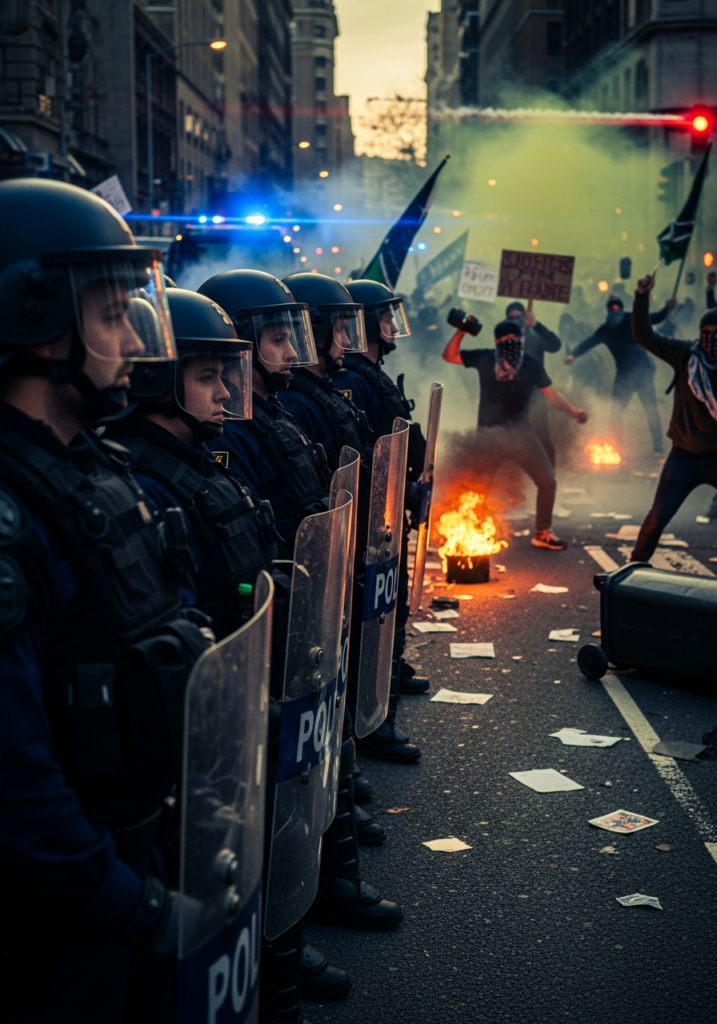
Critics also point to what they see as a disproportionate response, where peaceful protesters are caught up in aggressive crowd control measures. This has led to a heated national debate about the role of law enforcement and whether current methods are effective or counterproductive.
Claims of Excessive Force and Civil Rights Concerns
A major criticism leveled against police during riots is the claim of excessive force. This occurs when the level of force used by officers is greater than what is reasonably necessary to control a situation. Incidents where nonviolent protesters or journalists are hit with rubber bullets or tear gas often lead to lawsuits and public outcry.
These actions raise serious civil rights concerns. Critics argue that indiscriminate use of force violates demonstrators' constitutional rights, including the First Amendment right to assemble and the Fourth Amendment protection against unreasonable seizures. When police violence is perceived, it can erode trust between the community and law enforcement.
The argument is that even in a riot, the response should be targeted at those committing crimes, not the entire crowd. Dispersing thousands of people with chemical agents because of the actions of a few is seen by many as a collective punishment that infringes on the rights of everyone present.
Arguments for and Against Militarization of Police
The "militarization" of police refers to the use of military-style equipment, tactics, and mindset by domestic law enforcement. This is a central point of contention in discussions about riot responses.
Proponents argue that this equipment is necessary for public safety. They believe that heavily armed tactical units are essential for protecting officers and civilians when faced with violent rioters and extreme situations like active shooters. From this perspective, militarization is a practical response to increasing threats.
Opponents, however, claim that it escalates tensions and makes police departments look like an occupying force rather than community protectors. The main criticisms include:
- It creates a "warrior" mindset in officers instead of a "guardian" one.
- The intimidating presence of armored vehicles and heavily armed officers can provoke violence.
- It blurs the line between the military's role (fighting enemies) and the police's role (protecting citizens).
- There is a lack of training and accountability for the use of such powerful equipment.
Impact of Recent High-Profile Riots on National Debate
Recent high-profile events, especially the protests following the death of George Floyd, have dramatically intensified the national debate on policing. The widespread civil unrest and the varied police responses were broadcast across traditional and social media, shaping public opinion in real time.
This constant stream of information has led to unprecedented scrutiny of law enforcement tactics. The actions of officers during riots are no longer just local news; they are national and international stories that fuel calls for reform, accountability, and a re-evaluation of how police manage protests.
Shifts in Public Opinion and Political Reactions
The widespread media coverage and social media sharing of recent riots have caused significant shifts in public opinion. Views on police actions are often sharply divided and can be influenced by political affiliation, personal experiences, and the source of information one trusts, from Fox News to other outlets.
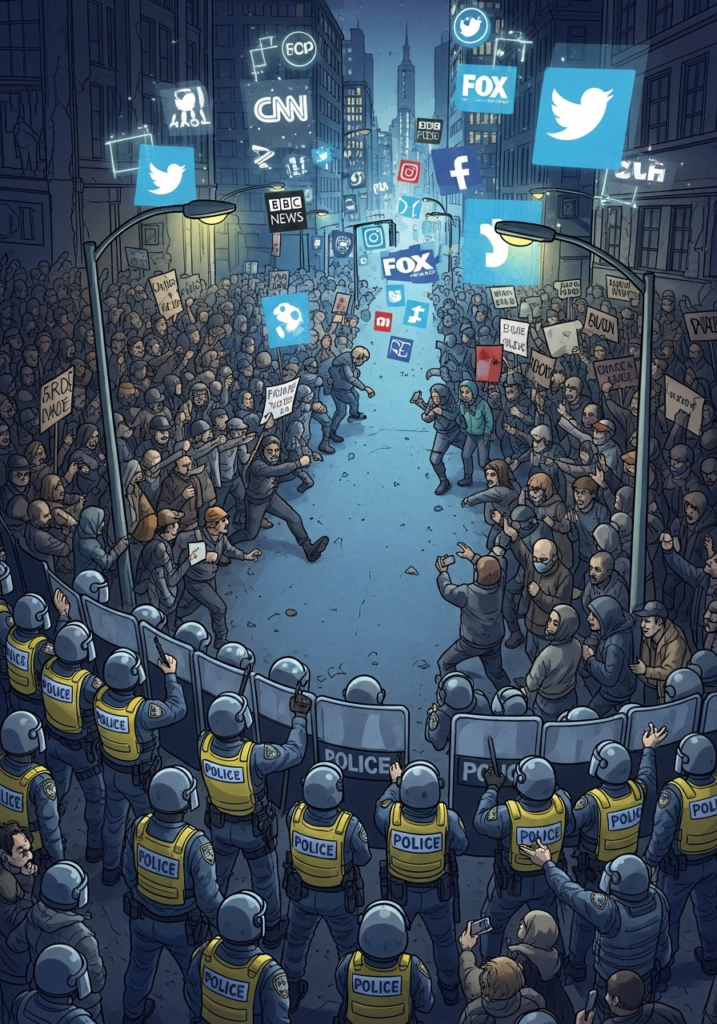
On one side, many people see police as a necessary force for maintaining order and are supportive of strong measures to stop rioting and property damage. They may view protesters as criminals and believe that forceful tactics are justified. Political reactions from this viewpoint often involve calls for "law and order" and increased support for law enforcement.
Conversely, others view the police response as overly aggressive and a violation of civil rights. They are more likely to sympathize with protesters and see police actions as a primary cause of escalation. This perspective fuels political reactions demanding police reform, demilitarization, and greater accountability for officers' misconduct, keeping the national debate active.
Increased Scrutiny and Calls for Accountability
One of the most significant outcomes of recent riots is the heightened scrutiny placed on law enforcement. With nearly every officer now equipped with a body-worn camera and every citizen armed with a smartphone, police actions are documented like never before. This has pulled back the curtain on crowd control tactics.
This increased visibility has fueled powerful calls for accountability. When misconduct or excessive force is captured on video, there is immense public pressure on police departments and prosecutors to take action. Citizens are demanding better oversight mechanisms, such as civilian review boards and stricter use-of-force policies.
The result is that police departments are finding it harder to operate without transparency. The scrutiny from the public, media, and even other government bodies is forcing a re-evaluation of training, policies, and culture within law enforcement to rebuild trust and ensure that officers are held responsible for their actions.
Conclusion
In summary, understanding police action during riots is crucial in navigating the complexities of public protests and law enforcement responses. It is essential to recognize the fine line between maintaining order and respecting the right to protest, as well as the historical context that shapes current tactics. As we engage in this national debate, it's important to consider diverse perspectives and the implications of police actions on community relations. Increased scrutiny and calls for accountability highlight the necessity for reform and dialogue. If you wish to delve deeper into this subject, feel free to reach out for a free consultation. Together, we can explore these pressing issues and their impact on society.
Frequently Asked Questions
Can Police Actions During Riots Sometimes Escalate Violence?
Yes, police actions can sometimes lead to escalation. An aggressive police presence, premature use of force, or indiscriminate crowd control tactics can be perceived as police violence by a crowd. This can provoke anger and turn a tense situation into a more violent one, undermining efforts to de-escalate.
What Tactics Do Police Use to Control Riots Safely?
To control riots, police officers use layered crowd control tactics. These include issuing clear dispersal orders, forming police lines to create barriers, and using non-lethal weapons like pepper spray and tear gas to disperse crowds. The goal is to restore order while minimizing serious injuries to both officers and civilians.
Have Some Police Responses Effectively Prevented Chaos?
Yes, some police responses have been effective. Well-trained law enforcement teams using coordinated riot control tactics, targeted mass arrests of violent individuals, and clear communication have successfully de-escalated situations and restored public safety without widespread chaos or injury, sometimes with support from the National Guard.
https://search.worldcat.org/issn/1467-9736
https://search.worldcat.org/issn/1080-6490
https://search.worldcat.org/issn/1462-5989
https://pubmed.ncbi.nlm.nih.gov/25992868
https://www.ncbi.nlm.nih.gov/pmc/articles/PMC7762908
https://www.nytimes.com/interactive/2020/07/03/us/george-floyd-protests-crowd-size.html