How Border Police and Law Enforcement Agencies Collaborate
 admin001
How Border Police and Law Enforcement Agencies Operate Together
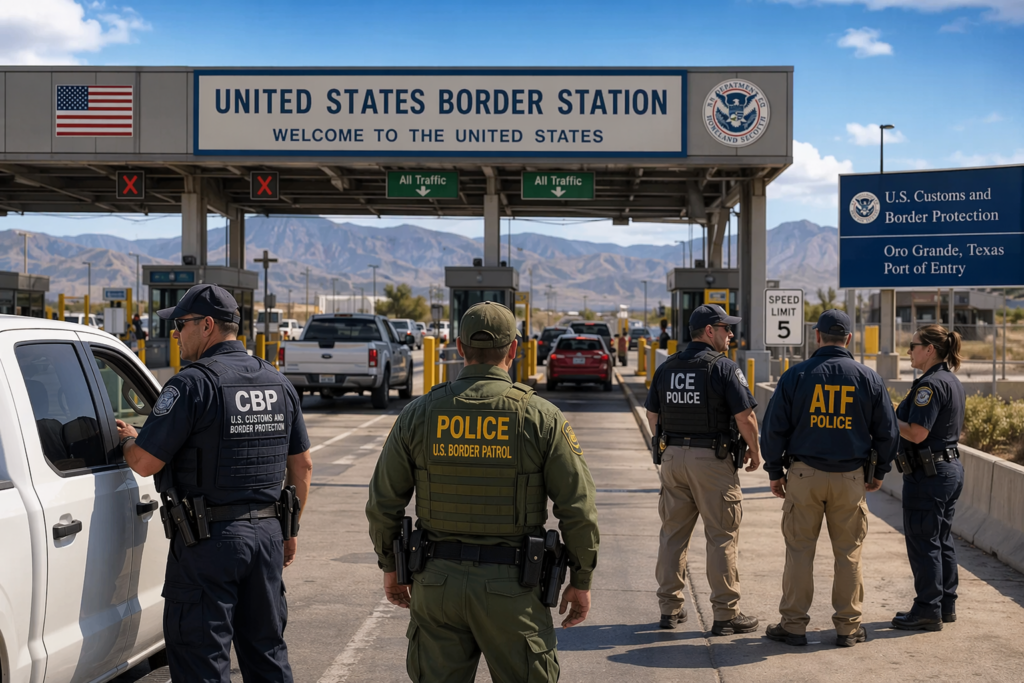
Key Highlights
- In the United States, border protection depends on close teamwork between border patrol agents and other law enforcement agencies.
- Border Patrol focuses on areas between ports of entry, while CBP officers handle screening and customs enforcement at official crossings.
- This system is part of federal law enforcement under the Department of Homeland Security.
- Agencies share information, staff joint task forces, and support public safety goals.
- Border operations use technology, training, and clear legal rules.
- Even with broad powers, officers still face federal law and civil rights limits.
Introduction
Border security in the United States is not handled by one office alone. It depends on many law enforcement teams working side by side across the border, ports, coastal areas, and parts of the interior of the United States. You may hear about Border Patrol most often, but that is only one piece of a larger system. To understand how these groups operate together, it helps to look at their roles, legal authority, and how daily cooperation supports safety and enforcement.
Overview of U.S. Border Police and Law Enforcement Agencies
In the United States, border work involves several law enforcement agencies, not just border patrol. The largest role sits with U.S. Customs and Border Protection, which includes Border Patrol, CBP officers at ports of entry, and air and marine units that support border control field operations.
At the same time, customs enforcement and immigration work also involve ICE, the Coast Guard, and Department of Justice partners, including the Criminal Alien Program. Each group has a different mission, but they connect through shared operations. That structure becomes clearer when you look at roles, powers, and jurisdiction.
Defining Roles and Responsibilities
Border patrol agents focus on areas between official crossings. Their main job is to deter, detect, and stop unlawful entry, including illegal immigration, human smuggling, terrorist weapons, and other contraband. Some of the major activities include patrolling sections of the international boundary and some coastal areas.
By contrast, customs enforcement at ports of entry is handled by CBP officers. These officers inspect travelers, freight trains, and documents. They decide who may enter the country and who may be sent to secondary inspection, removal proceedings, or criminal prosecution when fraud or smuggling is suspected.
Local police agencies serve a different purpose. They mainly protect neighborhoods, respond to crimes, and support public safety under state or local law. So while both groups wear badges and enforce rules, highway patrol personnel focus on federal border protection duties rather than everyday local policing.
Key Differences Between Border Patrol and Local Police
Border patrol is part of federal law enforcement, while local police and state police work under city, county, or state authority. That alone shapes what each group can do. Border Patrol agents are law enforcement officers, but their authority is tied to immigration and border-related duties under federal law.
You can see the difference in daily work:
- Border Patrol patrols between ports of entry and near the border.
- Local police respond to community crime, traffic issues, and emergency calls.
- Border Patrol may run interior checkpoints tied to immigration enforcement.
- Local law enforcement usually cannot enforce civil immigration violations on its own.
Another key difference is legal power near the border. Border Patrol agents may use authorities tied to the border search exception and immigration checkpoints that regular local police do not have. Still, they are not general-purpose police for every state offense.
Understanding Jurisdiction and Scope
Jurisdiction decides where an agency can act and what laws it can enforce. For border protection, that usually means the border itself, ports of entry, nearby zones, and certain enforcement activity within a 100-air-mile area from an external boundary.
Under federal law, the national border patrol's Border Patrol sits inside U.S. Customs and Border Protection, which is part of the Department of Homeland Security. That means its mission is national, not local. Its work covers the southwest border, the northern border, and some coastal regions.
This scope is broad, but not unlimited. Border Patrol does not have a free hand to enforce every kind of law everywhere. Its authority is strongest when tied to immigration, customs-related activity, and border security. That federal structure sets up how the larger system is organized next.
Federal Structure and Organization of Border Police
Border patrol and customs enforcement operate inside a large federal law enforcement framework, including national parks. The central agency is U.S. Customs and Border Protection, which falls under the Department of Homeland Security and includes several major operational branches.
Within that structure, different offices handle different tasks. Border Patrol works between ports of entry, the Office of Field Operations manages inspections, and air and marine units provide surveillance and support. To see how these pieces connect, it helps to break down the CBP structure and command system.
U.S. Customs and Border Protection (CBP) Structure
CBP is one of the largest law enforcement agencies in the federal government. Its mission is to secure the border and ports of entry while enforcing immigration, customs, and agricultural laws. Border patrol officers work diligently to fulfill this mission. At the same time, it also supports lawful trade and travel, which is a big part of how border protection works in practice.
The agency sits within the Department of Homeland Security and is divided into major branches. Each one handles a different part of the mission, from inspections to field patrols to maritime and air surveillance.
| CBP Component | Primary Role |
|---|---|
| Office of Field Operations | Manages CBP officers at ports of entry and inspects people and goods |
| U.S. Border Patrol | Patrols areas between ports of entry and interdicts unlawful entry |
| Air and Marine Operations | Provides aerial and maritime surveillance, interdiction, and technical support |
Together, these branches give CBP a broad but organized role across the border environment.
Border Patrol Chain of Command
Border patrol does not work as a stand-alone force. It is part of CBP, and CBP is under the Department of Homeland Security. That means decisions, resources, and policy flow through a formal chain of command rather than through local governments.
Inside CBP, Border Patrol is separate from the Office of Field Operations. OFO handles ports of entry, while Border Patrol manages areas between those crossings. Air and Marine units support both sides with surveillance, aircraft, marine craft, and other tools.
This setup matters because it keeps missions clear. Agents in the field report upward through federal supervisors, not local sheriffs or city chiefs. That structure also makes joint operations easier, since each office knows its role and where it fits within broader border security planning.
Integration with Other Federal Agencies
CBP works closely with other federal law enforcement partners because border threats often overlap. A smuggling case may involve immigration enforcement, drug enforcement, firearms tracing, customs enforcement, and criminal prosecution all at once. No single agency can handle every piece alone.
That is why the Department of Justice plays a major role. The FBI, DEA, ATF, U.S. Marshals, and U.S. Attorneys, along with the Internal Revenue Service, all support border-related cases. ICE also joins these efforts through investigations, removals, and multi-agency programs. Shared law enforcement training and regular coordination help these teams operate under common rules.
Federal operations can also include local support. In programs and task forces, border officers may share intelligence with police departments or work side by side during targeted enforcement. Those partnerships become even more visible in later sections on joint operations and task forces.
Main Duties and Powers of U.S. Border Patrol Agents
Border patrol agents are central to border security between official crossings. Their work includes detecting unlawful entry, stopping contraband including pounds of cocaine, and supporting border protection in remote areas, coastal zones, and parts of the northern and southwest border.
Yet their role is not just about watching the line. They also use specific law enforcement powers tied to immigration stops, searches, and checkpoints. Those powers are broader than what many local officers have, but they still come with legal boundaries. The next sections explain those duties in plain terms.
Enforcement of Immigration Laws
A core duty of border patrol agents is immigration enforcement between ports of entry, including the island of Puerto Rico. They look for unlawful crossings, monitor routes used for illegal immigration, and stop the movement of people who enter outside legal inspection channels. This work is especially concentrated along the southwest border.
Their job also includes identifying cases tied to smuggling or fraud. When facts support it, agents can refer cases for criminal prosecution. That may happen when there is evidence of organized transport, document fraud, or other offenses connected to border crossing activity.
Local police usually do not lead this type of work. They are focused on local crime and public order, while Border Patrol is charged with federal immigration duties. So if you compare the two, Border Patrol is more specialized and mission-driven around border movement and entry violations.
Authority to Conduct Stops and Searches
Border Patrol agents have special authority to stop and question people in border-related settings. At fixed interior checkpoints, vehicles may be stopped briefly without individualized suspicion if the checkpoint follows lawful procedures. That is one of the best-known differences between border enforcement and routine policing.
Away from checkpoints, the rules change. Roving patrol stops require reasonable suspicion based on objective facts suggesting an immigration violation or related crime. A broader search still needs probable cause, consent, or another valid legal basis. So the power is strong, but it is not unlimited.
The border search exception also gives officers wider search authority at the border and its functional equivalent, as established in United States v. Ramsey. In practical terms, that means border-related inspections can happen without the warrant rules you might expect elsewhere. Regular police officers generally do not have that same border-based authority.
Unique Powers Compared to Local Police
Border patrol agents are law enforcement officers, but their powers come from federal immigration and customs statutes rather than local criminal codes. That gives them tools designed for border protection, not general patrol work. These powers exist because their mission is tied to entry, inspection, and interdiction.
Some of their unique authorities include:
- Operating at or near the border under the border search exception
- Conducting brief stops at fixed interior checkpoints
- Enforcing immigration laws tied to unlawful entry and removability
- Working within a 100-mile border zone under specific federal regulations
Local police do not normally have those same powers. They cannot usually arrest someone for a civil immigration issue unless a formal authorization exists. So while Border Patrol agents may look similar to police officers, their legal reach is specialized and tied closely to federal border work.
Legal Authorities and Constraints
Border patrol operates under broad federal law, but broad does not mean unlimited. Like other law enforcement agencies, border personnel must follow statutes, agency rules, and constitutional protections that shape how they stop, search, question, and detain people.
That balance matters for civil rights. The government gives border officers tools that local agencies may not have, yet those tools still come with limits on reasonableness, duration, and location. To understand the system clearly, you need to look at both the legal basis and the guardrails.
Statutory Basis for Operations
The authority of border patrol agents comes mainly from federal law covering immigration and customs enforcement. These laws allow officers to inspect people and goods at the border, patrol between ports of entry, and carry out certain immigration-related actions near the border.
That legal structure also supports cooperation with the Department of Justice. When agents uncover evidence of smuggling, fraud, or other crimes, cases may be referred for criminal prosecution by U.S. Attorneys. In that sense, Border Patrol does not work in isolation. It feeds into a larger federal enforcement process.
Still, the law places limits on officers. CBP does not have a general police power to enforce state criminal law in the same way local departments do. Their powers must stay tied to federal border missions, and actions beyond that must fit clear legal authority.
Constitutional and Legal Limitations
Even in border protection work, constitutional law still matters. The Fourth Amendment continues to apply, which means officers must act reasonably during stops, searches, and detention. The border setting lowers some privacy expectations, but it does not erase civil rights.
For example, reasonable suspicion is required for roving patrol vehicle stops away from checkpoints. Officers cannot rely on race or ethnicity alone. They need specific, objective facts connected to an immigration violation or related offense. Detentions also must be limited in scope and length.
There are other hard lines too. Border officers may not arbitrarily stop vehicles anywhere they want, and they cannot enter private homes without a warrant or valid legal justification. So while the legal framework is strong, it is still bounded by the Constitution and by agency limits.
Rights of Individuals at the U.S. Border
If you are stopped at the border, your rights still exist, even though border security rules allow more inspection than you may see elsewhere. The border search exception permits many searches without a warrant, and that applies to both citizens and noncitizens at the border or its functional equivalent.
Still, border patrol agents and other CBP personnel must act within legal boundaries. A search or detention must remain reasonable. Away from the border, especially in roving stops, agents need proper grounds such as reasonable suspicion. Entering homes or extending detention without legal support crosses those limits.
This means civil rights remain part of the picture. If someone believes officers acted outside their authority, records, paperwork, and legal advice, including those from a naturalization service, become important. Knowing these rights helps people understand both the reach and the restraint built into border enforcement.
Cooperation Between Border Police and Law Enforcement Agencies
Border patrol is most effective when it works with other law enforcement agencies. Smuggling routes, trafficking networks, and cross-border crime rarely stay inside one jurisdiction, so federal law enforcement and local law enforcement often need shared plans and quick communication.
This cooperation can take several forms, from intelligence exchanges to formal task forces and support during field operations. Each agency keeps its own role, but success often depends on how well they connect. The next sections show what that teamwork looks like on the ground.
Information Sharing and Joint Task Forces
A major part of cooperation is information sharing. Border patrol may identify suspicious movement, vehicles, or smuggling patterns, then pass that data to partner law enforcement agencies. In return, local or federal investigators may provide leads, case history, or operational support.
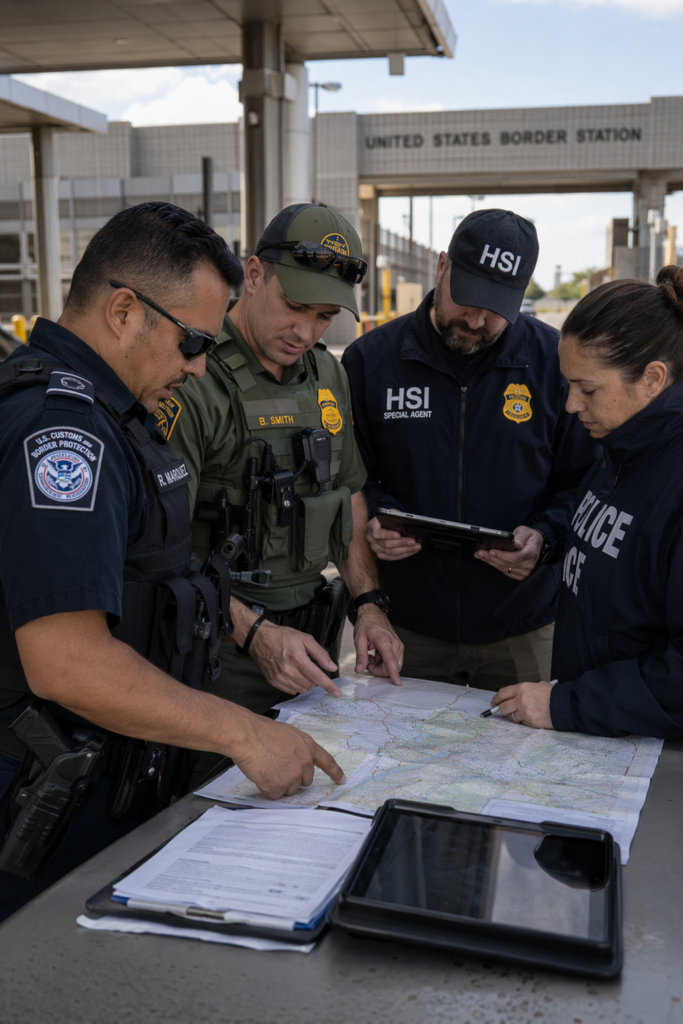
Joint task forces turn that exchange into action. These teams bring together people from different offices so that intelligence, arrests, prosecution, and follow-up all happen in one coordinated structure. That helps reduce gaps between field interdiction and long-term investigations.
Common forms of cooperation include:
- Shared intelligence on human smuggling, drug routes, and trafficking groups
- Joint task forces that combine federal, state, local, tribal, and foreign partners
- Support from prosecutors and investigators after border arrests
- Coordinated targeting of criminal organizations rather than single incidents
This model is used widely in modern border enforcement.
Protocols During Border Security Operations
During border security operations, agencies follow protocols that keep roles clear. Border patrol agents usually handle immigration-related interdiction and field contact near the border, while police officers from local departments may assist with traffic control, public safety, perimeter support, or follow-up criminal matters.
These protocols matter because border missions can involve several moving parts at once. One team may detect activity, another may track vehicles, and another may prepare a prosecution or detention transfer. Without set procedures, overlapping authority could create confusion in the field.
The goal is not to merge agencies into one force. It is to create orderly cooperation. Clear protocols help officers know who leads, who supports, what evidence is shared, and how a stop or arrest fits within federal and local rules. That structure keeps operations safer and more effective.
Communication Systems and Technology Integration
Technology helps communication move faster between law enforcement agencies. Border operations rely on cameras, radar, electronic sensors, databases, and video monitors to detect movement and support field decisions. When agencies share access to useful information, response times improve.
Air and Marine support, provided by the office of air, is especially important here. CBP uses aircraft, marine craft, and unmanned aerial vehicles to watch strategic locations and identify smuggling activity. Those tools help ground teams from Border Patrol and partner agencies focus resources where they matter most.
Examples of technology integration include:
- Shared surveillance support from aircraft and unmanned aerial vehicles
- Electronic sensors, cameras, and radar tied to field response
- Databases and communications systems used during joint operations
In practice, better communication means better coordination, especially across remote areas and busy border corridors.
Multi-Agency Operations and Task Forces
Some of the clearest examples of cooperation appear in multi-agency operations. These efforts bring border patrol together with federal law enforcement, prosecutors, investigators, and often state or local law enforcement agencies for a shared goal.
The value of this model is simple. Border crime can involve drugs, weapons, immigration violations, finances, and organized groups at the same time. A multi-agency response lets each office handle the part it knows best. The following examples show how that works in real settings.
Operation Ardent Vanguard and Its Impact
Operation Ardent Vanguard is a useful example of how border enforcement can stretch beyond one agency. Federal operations like this typically draw on intelligence, investigators, and field officers from different parts of the enforcement system rather than relying on a single unit.
In practical terms, that means border-related personnel may identify patterns or suspects, while other law enforcement agencies handle linked criminal pieces, local leads, or follow-up action. A case can move from detection to arrest to prosecution only when those pieces connect well. That is the heart of joint enforcement.
Even in places far from the southwest border, including states such as New York, and El Paso, border-linked investigations can involve local cooperation. The impact of operations like this is not just arrests. It is the creation of a coordinated approach that ties border intelligence to broader public safety work.
Border Enforcement Security Task Forces (BEST)
The BEST program is one of the strongest examples of a true security task force model. Led through Homeland Security Investigations, these teams target criminal organizations that threaten border enforcement on both the southern and northern borders.
What makes BEST important is its membership. It can include ICE, CBP, DEA, ATF, FBI, the U.S. Coast Guard, U.S. Attorney’s Offices, and other federal law enforcement partners. State, local, tribal, and even foreign law enforcement may also join. That creates a wide operational picture around one threat.
So how does the BEST program involve cooperation with border enforcement agencies? Border officers provide field knowledge and interdiction support, while investigative agencies build larger cases against networks involved in smuggling, trafficking, and other cross-border crime. It is cooperation by design, not by chance.
Case Studies of Successful Cooperation
Successful case studies in border enforcement usually share one pattern: one agency finds the activity, another adds investigative reach, and another handles prosecution or detention. That sequence shows why law enforcement cooperation matters more than isolated action.
For example, a stop near ports of entry may begin with inspection or field observation, then move to ICE or Department of Justice partners if the facts suggest a larger smuggling network. In other cases, local officers support a federal operation with area knowledge, road coordination, or suspect identification.
Common cooperation points include:
- Border detections that lead to broader federal investigations
- Shared operations at or near ports of entry
- Local support that helps federal teams act quickly and safely
These examples show a practical truth: the most effective border work is usually shared work.
Training, Capabilities, and Equipment
Border patrol relies on more than manpower. Strong law enforcement training, specialized equipment, and modern technology all shape what agents can do in the field on major highways. These capabilities help officers patrol long distances, monitor hard terrain, and respond to changing smuggling tactics.
At the same time, tools are only useful when paired with clear skills and sound judgment. Training helps officers work safely, legally, and effectively in demanding conditions. The next sections look at preparation, standard issue tools, and the real challenges agents face every day.
Specialized Training for Border Operations
Border operations require a different skill set than routine patrol work in a city. Agents need law enforcement training that fits long-distance patrol, remote terrain, surveillance support, and immigration enforcement. Because border patrol is part of a federal structure, its training in New Mexico supports a national mission rather than a local one.
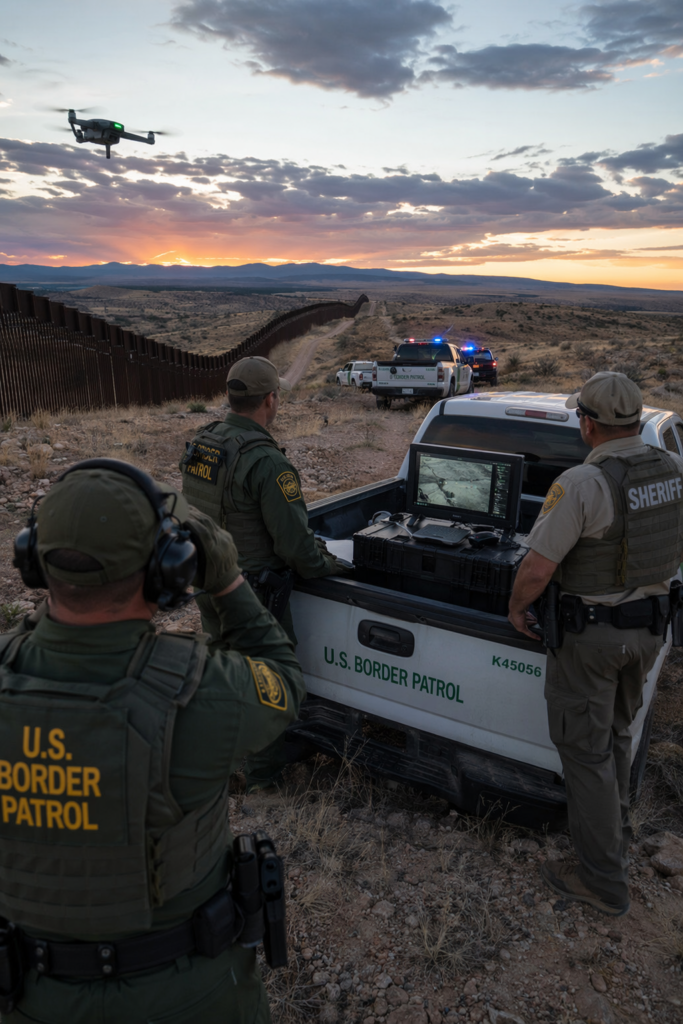
That mission also demands coordination. Agents must understand how to work with CBP officers, Air and Marine units, ICE investigators, prosecutors, and task force partners. In special operations or targeted enforcement efforts, this coordination becomes even more important.
Training also prepares agents for legal decision-making. Officers need to know when a checkpoint stop is allowed, when reasonable suspicion is required, and when a matter should be referred for criminal prosecution or transferred to another agency. In short, training connects structure, authority, and field performance.
Standard Issue Equipment and Technology
Border patrol agents work with a wide variety of equipment because the field environment can be difficult and fast-moving in areas like San Diego. The compiled information points to cameras, radar, sensors, databases, aircraft, vehicles, marine craft, and equestrian patrols as part of the larger border enforcement system.
Some tools stand out because they extend reach across distance and low visibility. Technology does not replace legal authority, but it helps agents detect movement, monitor routes, and coordinate stops in places where a local patrol model would not work well.
Examples include:
- Electronic sensors, radar, and cameras for surveillance
- Aircraft, marine vessels, and vehicles for rapid movement
- Night vision scopes and other field tools used in low-light conditions
These resources support the special role of border agents. Their unique powers come from law, but their effectiveness often depends on the equipment behind them.
Challenges Faced in the Field
Field conditions can be harsh. Border patrol agents often work in remote areas, along long stretches of the international boundary, and across terrain that is difficult to monitor. That alone makes border security very different from local patrol work on regular streets.
The mission is also broad. Agents are not only watching for illegal immigration. They are also dealing with human smuggling, contraband, and threats tied to national security. Because routes and tactics shift, officers must stay flexible while working within legal limits.
Common challenges include:
- Covering vast areas with uneven terrain and limited access
- Tracking fast-changing smuggling routes and methods
- Balancing enforcement demands with safety, legality, and coordination
These realities explain why Border Patrol needs specialized systems, support units, and strong partnerships with other agencies.
Transparency, Oversight, and Public Accountability
Broad authority makes transparency important. Because border patrol and other law enforcement agencies operate with serious power, public accountability helps build trust and makes sure misconduct is addressed when it happens.
Oversight also matters because border settings can be complex and high pressure. Complaints, reviews, and public discussion help show where policy works and where reform may be needed. Looking at misconduct handling and notable incidents gives a clearer picture of how accountability fits into border enforcement.
Handling of Misconduct and Complaints
When complaints are made against border patrol agents or other personnel, oversight becomes part of the process. Public accountability depends on people being able to report misconduct and on agencies having systems to review what happened. That is true in border law enforcement just as it is elsewhere.
Complaints may involve misuse of authority, improper stops, excessive detention, or actions that raise civil rights concerns. The compiled information also notes that people who believe their rights were violated may document the event, preserve records, and file a complaint through DHS channels.
This process matters because border enforcement involves unusual powers. When authority is broad, review must be clear. Handling complaints well does not weaken enforcement. It helps separate lawful action from misconduct and supports a more credible system for both officers and the public.
Notable Incidents and Lessons Learned
Notable incidents in border enforcement and immigration reform often raise questions about civil rights, detention practices, and the reach of federal power near the border. Public discussion from groups such as the National Immigration Forum has helped draw attention to how operations affect courts, communities, and enforcement priorities.
These lessons usually point in the same direction. Broad powers need clear limits, and law enforcement agencies need strong supervision when operating in high-pressure border settings. They also show why legal standards on stops, searches, and detention must stay visible in day-to-day work.
Key lessons include:
- Strong authority should be matched with meaningful oversight
- Civil rights concerns can grow when enforcement expands without clear boundaries
- Public accountability helps identify policy and training gaps
The takeaway is simple: effective border patrol work and responsible oversight must move together.
Conclusion
In conclusion, the collaboration between border police and law enforcement agencies is essential for effective security operations at the U.S. borders. Understanding the distinct roles, responsibilities, and jurisdictions of these entities allows for streamlined communication and enhances their ability to respond to various challenges. By sharing information and leveraging joint task forces, they can better protect communities while ensuring that rights are respected. As you reflect on the complexities of border protection and law enforcement collaboration, consider how this partnership promotes safety and accountability. If you're interested in learning more about these operations or have questions, feel free to reach out for a free consultation.
Frequently Asked Questions
Are U.S. Border Patrol agents considered law enforcement officers?
Yes. In the United States, border patrol agents are law enforcement officers under federal law. Their role is tied to border protection, immigration enforcement, and interdiction between ports of entry. They are officers, but their authority is specialized and not the same as general local policing authority.
How do federal operations involve both border police and local police agencies?
Federal law enforcement operations often combine border patrol, investigators, prosecutors, and local police through cooperation and task force models. Border officers may detect activity, while local police provide area support or follow-up assistance. This shared structure helps agencies respond more effectively to border-linked crime and smuggling cases.
What legal limitations are there on U.S. Border Patrol actions?
Border patrol works under federal law and the border search exception, but legal limitations still apply. Officers must follow constitutional rules on reasonableness, detention, and searches. Civil rights remain in force, and agents cannot arbitrarily stop vehicles everywhere or enter private homes without proper legal justification.
https://www.nytimes.com/2008/04/02/us/02fence.html
https://supreme.justia.com/cases/federal/us/431/606
https://www.nytimes.com/2019/09/15/us/border-patrol-culture.html