Discover How Law Enforcement Motorcycle Units Boost Safety
 admin001
How Law Enforcement Motorcycle Units Enhance Public Safety
Key Highlights
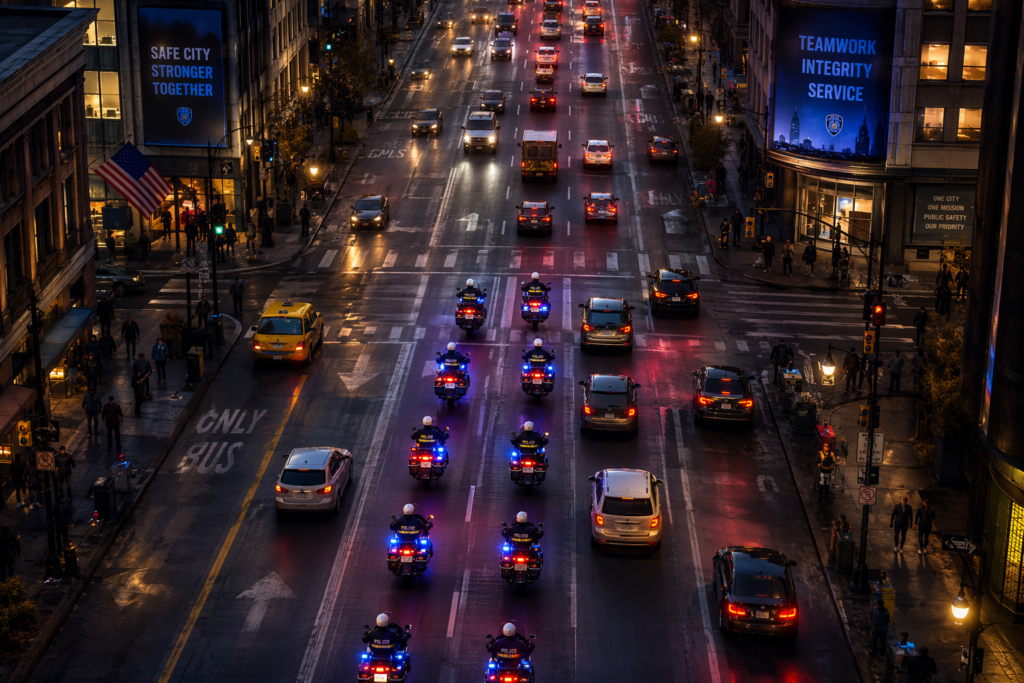
- A police motorcycle gives a motorcycle unit quick access in places larger patrol vehicles may struggle to reach.
- In law enforcement, these bikes are especially useful for traffic enforcement, escorts, and rapid response near collisions.
- Their maneuverability helps officers support crowd control during parades, marathons, and other busy public settings.
- Over time, motorcycle technology has improved comfort, braking, and control for police work.
- Popular police models in the United States often come from Harley, BMW, Honda, and Kawasaki.
- Some agencies now explore electric options for quiet, low-cost patrol use.
Introduction
A police motorcycle is more than a patrol bike. It is a practical tool that helps a motorcycle unit move fast, work in tight spaces, and support public safety in ways a car often cannot. You see this most clearly during crashes, major events, and escorts, where timing matters. Because these motorcycles can reach scenes quickly and navigate crowded streets with ease, they remain an important part of modern policing across many communities in the United States.
The Evolution of Law Enforcement Motorcycle Units
Law enforcement agencies in the United States have used the police motorcycle since the early 1900s. Departments such as the Los Angeles Police Department and Berkeley Police Department helped shape the early motorcycle unit, while Detroit is often credited as the first police buyer of Harley-Davidson motorcycles in 1908.
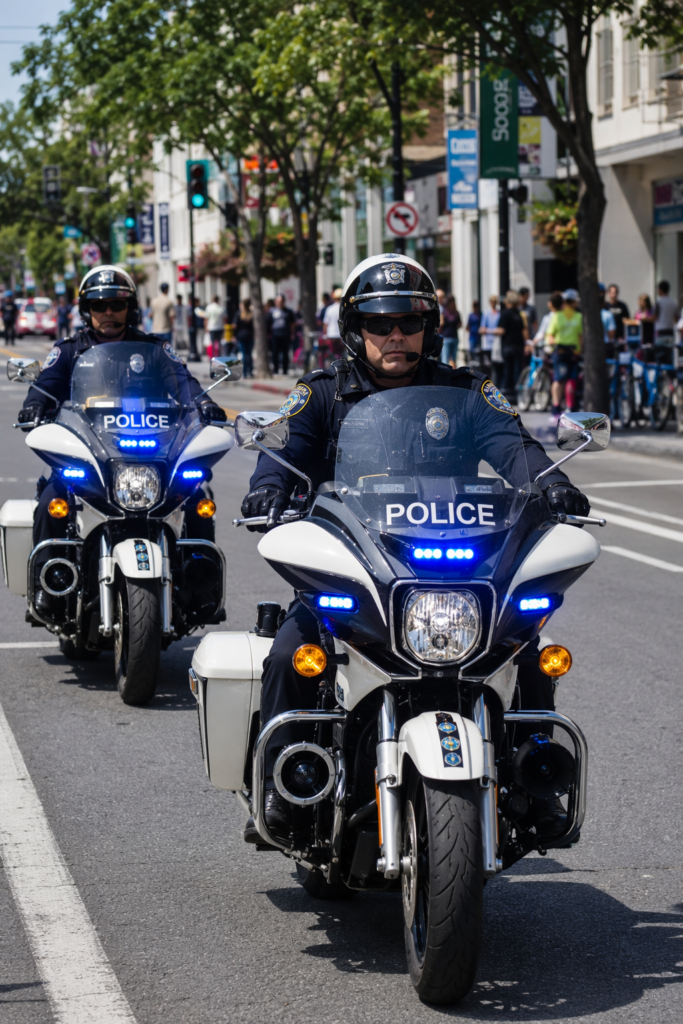
As motorcycles became more common transportation in the 1930s, their role in policing grew as well. Over time, better engineering, stronger reliability, and specialized factory police models turned the motorcycle unit into a lasting part of patrol, escort, and traffic work. That history helps explain why these units still matter today.
Early Milestones and Iconic Police Motorcycle Models in the United States
Some of the earliest police motorcycle milestones in the United States appeared before World War I. Harley-Davidson states that Detroit bought police motorcycles in 1908. The LAPD formally established its motorcycle “Speed Squad” in 1909, and Berkeley officially organized a motorcycle patrol in 1911. Portland also had an officer using his own motorcycle for patrol work very early on.
Historic models changed with the times. Harley machines were early staples, and later the Electra Glide became one of the most recognizable police bikes in America. The FLHTP Electra Glide and Road King families built a strong reputation with police departments over many decades.
By the late 20th century, Kawasaki became iconic too. The California Highway Patrol was strongly linked in the public mind with Kawasaki police motorcycles through CHiPs. That visibility helped make the KZ series one of the best-known patrol motorcycles of its era.
Shifts in Motorcycle Technology and Their Impact on Police Work
Motorcycle technology has changed police work in clear, practical ways. Early patrol bikes were basic machines built for utility. Newer law enforcement motorcycles are purpose-built or specially adapted, giving officers more control, comfort, and carrying capacity during long shifts or demanding assignments.
Today, features like ABS improve braking confidence, while cruise control reduces fatigue on highway patrol. Some modern models also offer electronically adjustable suspension, heated grips, wind protection, and traction control. These additions help officers stay stable and comfortable in changing road and weather conditions.
So how do law enforcement bikes differ from standard civilian bikes? The biggest difference is equipment and mission. Police models often include emergency lighting, stronger charging systems, special controls, storage for gear, and mounting points for radar or communication tools. They are designed for repeated police use, not just everyday riding.
Core Duties and Special Assignments of Police Motorcycle Officers
Motorcycle officers handle some of the most visible work in law enforcement. Their main duties often include traffic enforcement, crash response, roadway management, and patrol support in areas where a full-size vehicle may be slower or less practical. Speed and mobility are central to the job.
Just as important, they also support special events and community events. You may see them during parades, races, funeral processions, and official escorts. These assignments demand precision, training, and public awareness. The next sections break down how motor officers carry out these roles in real-world settings.
Traffic Control and Accident Response Operations
When traffic backs up after a collision or a major gathering fills the streets, a police motorcycle becomes especially valuable. Its smaller size lets officers move through congestion faster than many four-wheel patrol vehicles. That helps officers reach scenes sooner and begin traffic enforcement or lane control without delay.
During traffic control, motorcycle units often use leapfrog movement. One officer rides ahead, blocks or redirects vehicles, then moves forward again as the main group passes. This approach is useful in escorts, marathons, and other operations where crowd control and roadway timing matter.
Common traffic control and response tasks include:
- Reaching crash scenes quickly when blocked roads slow larger vehicles
- Managing intersections during escorts or public route closures
- Supporting patrol calls in narrow streets or access points
- Redirecting traffic flow around incidents, races, or parade routes
Community Engagement, Public Events, and Escort Services
Beyond enforcement, a motorcycle unit plays an important public-facing role. Motor officers are often assigned to community events where visibility, precision riding, and quick movement are important. Their presence helps organize busy spaces while also making police interaction more approachable for the public.
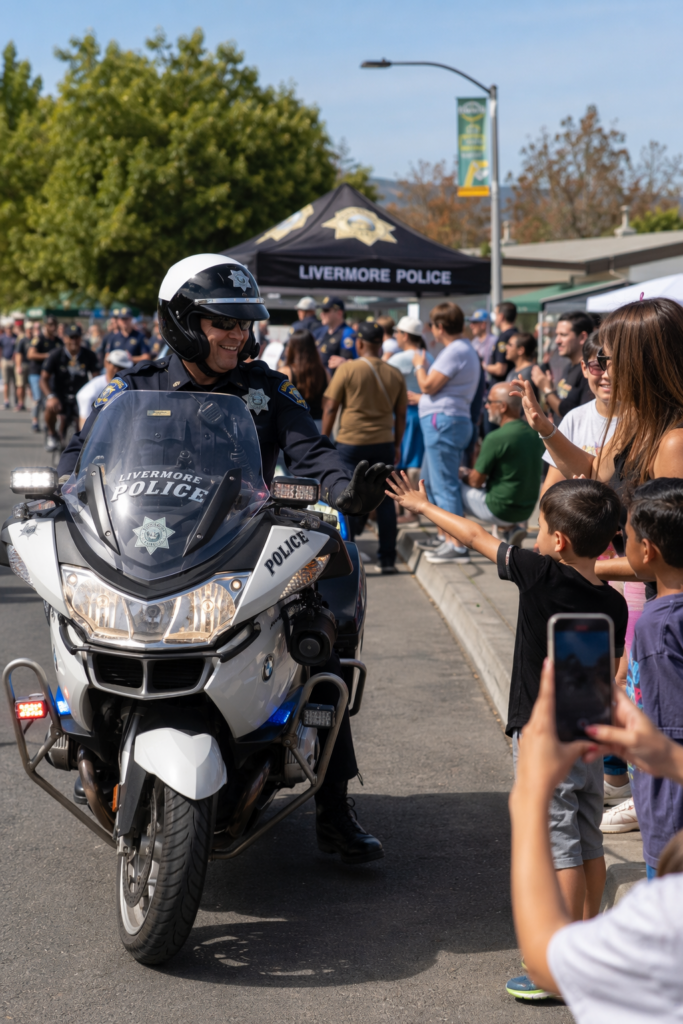
Escort work is another major duty. Police escorts are commonly used for dignitaries, ceremonial motorcades, and funeral processions. Motorcycles are well suited for this because officers can move ahead of the main group, stop cross traffic, and keep the route orderly without creating unnecessary delay.
You will often see motor officers handling tasks such as:
- Leading or protecting police escorts through crowded streets
- Supporting funeral processions with rolling traffic blocks
- Assisting with parades, marathons, and other community events
Key Features and Advantages of Police Motorcycles
A police motorcycle offers law enforcement a clear tactical advantage in the right setting. It can move through dense traffic, access narrow routes, and reach incident areas that may slow down cars or SUVs. For police use, that speed and flexibility can improve response during escorts, collisions, and event management.
At the same time, these motorcycles are built around practical needs. Storage, emergency systems, weather protection, and rider-focused controls all support daily work. To understand why they remain so effective, it helps to look at the equipment and the brands that shape modern fleets.
Specialized Equipment for Emergency Situations and Officer Safety
A police motorcycle is equipped for more than transportation. It is set up to support emergency response, communication, and officer safety in fast-moving situations. Factory police models and police conversions often include dedicated lighting, warning systems, stronger electrical capacity, and secure mounting points for tools officers need on duty.
Storage also matters. Saddlebags and rear compartments give officers room for essential gear while keeping the bike balanced and ready to move. On some modern bikes, accessory power management and integrated controls make it easier to operate equipment without distracting the rider.
Typical emergency and safety equipment can include:
- Emergency lighting and visibility aids
- Saddlebags or storage boxes for duty gear
- Radar or lidar mounts and communication equipment
- Engine guards, wind protection, and specialized switch systems
Popular Motorcycle Brands and Models Used by U.S. Law Enforcement
Across the United States, the brands most often associated with law enforcement motorcycles are Harley, BMW, Honda, and Kawasaki. Each has supplied well-known patrol models, either as factory-built police bikes or as motorcycles adapted for duty. These choices reflect what agencies need most: reliability, control, storage, and comfort over long hours.
Harley remains deeply tied to American policing through models such as the FLHTP Electra Glide and FLHP Road King. BMW has a strong global and U.S. presence with RT-P models. Honda’s ST series has also been widely respected, while Kawasaki’s KZ1000P became a classic. Ducati appears in broader motorcycle discussions, but it was not identified in the compiled information as a common U.S. police brand.
| Brand | Notable law enforcement models mentioned |
|---|---|
| Harley | FLHTP Electra Glide, FLHP Road King, XL883 |
| BMW | R1200RT-P, R1250RT-P, F 750 GS-P, F 850 GS-P |
| Honda | ST1100, ST1300PA, VFR series |
| Kawasaki | KZ1000P, KZ900 C2, Concours 14P |
These brands became popular because they offered purpose-built solutions for patrol, escort, and highway work, not just standard street motorcycle performance.
Conclusion
In conclusion, law enforcement motorcycle units play a crucial role in enhancing public safety through their unique capabilities and community engagement. From traffic control to emergency response and public events, these skilled officers utilize advanced technology and specialized equipment to ensure safety and security. The evolution of motorcycle units reflects the dynamic nature of policing, adapting to new challenges while building strong relationships with the communities they serve. By understanding the impact and advantages of these units, we can appreciate their dedication to keeping our streets safer. If you're interested in learning more about public safety initiatives, feel free to reach out to your local law enforcement agency!
https://commons.wikimedia.org/wiki/Category:Police%20motorcycles