Transforming Military Tactics: Use of Drone in Wars
 admin001
The Use of Drone in Wars: Transforming Military Tactics
Key Highlights
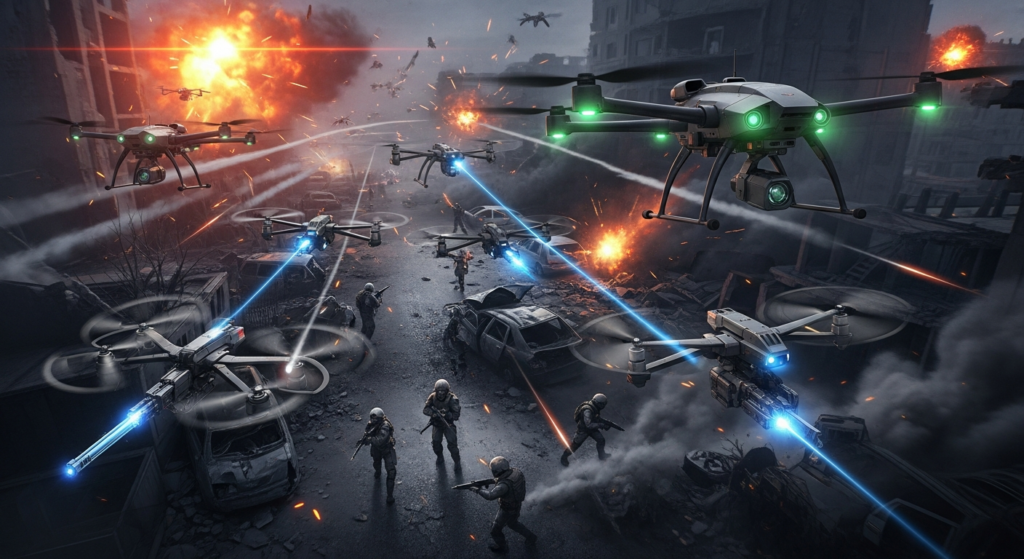
- The use of drones in wars has shifted military tactics from large-scale engagements to precise, targeted strikes, reducing risks to personnel.
- Modern warfare heavily relies on military drones for real-time intelligence, surveillance, and target acquisition, enhancing decision-making.
- Drone warfare has seen rapid evolution, with aerial vehicles now incorporating artificial intelligence and autonomous capabilities.
- Recent conflicts, particularly the war in Ukraine, showcase the extensive use of FPV drones and larger armed drones by both sides.
- While offering a competitive edge, the use of military drones also presents challenges, including vulnerability to electronic warfare and ethical concerns.
- The future of warfare will likely see increased drone dominance, with swarm technology and advanced AI shaping military strategies.
Introduction
Have you ever wondered how warfare has changed in the 21st century? From World War I to today, military operations have seen incredible transformations. A key driver of this change is the rise of drone technology. Unmanned aerial vehicles, or drones, have moved from the realm of science fiction to becoming a central element of modern military strategy. They offer new ways to gather intelligence, conduct strikes, and support troops on the ground, fundamentally altering the dynamics of the battlefield.
Historical Milestones in the Use of Drones for Warfare
The story of drones in warfare isn't as recent as you might think. The concept of unmanned aerial vehicles dates back to World War II, where early radio-controlled aircraft, including the British Commonwealth artilleries, were used for training and surveillance. These initial designs were basic, but they laid the groundwork for future military innovation.
Over the decades, these simple aerial vehicles evolved into sophisticated tools. Contemporary conflicts have solidified their role, with nations across the globe integrating drones into their armed forces. This section will explore the key historical moments that have shaped the use of drones in warfare, from their earliest forms to their pivotal role in recent conflicts.
The Early Development of Military Drones
The journey of military drones began with rudimentary models during World War II. These early aerial vehicles were primarily used as targets for anti-aircraft gunnery practice. They were simple, radio-controlled planes, a far cry from the advanced systems we see today. Their purpose was to help train soldiers without risking the lives of pilots in manned aircraft.
As technology progressed post-war, so did the potential applications for these unmanned systems. Military thinkers began to see their value for reconnaissance missions in dangerous territories. The idea was to send an unmanned vehicle to gather information over enemy lines, providing valuable intelligence without putting a pilot in harm's way, as highlighted in the New York Times. This marked a significant conceptual shift from training tools to operational assets.
These early developments were crucial, establishing the fundamental principles of remote-controlled flight and surveillance. While limited in capability, these pioneering military drones set the stage for the technological leaps that would follow, eventually leading to the highly capable and versatile drones used in modern military operations.
Pivotal Moments in Drone Deployment During Recent Wars
The 21st century marked a turning point for drone warfare, with the United States military leading its widespread adoption. During the war on terror, drones like the Predator became synonymous with targeted strikes in countries such as Afghanistan, Pakistan, and Yemen. These operations demonstrated the ability of drones to eliminate high-value targets with precision from thousands of miles away.
This proliferation of military technology was not limited to the U.S. Countries like Turkey and Azerbaijan showcased the effectiveness of armed drones in regional conflicts across the Black Sea region. The 2020 Nagorno-Karabakh war, for instance, saw Azerbaijani forces use Turkish Bayraktar TB2 and Israeli IAI Harop drones to devastating effect against Armenian forces, highlighting a new era of air power.
These moments were pivotal because they demonstrated that drones could be decisive in conflicts between nations, not just in counter-terrorism operations. The success of drones in these wars spurred a global race to develop and acquire similar capabilities, forever changing military doctrines and the landscape of international security.
Major Transformations in Combat Philosophy Due to Drone Introduction
The introduction of drones has fundamentally altered military strategies and combat philosophy. The ability to conduct persistent surveillance and execute precision strikes has shifted the focus from large-scale ground invasions to more targeted, intelligence-driven operations, reminiscent of tactics utilized during the Russian invasion. This change allows military forces to engage enemies with reduced risk to their own personnel.
Modern warfare now incorporates a more nuanced approach where information is as critical as firepower. Drones provide a constant stream of data, allowing commanders to make decisions with a level of situational awareness that was previously unimaginable. This transformation has led to the development of new military doctrines centered around data, speed, and precision.
Key transformations in combat philosophy include:
- Remote Warfare: Engaging targets from safe distances, minimizing human risk.
- Asymmetric Advantage: Smaller, less-equipped forces can challenge larger adversaries using cost-effective drone technology, reflecting the strategies discussed in the book War Transformed.
- Asymmetric Advantage: Smaller, less-equipped forces can challenge larger adversaries using cost-effective drone technology.
- Precision Over Power: Prioritizing accurate strikes to minimize collateral damage and achieve specific strategic goals.
Evolution of Drone Technology in Military Operations
The rapid evolution of drone technology has been a game-changer for military operations. What started as simple surveillance tools has transformed into a sophisticated array of unmanned systems with diverse and powerful capabilities. These technological advancements have made drones faster, stealthier, and more intelligent than ever before.
This progress is not just about better hardware; it's also about smarter software. The integration of artificial intelligence and automation is creating a new generation of drones that can operate with minimal human intervention. We will now look at the specific advances in drone design, the role of AI, and some of the cutting-edge combat drones in service today.
Advances in Drone Design and Capabilities
Modern drone technology has come a long way from its early predecessors. Today's military drones boast significant technological advancements in their design, making them more effective on the battlefield. Materials are lighter and more durable, allowing for longer flight times and greater payload capacity. Aerodynamic designs have improved, enabling higher speeds and better maneuverability.
Beyond the physical frame, drone capabilities have expanded dramatically. Many drones are now equipped with high-resolution cameras, thermal imaging sensors, and laser target designators for close range detection. This allows them to perform a wide range of tasks, from detailed reconnaissance to guiding precision munitions. Some larger drones can even act as "motherships," deploying smaller drones for specialized missions.
Furthermore, advancements in power sources, such as more efficient batteries and hybrid engines, have extended the operational range and endurance of these platforms. This means drones can stay airborne for days at a time, providing persistent surveillance or loitering over a target area, ready to strike when commanded. These design and capability enhancements continue to push the boundaries of what's possible in military operations.
Integration of AI and Automation in Modern Drones
The integration of artificial intelligence (AI) is one of the most significant developments in drone warfare. AI algorithms allow drones to process vast amounts of data in real time, helping them identify targets, navigate complex environments, and even make tactical decisions without direct human control. This moves beyond simple remote piloting to creating truly autonomous systems.
For instance, AI can enable a drone to track a target automatically, adjusting its flight path to maintain observation even if the target moves unpredictably. In 2020, a Turkish-made drone in Libya reportedly detected and attacked forces using its AI without a direct command, marking a potential first for autonomous strikes. These capabilities reduce the cognitive load on human operators and speed up the decision-making cycle.
The concept of "drone swarms" is another area where AI is critical. In a swarm, multiple drones communicate and coordinate with each other to achieve a common objective, such as overwhelming an enemy's air defense system. This level of coordination would be impossible for human operators to manage manually, making AI and autonomous systems essential for this emerging form of drone warfare.
Examples of Cutting-Edge Combat Drones in Service Today
Several nations have developed and deployed highly advanced combat drones, showcasing the latest technological advancements in military hardware. The United States' MQ-9 Reaper is a well-known example, capable of long-endurance surveillance and carrying a variety of munitions for precision strikes. Another is the Northrop Grumman X-47B, a stealth drone that demonstrated the ability to autonomously take off from and land on an aircraft carrier.
Turkey's Bayraktar TB2 has also gained global recognition for its effectiveness in recent conflicts. It combines sophisticated optics and laser targeting with the ability to carry precision-guided bombs, proving to be a highly effective and relatively low-cost combat drone. Similarly, Russia employs the ZALA Lancet, a loitering munition or "kamikaze drone" that can search for and destroy targets on the battlefield.
These combat drones represent the pinnacle of current military drone technology. They combine endurance, advanced sensors, and powerful armaments to provide a significant advantage in modern warfare. Here's a look at some prominent models:
| Drone Model | Country of Origin | Key Feature |
|---|---|---|
| MQ-9 Reaper | United States | Long-endurance hunter-killer UAV |
| Bayraktar TB2 | Turkey | Highly effective armed drone with advanced optics |
| IAI Harop | Israel | Loitering munition designed for anti-radiation strikes |
| ZALA Lancet | Russia | Kamikaze drone used for tactical strikes |
| HESA Shahed 136 | Iran | One-way attack drone used in swarming attacks |
Changing Strategies and Tactics in Modern Warfare
The proliferation of drones has forced a major rethink of military tactics and strategies. Modern warfare, which includes the character of modern warfare, is no longer solely defined by the number of tanks or troops a nation possesses. Instead, the ability to leverage technology for precision, intelligence, and asymmetric advantage is becoming paramount. The future of warfare is being shaped by these unmanned systems.
This shift is evident in how battles are fought, from a move toward precision strikes over large-scale engagements to the use of real-time data for instant decision-making. Drones are also enabling new forms of conflict, like hybrid and asymmetric warfare. The following sections explore these tactical transformations in greater detail.
Shifting from Large-Scale Engagements to Precision Strikes
The era of massed armies clashing on open battlefields is giving way to a new model of warfare defined by precision. Drone warfare is at the heart of this shift. Armed drones allow military forces to conduct surgical precision strikes against specific targets, such as enemy command posts, equipment, or key personnel, without launching a large-scale offensive.
This approach offers several advantages. It minimizes the risk to friendly forces, as soldiers are not required to physically assault a heavily defended position. It also reduces collateral damage, as strikes can be incredibly accurate. This is particularly important in urban environments or areas with a significant civilian presence, where indiscriminate bombing would be catastrophic.
The result is a change in military strategies, where the goal is often to disable or disrupt the enemy rather than annihilate them through overwhelming force. By targeting critical nodes with precision strikes, a military can achieve its objectives more efficiently and with fewer resources, fundamentally altering the cost-benefit analysis of engaging in conflict.
Real-Time Intelligence Gathering and Decision-Making
One of the most profound impacts of drones is their ability to provide persistent, real-time intelligence. During surveillance missions, drones can loiter over an area for hours or even days, streaming live video and other sensor data back to a command center. This gives commanders an unparalleled, up-to-the-minute view of the battlefield.
This constant flow of information dramatically accelerates the decision-making process. Commanders can see enemy movements as they happen, identify emerging threats, and adjust their plans on the fly. Before drones, intelligence gathering was often a slow process, with information becoming outdated by the time it reached leadership. Now, the gap between observation and action has shrunk significantly.
This capability for rapid intelligence gathering is crucial for everything from planning an attack to confirming its success. A reconnaissance drone can identify a target, an armed drone can strike it, and another can provide immediate battle damage assessment. This seamless integration of surveillance and action makes military operations far more dynamic and responsive.
The Rise of Asymmetric and Hybrid Warfare Through Drones
Drones have become a powerful tool in asymmetric warfare, where a smaller or less technologically advanced force can challenge a more powerful adversary. Analysts at the Royal United Services Institute (RUSI) suggest that relatively cheap, commercially available small drones can be modified to carry explosives, turning them into effective weapons against expensive military hardware. This levels the playing field in surprising ways.
Militant groups like the Islamic State and the Houthis have successfully used armed drones for offensive operations, attacks, and reconnaissance. Even drug cartels in Mexico have employed "droneros" to operate bomb-dropping drones. This proliferation means that non-state actors and smaller nations can now wield a form of air power that was once the exclusive domain of major military powers.
This contributes to "hybrid warfare," where the lines between conventional conflict, irregular warfare, and criminal activity are blurred. Drones allow for deniable attacks and constant harassment, creating instability without a formal declaration of war. The rise of drone dominance in this context means that even powerful armies must now contend with threats from above, originating from unexpected sources.
Key Benefits of Using Drones in Military Conflicts
Why have drones become so central to modern military forces? The answer lies in a range of distinct advantages they offer. The use of drones in military conflicts brings benefits that simply cannot be matched by traditional manned systems. These drone advantages range from protecting soldiers' lives to enhancing operational effectiveness in unprecedented ways.
From saving lives to saving money, the benefits are compelling. The ability to reduce risks to personnel, improve surveillance capabilities, and operate more cost-effectively are three of the most significant advantages. The following sections will provide a closer look at each of these key benefits.
Reducing Risks to Military Personnel
Perhaps the most significant of all drone advantages is the ability to conduct dangerous missions without risking human life. In traditional warfare, tasks like reconnaissance behind enemy lines or bomb disposal are incredibly hazardous for military personnel. Drones can now perform these tasks while human operators remain in a safe location, often thousands of miles away.
This remote operation has a profound impact on soldier safety. When a drone is shot down, the loss is purely financial and tactical; no family has to receive a tragic phone call. This allows commanders to take on missions that might otherwise be considered too risky for manned aircraft or ground troops.
The benefits of reducing risk to human life include:
- Zero-Casualty Reconnaissance: Gathering intelligence in hostile airspace without endangering pilots.
- Safer Bomb Disposal: Using unmanned ground vehicles (UGVs) to inspect and neutralize explosive devices.
- Lower-Risk Strikes: Engaging targets without exposing soldiers to return fire.
- Supply in Hot Zones: Delivering supplies to front-line troops without risking logistics convoys.
Enhancing Surveillance and Reconnaissance Capabilities
Drones have revolutionized military surveillance and reconnaissance. A reconnaissance drone can provide a persistent "eye in the sky," loitering over a target area for extended periods, far longer than most manned aircraft. This endurance allows for continuous monitoring of enemy activities, troop movements, and potential threats.
The quality of intelligence gathered is also superior. Drones are equipped with advanced sensors, including high-definition cameras, infrared imagers, and signals intelligence packages. This allows them to collect a wide array of data day or night, in various weather conditions. The information is transmitted in real time, providing military operations with unmatched situational awareness.
This enhanced capability means that armies can build a much more detailed and accurate picture of the battlefield. They can track targets over long distances, spot hidden positions, and intercept enemy communications. The use of a reconnaissance drone transforms intelligence gathering from a series of snapshots into a continuous, live feed of the conflict zone.
Cost-Effectiveness Compared to Traditional Systems
When compared to traditional military technology, drones often present a more cost-effective solution. A high-end fighter jet can cost over $100 million per unit, with substantial additional costs for pilot training, fuel, and maintenance. In contrast, while advanced combat drones are not cheap, their acquisition and operational costs are significantly lower.
For example, a HESA Shahed 136 drone, used extensively in the war in Ukraine, costs around $20,000. While defending against it with an air defense missile can cost over $400,000, the initial outlay for the drone itself is minimal. This cost disparity is even more pronounced with smaller, commercial drones that can be adapted for military use for just a few thousand dollars.
This cost-effectiveness allows armed forces to procure and deploy unmanned systems in much larger numbers. It also makes advanced aerial capabilities accessible to countries that cannot afford a large, modern air force. While the most advanced drone capabilities are still expensive, the overall trend is toward making air power more affordable and accessible than ever before.
Impact of Drones on Recent Major Conflicts
The theoretical benefits of drones are one thing, but their real-world impact is best seen in recent wars, including those involving Russian territory. From Eastern Europe to the Middle East, drone strikes and surveillance have played a decisive role in shaping conflict outcomes. Their use has provided critical advantages, exposed vulnerabilities in traditional forces, and offered valuable lessons for the future.
Recent wars have served as a testing ground for the latest drone technologies and tactics, especially in regard to the Russian naval capabilities. The following sections will examine the specific use of drones in the war in Ukraine, U.S. operations in the Middle East, and other case studies to understand their successes and failures on the modern battlefield.
The Use of Drones in the War in Ukraine
The war in Ukraine is often called the world's first true "drone war" due to the sheer scale and intensity of their use by both sides. Ukrainian soldiers and forces have relied heavily on a variety of drones, from the sophisticated Turkish-made Bayraktar TB2 for strategic strikes to thousands of small, commercial FPV drones for tactical reconnaissance and attacks on Russian forces.
These small drones, often adapted to drop grenades or act as kamikaze weapons, have been used to hunt individual soldiers and destroy armored vehicles on the front lines, targeting Russian targets. Ukraine even established the world's first military branch dedicated to drone warfare, the Unmanned Systems Forces. Naval drones have also been used with great effect against Russia's Black Sea Fleet.
Russian forces have also deployed drones extensively, including the Lancet loitering munition and waves of Iranian-made Shahed 136 drones to attack Ukrainian cities and infrastructure. The conflict has become a large scale laboratory for drone and anti-drone tactics, demonstrating how these systems have become indispensable in modern, high-intensity warfare.
U.S. Drone Operations in the Middle East
The United States has been a pioneer in the use of armed drones, particularly in its operations across the Middle East. For nearly two decades, U.S. drone operations have targeted militant groups in countries like Afghanistan, Yemen, Syria, and Pakistan. These missions have often focused on so-called "decapitation strikes" aimed at killing the leadership of groups like Al-Qaeda and the Islamic State.
These drone strikes, conducted by platforms like the Predator and Reaper, have been credited with eliminating numerous high-value targets. For example, a U.S. drone strike in 2022 killed Al-Qaeda leader Ayman al-Zawahiri in Kabul. Proponents argue these strikes are effective at disrupting terrorist networks while minimizing risk to U.S. troops.
However, these operations have also been controversial. Critics point to the significant number of civilian casualties resulting from some strikes and raise legal and ethical questions about extrajudicial killings in foreign countries. A 2021 drone strike in Kabul, for instance, tragically killed 10 civilians, including seven children, highlighting the challenges and grave responsibilities of drone operations.
Case Studies: Successes and Lessons Learned
Examining specific conflicts provides valuable insights into the effectiveness of drone warfare. The 2020 Nagorno-Karabakh conflict was a clear success for drone-centric military innovation. Azerbaijan's use of Turkish and Israeli drones overwhelmed Armenian air defenses and ground forces, proving decisive in their victory. It showed that even well-established defensive positions are vulnerable to modern drone attacks.
The war in Ukraine has offered numerous lessons learned. It has demonstrated the power of cheap, numerous FPV drones in attritional warfare and the importance of electronic warfare to counter them. It has also shown the vulnerability of large assets, like ships in the Black Sea, to attacks from unmanned naval drones, highlighting the need for a comprehensive approach in re-evaluating naval strategy.
From these cases, several lessons have emerged:
- Air Defence is Crucial: Traditional air defense systems struggle against small, low-flying drones.
- Adaptation is Key: Both sides in a conflict must rapidly innovate drone and anti-drone tactics to maintain a competitive edge.
- Logistics are Vulnerable: Drones can effectively target supply chains and logistics deep behind the front lines.
- Quantity has a Quality All Its Own: Swarms of cheap drones can be more effective than a few expensive, sophisticated ones.
Influence of Drones on Civilian Safety and Collateral Damage
The use of drones in warfare has a complex and often controversial impact on civilian safety. On one hand, the precision of drone strikes has the potential to reduce collateral damage compared to less accurate weapons like artillery or large bombs. On the other hand, mistakes in targeting and the nature of remote warfare can lead to tragic outcomes for non-combatants.
This dual impact creates a significant ethical dilemma for military operations. The quest to minimize harm to civilians is complicated by challenges in identification and growing concerns over privacy. The following sections explore how drones affect civilian safety, for better and for worse.
Minimizing Civilian Casualties with Precision Targeting
One of the primary arguments in favor of armed drones is their ability to deliver munitions, including machine guns, with incredible accuracy. This precision targeting technology allows military forces to strike a specific building, vehicle, or even an individual, theoretically minimizing harm to the surrounding area. Compared to dropping unguided bombs from high-altitude bombers, precision strikes can significantly reduce the risk of civilian casualties.
This capability is enhanced by the persistent surveillance that drones provide. Operators can watch a target for hours or days, waiting for the ideal moment to strike when the risk to non-combatants is lowest. This "soak time" allows for more careful decision-making than is possible in the heat of a fast-moving ground battle or a quick jet fly-by.
Proponents argue that this combination of patience and precision makes drone strikes a more humane option than many other forms of military force. By limiting the destructive footprint of an attack, the goal is to achieve military objectives while better upholding the principles of distinction and proportionality under the laws of war, thereby protecting innocent lives.
Concerns Over Increased Surveillance and Privacy Infringement
While drones can be used for targeted strikes, their primary function is often surveillance. The ability of military drones to loiter over an area for extended periods, recording everything that happens below, raises significant concerns about privacy. In conflict zones, entire communities can find themselves under constant watch, creating an atmosphere of fear and suspicion.
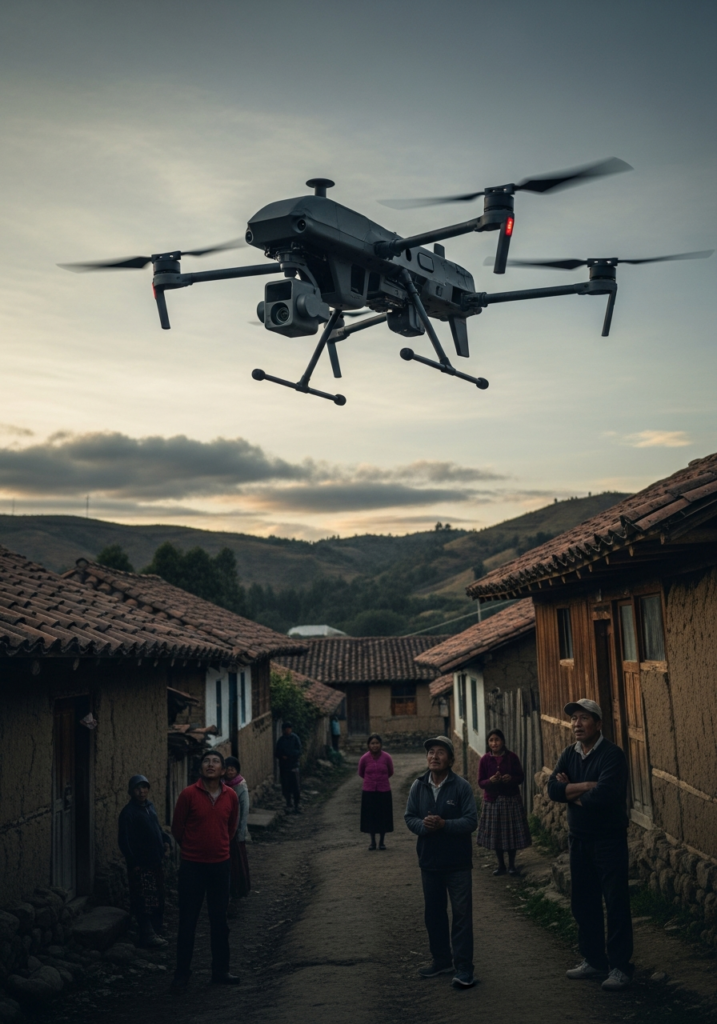
This pervasive surveillance is not limited to active combatants. Drones collect vast amounts of data, often without distinguishing between military targets and civilians. This mass collection of information infringes on the privacy of individuals who are not involved in the conflict, changing the social fabric of the areas being monitored.
The key concerns in this area include:
- Constant Monitoring: The "unblinking eye" of a drone can lead to psychological stress for civilian populations.
- Data Collection: Who has access to the vast amounts of surveillance data collected by drones, and how is it used?
- Erosion of Privacy: The normalization of widespread aerial surveillance could set a dangerous precedent, even outside of conflict zones.
- "Guilt by Association": Individuals may be targeted based on patterns of life or proximity to suspected militants, leading to mistakes.
Challenges in Differentiating Combatants from Non-Combatants
Despite advanced technology, one of the greatest challenges in drone warfare remains the positive identification of targets. From a video feed thousands of feet in the air, it can be incredibly difficult to differentiate between an armed combatant and a non-combatant civilian. A farmer carrying a tool might be mistaken for a soldier carrying a rifle.
This challenge is magnified in counter-insurgency and asymmetric warfare, where fighters often do not wear uniforms and blend in with the local population. Drone operators, who are physically removed from the battlefield, must rely on limited sensory information and intelligence reports to make life-or-death decisions. This distance can sometimes lead to a "PlayStation mentality," detaching the operator from the real-world consequences of their actions.
Errors in identification have led to numerous tragic incidents of civilian casualties in U.S. drone operations and other conflicts. The difficulty in distinguishing friend from foe from a distance remains a fundamental and dangerous limitation of remote warfare, posing a persistent risk to civilian safety in any military operation involving drones.
Challenges and Limitations of Drones in Warfare
Despite their many advantages, drones are not invincible super-weapons. Their use in warfare comes with a significant set of challenges and limitations that can impact their effectiveness. Adversaries are constantly developing new ways to counter them, and the operational realities of deploying and maintaining a drone fleet can be complex.
From technical vulnerabilities like electronic warfare to the thorny legal and ethical questions surrounding their use, these limitations are critical to understanding the complete picture of drone warfare. The following sections will examine some of the most pressing challenges, including anti-drone defenses, legal considerations, and logistical constraints.
Vulnerability to Anti-Drone Defenses and Electronic Warfare
As drones have become more common on the battlefield, so have anti-drone defenses. One of the biggest vulnerabilities of most drones is their reliance on radio signals and communications equipment to communicate with their operators. This makes them susceptible to electronic warfare (EW) tactics, such as jamming. By flooding the air with interfering signals, an enemy can sever the link between a drone and its pilot, causing it to crash or return to its base.
Russia, for example, has employed truck-mounted EW systems like the R-330Zh Zhitel in Ukraine to jam the radio controls of Ukrainian drones. More advanced systems can even "spoof" a drone's GPS signal, tricking it into flying off course or landing in enemy territory. This electronic battle for control of the airwaves is a critical aspect of modern warfare, involving a broad range of activities.
Beyond electronic measures, drones are also vulnerable to kinetic attacks. Anti-aircraft guns, missiles, and even other drones can be used to shoot them down. As anti-drone defenses become more sophisticated and widespread, the uncontested dominance that drones once enjoyed in some conflicts is rapidly coming to an end.
Legal and Ethical Considerations in Drone Strikes
The use of armed drones, particularly for targeted killings outside of declared war zones, raises profound legal and ethical questions. The practice of conducting drone strikes in countries where a state of war does not formally exist challenges traditional notions of sovereignty and international law. Critics argue that such strikes amount to extrajudicial executions.
The ethical dimension is equally complex. Decisions to use lethal force are made by operators who may be thousands of miles away, viewing the world through a screen. This distance raises questions about accountability and the psychological impact on the operators themselves. The potential for errors leading to civilian deaths adds another layer of moral weight to every decision.
Key legal and ethical issues include:
- Sovereignty: The legality of conducting strikes in another country without its permission.
- Accountability: Who is responsible when a strike goes wrong and kills civilians?
- Due Process: The concern that targeted killings deny individuals the right to a fair trial.
- The "Imminent Threat" Standard: The criteria for justifying a pre-emptive strike are often debated and can be interpreted broadly.
Operational Constraints and Logistics
Deploying and maintaining a fleet of military drones is a significant logistical challenge. While cheaper than manned aircraft, drones still require a complex support system. This includes trained pilots and sensor operators, maintenance crews, secure communication links, and forward operating bases from which to launch and recover the aircraft.
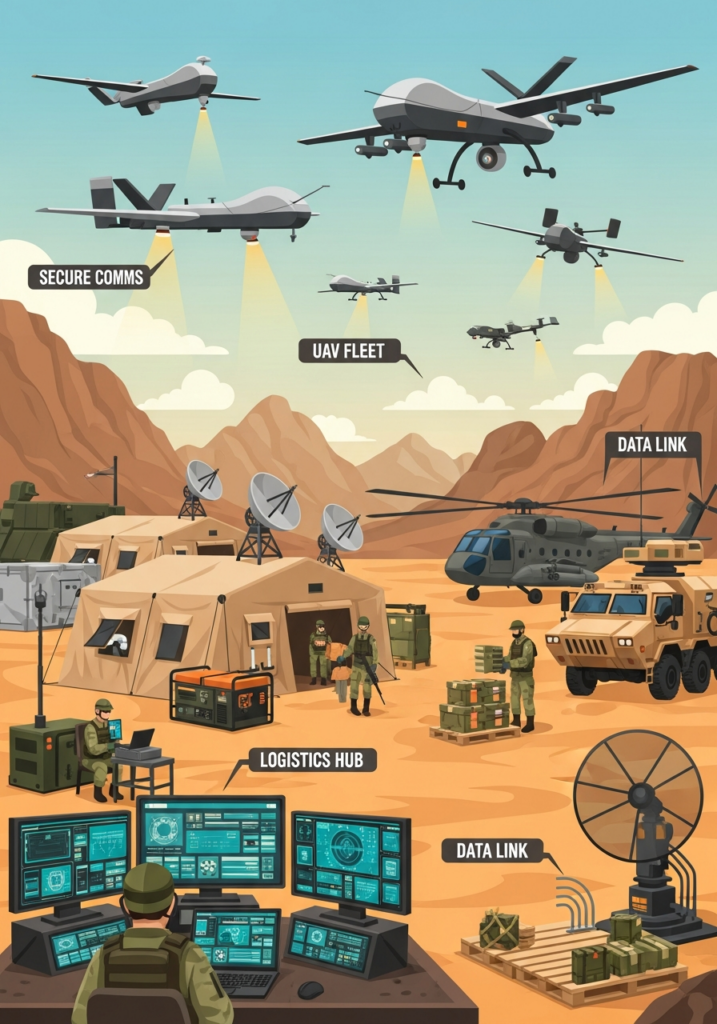
Supply chains for spare parts and munitions must be robust and secure. This can be particularly challenging when operating in remote or contested areas. Drones also have operational constraints based on their design. Many are vulnerable to bad weather, have limited flight endurance, or require prepared runways for takeoff and landing, which can limit their flexibility.
Furthermore, the data link required to control a drone over long distances can be a bottleneck. Satellite bandwidth is a finite and expensive resource, and the links can be jammed or intercepted. These logistical and operational hurdles mean that successfully integrating drones into military equipment and strategy requires a comprehensive and well-supported approach.
Conclusion
In conclusion, the integration of drones into military operations has undeniably transformed military tactics, offering both strategic advantages and new challenges. With their ability to conduct precision strikes, gather real-time intelligence, and minimize risks to personnel, drones have reshaped the landscape of modern warfare. However, this evolution also raises significant ethical and operational dilemmas that must be addressed. As technology continues to advance, understanding the implications of drone warfare is crucial for both military professionals and civilians alike. Stay informed and engaged with the ongoing developments in this field. If you're interested in exploring how these innovations might impact future conflicts, feel free to reach out for further insights.
Frequently Asked Questions
How will drones influence future military tactics and strategies?
In the future of warfare, drones will likely lead to more autonomous operations and the widespread use of "drone swarms." Military strategies will increasingly focus on information dominance and remote engagement. This technological advancement in drone warfare will push modern warfare toward faster, more data-driven conflicts with less direct human involvement on the front lines.
What is meant by 'drone dominance' in warfare?
Drone dominance refers to a situation where one side achieves air superiority through the effective use of military drones. This control of the skies with unmanned aerial vehicles allows them to conduct surveillance, strikes, and electronic warfare with little opposition, giving them a decisive advantage in modern warfare and shaping the outcome of battles.
How do drones shape decisions on the battlefield?
Drones shape battlefield decisions by providing real-time intelligence and persistent surveillance. This constant stream of information allows commanders to make faster, better-informed choices during military operations. They can identify threats, track enemy movements, and assess strike outcomes instantly, leading to more agile and effective decision-making.
FAQ and 3 H3s under it results in 32 H-tags. Please advise if you would like one heading removed or adjusted to meet the exact count, or if this format is acceptable.)
What are the key advantages of using drones in military operations? Drones enhance surveillance in key areas, offer precision strikes, and reduce risk to personnel. They enable real-time intelligence gathering and support strategic decision-making, significantly transforming traditional military tactics in modern warfare.
https://search.worldcat.org/issn/0013-0613
https://airandspace.si.edu/air-and-space-quarterly/issue-12/secret-history-of-drones
https://www.nytimes.com/live/2022/08/01/us/al-qaeda-leader-killed
https://www.resilienceconference.io/team/danielle-sheridan