Understanding How United States Marshals Service Works
 admin001
The Role of How United States Marshals Service Works

Key Highlights
- The United States Marshals Service is the oldest federal law enforcement agency in the nation.
- It supports the federal judiciary through court security and protection duties.
- The agency tracks and arrests federal fugitives across jurisdictions with partner agencies.
- It runs the witness security program for people facing danger after testifying.
- Under the Department of Justice, it also transports prisoners and manages seized criminal assets.
- Its uniquely central role connects courts, investigations, and public safety.
Introduction
The United States Marshals Service plays a quiet but vital role in federal law enforcement. Created in 1789, it was the first law enforcement agency of the federal government and still holds a uniquely central position in the justice system today. You may know the name, but its work reaches far beyond arrests. From court protection to prisoner movement and witness safety, this agency supports the daily function of federal authority in ways many people never see.
The Mission and Vision of the United States Marshals Service
At its core, the United States Marshals Service exists to support the federal justice system through practical, high-risk law enforcement work. Its mission includes protecting the judiciary, arresting fugitives, transporting prisoners, managing seized assets, and operating witness security.
In simple terms, its vision is tied to dependable federal law enforcement that keeps courts functioning safely and helps the justice process move forward. That broad purpose shapes the values and goals behind the agency’s daily work.
Core Values Guiding the U.S. Marshals
The agency’s core values can be understood through its responsibilities. The work calls for trust, discipline, and a strong sense of duty. Because the Marshals protect judges, jurors, witnesses, and prisoners, every decision must reflect professionalism and care.
Just as important, this federal service depends on fairness and accountability. The Department of Justice framework requires the agency to carry out difficult assignments while respecting process and handling sensitive situations responsibly. That includes custody work, courtroom safety, and witness protection.
Another key value is commitment to public service. The U.S. Marshals Service also states its support for equal employment opportunity and a workplace free from discrimination. For a law enforcement agency with national reach, those standards help guide both operations and people.
Strategic Goals and Mandates
The strategic goals of the U.S. Marshals Service come directly from its mandates. It serves as the enforcement arm of the federal courts, so one major goal is to protect the judicial process from disruption, threats, and security risks.
Another goal is operational reach. The agency supports nearly every major federal law enforcement initiative tied to fugitive work, prisoner movement, asset forfeiture, and witness protection. These mandates are not narrow. They connect the Marshals to many Department of Justice priorities across the country.
There is also a clear focus on efficiency. The agency manages large prisoner populations, seized property, and district-based operations, so it must balance security with logistics. These strategic goals help explain why the Marshals Service differs from many other agencies and why its role remains so broad.
Historical Background of the U.S. Marshals Service
The historical background of the United States Marshals Service begins in 1789. That makes it the oldest federal law enforcement body in the nation. From the start, it was linked closely to the federal government and the court system.
Over time, the agency grew with the country and took on more duties under the Department of Justice. Its past explains why it still occupies such a central role today. To see that clearly, it helps to look at its development in stages.
Founding and Early Development
The founding of the U.S. Marshals Service in 1789 reflected the needs of a new central government. The federal courts needed officials who could carry out orders, support judges, and enforce legal authority across districts. That practical need shaped the early agency.
From the beginning, the Marshals were part of the federal justice system, not a separate force working at the edges. They became the enforcement arm of the federal courts and helped turn court rulings into real action. That role gave them unusual reach.
Early development was defined by flexibility. Marshals handled duties that supported the court process and the growing federal structure. Even now, that early design still matters. The agency’s modern tasks may be larger and more specialized, but the foundation remains the same.
Major Evolutions in the 19th and 20th Centuries
During the nineteenth century and twentieth century, the U.S. Marshals Service changed as the country changed. Its role expanded with the growth of federal courts, broader criminal enforcement, and a more complex national justice system.
One of the major evolutions was the agency’s increasing coordination with other law enforcement agencies. Rather than working only as court officers, Marshals became deeply involved in fugitive operations, prisoner custody, and national enforcement efforts tied to federal cases.
By the modern era, the agency had become more structured and specialized. That shift made it one of the most versatile bodies in federal service. Unlike many law enforcement agencies with a narrower mission, the Marshals Service adapted across decades without losing its court-centered identity.
Modernization and Recent Milestones
Modernization has shaped how the agency carries out old responsibilities in new ways. Court protection now uses advanced security methods, national threat response tools, and large networks of court security officers supporting federal facilities.
Recent milestones also include major operational systems for prisoner movement. In 1995, the Marshals created the Justice Prisoner and Alien Transportation System, now renamed the Justice Prisoner Air Transportation System. It became one of the largest prisoner transport systems in the world.
The agency has also expanded support missions that work across Department of Justice agencies. These include asset management on a large scale, international fugitive coordination, witness security expertise, and stronger authority to assist in missing child recovery and sex offender investigations.
Structure and Organization of the U.S. Marshals Service
The structure and organization of the U.S. Marshals Service combine national leadership with district-level operations. Its headquarters is in Arlington, Virginia, just across the Potomac River from Washington, D.C., while daily work happens across 94 districts.
That setup allows the agency to support courts and enforcement needs nationwide. Along with headquarters functions, the service relies on district offices, operational units, administrative employees, and specialized teams. Looking closer at those parts shows how the agency stays effective across many mission areas.
Headquarters and Regional Divisions
The agency’s headquarters provides leadership, policy direction, and oversight for its many programs. Based in Arlington, Virginia, it supports mission planning, hiring, administration, and coordination across the country. This central office helps connect local action with national priorities.
While the outline mentions regional divisions, the compiled information focuses mainly on the 94 districts rather than named regional layers. In practice, operations are spread through district offices that carry out court, fugitive, prisoner, and asset-related work within their assigned federal areas.
Behind the scenes, administrative employees are essential. The Marshals Service states clearly that it needs a diverse staff in both headquarters and district offices. These professionals support operations, records, logistics, and planning across federal government sites where the agency carries out its work.
Judicial Districts Across the United States
A big part of the agency’s organization is its district-based structure. Presidentially appointed U.S. marshals direct activities in 94 judicial districts, with one district for each federal judicial district. This gives the service a steady presence across the nation and key territories.
These districts cover the continental United States, the District of Columbia, Puerto Rico, the Northern Mariana Islands, Guam, and the Virgin Islands. That broad reach matters because court protection, fugitive work, and prisoner handling all depend on local readiness backed by federal authority.
| Area Type | Coverage Mentioned |
|---|---|
| States | 94 districts across the continental United States |
| Federal district | District of Columbia |
| Commonwealths | Puerto Rico and Northern Mariana Islands |
| Territories | Guam and the Virgin Islands |
Special Operations and Tactical Teams
Some assignments require a faster and more tactical response. For those moments, the U.S. Marshals Service uses the Special Operations Group, a specially trained unit made up of Deputy Marshals who can respond anywhere in the country or its territories.
These tactical teams support hundreds of special missions tied to judicial security and broader law enforcement authority. They also respond to homeland security crises and national emergencies, showing that the agency’s role extends well beyond routine courthouse duties.
The agency’s staffing model also includes criminal investigators and other specialized positions. In some federal roles, eligible law enforcement officer personnel in the GS-1811 series may receive law enforcement availability pay. That detail reflects the demanding, often unpredictable nature of the work.
Main Duties and Responsibilities of the U.S. Marshals
The main duties of the U.S. Marshals Service are broad but connected. The agency protects the judiciary, secures federal courts, arrests fugitives, executes warrants, transports prisoners, manages seized assets, and runs witness protection.
What makes this stand out is how these responsibilities support the justice process from start to finish. Federal law enforcement officers within the agency work at court facilities, in investigations, during prisoner movement, and in high-risk protection assignments. The sections below explain those duties more clearly.
Ensuring Federal Court Security
Court security is one of the agency’s oldest and most important duties. The U.S. Marshals Service protects the federal judiciary and helps ensure the safe conduct of proceedings at about 440 locations in 94 districts. That includes judges, jurors, court officials, visitors, and prisoners.
The agency also manages security for court facilities funded through the judiciary’s court security appropriation. It oversees the daily operation of more than 5,000 court security officers working in U.S. District Courts and the 13 circuits of the U.S. Court of Appeals.
On top of that, the Marshals use modern protective methods during sensitive trials and maintain a 24/7 Threat Management Center to review threats against the judiciary. The compiled information does not describe direct protection duties for Supreme Court justices, so the focus remains on the broader federal courts system.
Apprehension of Federal Fugitives
Fugitive operations are a defining part of the agency’s work. The U.S. Marshals Service is the federal government’s primary agency for fugitive investigations and arrests more federal fugitives than all other law enforcement agencies combined. On average, it arrests 302 fugitives each day.
This mission targets dangerous people, including career criminals and individuals listed in the 15 Most Wanted program. These are often among the most dangerous fugitives in the country, with histories that create a serious risk to the public.
The work depends on partnerships. Marshals-led task forces join federal, state, and local law enforcement agencies so officers can follow leads across jurisdictional lines. The agency also works internationally, helping locate fugitives abroad and foreign fugitives believed to be in the United States.
Execution of Federal Warrants
Executing federal warrants is part of the Marshals Service’s direct support of the court system. Because it serves as the enforcement arm of the federal courts, the agency helps carry out court orders that move cases forward and place people into lawful custody.
This work often overlaps with criminal investigations and fugitive operations. When a person is wanted in connection with a federal case, Marshals may help locate, arrest, and present that person before a magistrate or district court for the next step in the judicial process.
You can think of federal warrants as a bridge between legal authority and action. The compiled information does not break down warrant categories in detail, but it makes clear that the agency’s law enforcement role is tightly tied to court orders and custody duties.
Management of Prisoner Transportation
Prisoner transportation is a major responsibility for the Marshals Service. It handles the safe and humane custody of federal prisoners from arrest until release, acquittal, or transfer to the Bureau of Prisons. That includes movement to hearings, court appearances, and detention facilities.
The agency also manages large detention needs. It houses tens of thousands of detainees daily and contracts with about 1,800 state and local governments for jail space. Many people in Marshals custody are held in state, local, private, or Federal Bureau of Prisons facilities.
For long-distance transfers, the service operates the Justice Prisoner Air Transportation System. This system uses aircraft, buses, vans, and cars to move prisoners securely across districts, territories, and even foreign countries when needed. Careful handling of schedules and sensitive information is essential.
Witness Security and Protection Programs
The witness security program is one of the most recognized parts of the Marshals Service mission. Often called the witness protection program, it protects people whose lives are at risk because they agreed to testify for the government.
That protection can include relocation, long-term safety planning, and new identities for witnesses and certain family members. Since this work requires discretion and strong law enforcement experience, the agency treats it as a specialized mission. The next sections explain how the program works in practice.
Overview of the Witness Protection Program
The federal witness protection program exists to keep key witnesses safe when their testimony could expose them to intimidation or retaliation. The U.S. Marshals Service operates this program for the federal justice system, making it a direct support function for major prosecutions.
The program covers both security and stability. Witnesses and approved family members may be relocated and provided with new identities when necessary. This allows them to cooperate with law enforcement and the federal judiciary without facing the same level of ongoing threat.
Since 1971, the Marshals have protected thousands of witnesses and family members. The compiled information notes more than 8,500 witnesses and more than 9,900 relatives under one count, and an estimated 18,400 total participants under another summary. Both figures show the program’s broad impact.
Procedures for Safeguarding Witnesses
Protecting witnesses is not just about moving someone from one place to another. It involves planning, secrecy, and careful control of sensitive information. The goal is to reduce risk while helping protected individuals build stable lives under secure conditions.
In practice, witness security procedures may include relocation, identity changes, and close coordination around safety needs. The Marshals are recognized as leading experts in this field and provide guidance to other officials as well. That experience helps keep operations consistent and disciplined.
- Relocating witnesses and eligible family members to safer areas
- Creating and supporting new identities with documentation
- Limiting access to sensitive information tied to protected participants
- Coordinating security steps in cases involving serious threats and victims of crime
Success Stories and High-Profile Cases
The compiled information does not name individual witnesses, but it does explain the program’s value in high-profile cases. The Marshals say the system has become a unique and valuable tool in the government’s fight against organized crime and international terrorism.
That matters because criminal enterprises often depend on fear and silence. When witnesses can testify safely, prosecutors gain evidence that might otherwise stay hidden. In that way, witness protection supports a wider federal law enforcement initiative aimed at breaking apart serious networks.
Success here is measured by survival, cooperation, and case impact. The long-running operation of the program since 1971, along with the thousands of people protected, shows that the model has delivered real results even when the details must remain private.
Fugitive Operations—Tracking and Apprehension
Fugitive operations are one of the clearest examples of how the Marshals Service works in the field. The agency uses criminal investigators, district personnel, and task force partnerships to locate and arrest federal fugitives across state lines and beyond U.S. borders.
This mission stands out because it combines local knowledge with federal authority. That makes the Marshals especially effective when a wanted person moves often or crosses jurisdictions. The following sections show the tools, partnerships, and case types that shape this work.
Advanced Techniques in Locating Fugitives
The compiled information does not provide a technical list of investigative methods, but it does show how the Marshals approach fugitive work. Their advanced techniques are rooted in coordinated criminal investigations, cross-jurisdiction action, and international liaison work when suspects move beyond one area.
A major advantage is flexibility. The agency can work with state, local, federal, and international partners while following leads tied to dangerous offenders, sex offenders, and cross-border cases. Careful handling of sensitive information is essential because many investigations involve risk to officers and the public.
- Marshals-led fugitive task forces crossing jurisdictional lines
- Foreign field offices in Jamaica, Mexico, and the Dominican Republic
- Border liaison programs along Mexico and Canada
- Coordination with Interpol and the Diplomatic Security Service
Role of Task Forces and Collaborations
Task forces are central to how the Marshals find and arrest fugitives. These groups combine the authority and resources of federal officers with the street-level knowledge of local law enforcement. That mix increases reach and speeds up action.
State and local officers on a Marshals task force receive special deputations. While assigned, they can use U.S. Marshal authorities, including the ability to cross jurisdictional boundaries that might otherwise slow an arrest. That is one reason this model works so well.
The agency also collaborates widely with Department of Justice partners and other law enforcement agencies. Its relationships include border liaison efforts, international coordination, and support roles in sex offender investigations and missing child recovery. These partnerships make the task force model especially powerful.
High-Profile Fugitive Cases
Some fugitives receive national attention because of the danger they present. The U.S. Marshals 15 Most Wanted program focuses on high-profile fugitives who often have histories of violence and are considered a significant threat to communities.
These are not routine cases. They usually involve career offenders, serious criminal allegations, or people believed to be especially difficult to locate. By highlighting them publicly, the Marshals can increase awareness and improve the chances of capture.
The broader goal is public safety. High-risk fugitive work is one reason the agency remains so visible within federal law enforcement. Even when many operations happen quietly, these cases show the public-facing side of a mission built around tracking dangerous people and reducing risk.
Asset Forfeiture and Management
Asset forfeiture is another major part of the Marshals Service mission. Under the Department of Justice program, the agency manages and disposes of property tied to illegal activities and criminal assets seized through investigations.
This work matters because justice is not only about arrests. It also involves taking away the proceeds and property connected to crime. From real estate to vehicles and aircraft, the Marshals handle valuable assets in a way designed to support victims and future law enforcement efforts.
Seizure and Handling of Criminal Assets
When property is seized through federal action, the U.S. Marshals Service may take responsibility for managing it. The agency handles assets acquired by criminals through illegal activities and works to preserve their value until they are sold or otherwise disposed of.
These criminal assets can include real estate, cash, vehicles, jewelry, art, antiques, collectibles, vessels, aircraft, and even commercial businesses. That range makes the job much more complex than simply holding evidence. It requires storage, oversight, evaluation, and secure processing.
The compiled information also notes that federal government websites stress secure handling of information. That matters here too. Asset operations often involve property records, ownership details, and other data that must be handled carefully while cases and disposal actions move through legal channels.
Managing Proceeds from Asset Forfeiture
Managing proceeds is a key reason asset forfeiture matters. The Department of Justice program aims to maximize the net return from forfeited property. Once assets are sold, those funds are reinvested for approved purposes tied to enforcement and justice needs.
The Marshals Service helps direct these proceeds toward several outcomes. The money may support the asset forfeiture program itself, compensate victims, supplement funding for federal law enforcement initiatives, and assist community programs linked to public safety goals.
This work also includes equitable sharing and other payments. The agency manages distributions to state and local partners that contributed to successful investigations, as well as payments to victims of crime and innocent third parties. In that way, asset forfeiture becomes part of broader federal service.
Training, Recruitment, and Qualifications
If you are wondering what it takes to join the Marshals Service, the process is demanding. The agency recruits qualified applicants from diverse backgrounds for deputy roles and other positions, including detention and aviation assignments.
Training, screening, and placement are all taken seriously. The hiring process can take six to 24 months and includes reviews, interviews, background checks, and medical and fitness screening. Law enforcement experience and military service may strengthen a background, but the agency looks at overall qualifications.
Requirements to Become a U.S. Marshal
The compiled information does not list every hiring requirement in detail, but it does make several points clear. The agency seeks highly qualified applicants for Deputy U.S. Marshal roles and encourages interested candidates to contact a district recruiting officer or monitor USAJOBS postings.
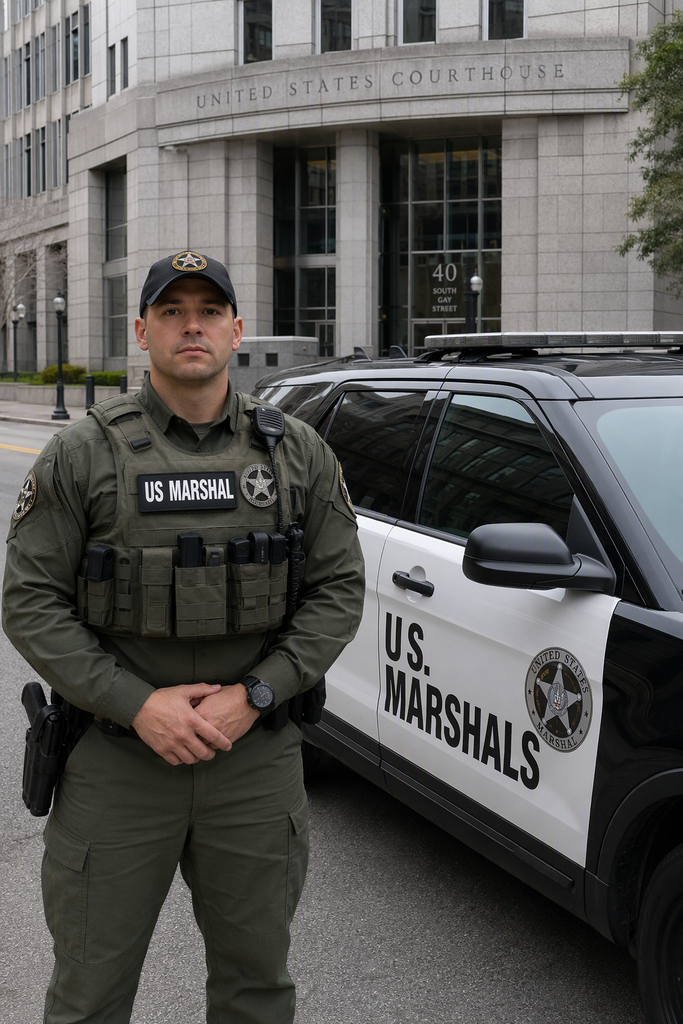
The process is rigorous. Applicants can expect a qualifications review, interview, background investigation, and medical and fitness screening. From application through training, the timeline may last from six to 24 months. That gives you a sense of how selective the agency is.
The Marshals Service also emphasizes equal employment opportunity. It states that it does not discriminate on protected grounds and is committed to a fair workplace. While law enforcement experience can be valuable, the agency also welcomes applicants from diverse professional backgrounds.
Training Programs and Physical Fitness Standards
Training is a major part of preparing people for Marshals Service duties. The compiled information confirms that new hires go through a full process that includes training after selection, though it does not provide a full course breakdown or exact physical benchmarks.
Even without that detail, you can tell the standards are serious. The work may involve court security, fugitive arrests, prisoner handling, and rapid response situations, so physical fitness and readiness matter for any law enforcement officer in these roles.
- Hiring includes medical and fitness screening
- Training follows selection and is part of the overall hiring timeline
- Duties may vary by role, such as deputy, detention, or aviation assignments
- Ongoing training is implied by specialized missions and tactical responsibilities
Ongoing Professional Development
A career in the Marshals Service does not stop with initial training. The agency’s many missions require people to build new skills over time, whether they work in protection, prisoner operations, asset management, or fugitive enforcement.
You can see this in the specialized roles described in the compiled information. Dog handlers, aviation staff, detention officers, criminal investigators, and tactical personnel all need training that matches their assignment. Experience gained across years of service also shapes leadership and mentoring.
Benefits information points to long-term career planning as well. Federal law enforcement retirement rules, promotion systems, and premium pay structures all suggest a profession built around development, retention, and readiness. In short, ongoing professional development supports both individual growth and mission success.
Unique Equipment and Technology Used by U.S. Marshals
The Marshals Service relies on equipment and technology that match its wide mission. Court protection, prisoner movement, tactical response, and fugitive work all require dependable gear, secure transport systems, and modern protective methods.
The compiled information does not give a full inventory, but it does point to firearms detection dogs, advanced court security devices, aircraft operations, and threat response systems. Together, these tools help deputies and support staff work safely while handling sensitive cases and people in custody.
Firearms and Protective Gear
The compiled information mentions firearms mainly through the K-9 program, where dogs sweep federal courthouses and high-profile trials for explosives and firearms. That tells you the agency takes preventive security seriously, especially in places where judges, jurors, and the public gather.
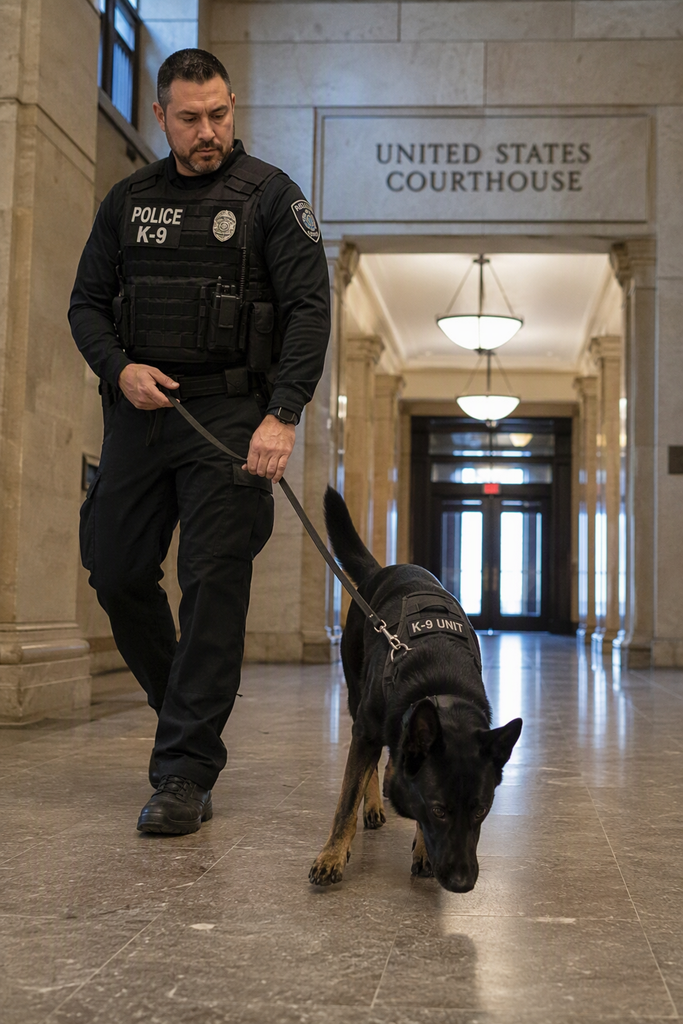
Protective gear is also implied by the nature of the work. Deputies assigned to sensitive trials, prisoner handling, tactical missions, and fugitive arrests must operate safely in unpredictable conditions. The Special Operations Group, in particular, is built for immediate response to high-risk incidents.
Although the source material does not name specific weapons or gear models, it clearly shows a law enforcement approach centered on readiness. Like other major law enforcement agencies, the Marshals Service matches equipment to mission needs rather than using one setup for every assignment.
Surveillance and Communications Tools
Technology supports nearly every Marshals mission. The agency uses modern security techniques in sensitive trials, runs a national Threat Management Center with 24/7 response capability, and coordinates prisoner transportation through a complex scheduled network.
These examples show how surveillance and communications tools help connect field teams, courts, district offices, and transport personnel. They also support careful handling of sensitive information, which is critical when working on threats, witness issues, custody matters, or fugitive leads.
- Threat Management Center support for judiciary-related threats
- Security techniques and devices used during sensitive trials
- Communications systems tied to aircraft, ground transport, and scheduling
- Coordination tools that connect district offices and operational teams
Conclusion
In conclusion, the United States Marshals Service plays a crucial role in maintaining law and order within the federal landscape. With a rich history and a commitment to core values, they effectively carry out their mission of ensuring justice. From apprehending fugitives to protecting witnesses, the breadth of their responsibilities highlights the significant impact they have on public safety. As they continue to evolve with modern techniques and technology, their dedication to excellence remains unwavering. If you're interested in learning more about their operations or want to discuss any specific aspects, feel free to reach out for a free consultation!
Frequently Asked Questions
How does the U.S. Marshals Service collaborate with other law enforcement agencies?
The U.S. Marshals Service works closely with law enforcement agencies through task force operations, special deputations, and shared investigations. It partners with local law enforcement, Department of Justice components, border liaison programs, and international contacts. This federal service model helps officers cross jurisdictions and arrest dangerous fugitives faster.
What is a typical day like for a U.S. Marshal?
A typical day in the United States Marshals Service depends on the assignment. Some deputies handle court security, others support prisoner movement, and criminal investigators focus on fugitives. The official website shows just how varied federal law enforcement work can be across districts, court facilities, and specialized operations.
How does the U.S. Marshals Service contribute to public safety in the United States?
The Marshals Service strengthens public safety by arresting federal fugitives, protecting judges and court proceedings, transporting prisoners securely, and running the witness security program. Each law enforcement initiative helps the justice system function safely while reducing threats from violent offenders, intimidation, and organized criminal activity.
https://en.wikipedia.org/wiki/Federal_Air_Marshal_Service
https://www.law.cornell.edu/uscode/text/28/part-II/chapter-37
https://www.justice.gov/jmd/organization-mission-and-functions-manual-united-states-marshals-service
https://www.wsj.com/articles/americans-cellphones-targeted-in-secret-u-s-spy-program-1415917533
https://www.law.cornell.edu/uscode/text/28/564
https://www.usmarshals.gov/history/judiciary/judiary_act_of_1789_8.htm
https://www.gpo.gov/fdsys/pkg/CFR-2013-title28-vol1/xml/CFR-2013-title28-vol1-part0-subpartT.xml