Essential Police Procedures on School Shooting Explained
 admin001
Understanding Police Procedures on School Shooting Response
Key Highlights
- Police procedures in an active shooter event focus on fast law enforcement action to stop the threat.
- A police department now trains for immediate entry instead of waiting outside for larger teams.
- School safety plans work best when school staff, first responders, and local leaders prepare together.
- Good active shooter response depends on communication, site maps, and clear roles on arrival.
- Threat assessment, school security, and reporting systems help reduce risk before violence starts.
- Ongoing drills and review shape stronger police procedures after past failures.
Introduction
When an active shooter is reported at a school, you want to know what law enforcement is supposed to do and why each step matters. Modern police response is built around speed, coordination, and school safety. Officers are trained to move toward the threat, not wait for ideal conditions. At the same time, schools and public agencies must plan ahead. Understanding these procedures helps you see how police, staff, and first responders work together during a fast-moving crisis.
Overview of Police Procedures in School Shooting Incidents
In active shooter situations, the standard goal is direct and simple: stop the killing, then help the injured. A police department sends officers fast, gathers available facts, and pushes responding units toward the suspected location of the threat.
At the same time, law enforcement sets up command, traffic control, and coordination with fire, EMS, and school officials. In many cases, the school enters lockdown while officers move inside. These basic actions shape how police handle school attacks in the first minutes and beyond.
Defining School Shooting Response Protocols
School shooting response protocols are the written and trained steps law enforcement follows during an active shooter emergency. They cover dispatch, arrival, rapid entry, locating the attacker, and moving people to a safe location. The aim is to reduce delay and give officers a clear path of action under pressure.
These response protocols also account for conditions inside a school. Officers may expect locked doors, dark classrooms, hidden students, and confused witnesses. They use threat assessment principles to judge where the danger is highest and what route gives the fastest access to the active shooter.
Just as important, official plans extend beyond the first contact. They address first aid, movement of wounded people, room clearing, and a continued search for other risks. A strong protocol also supports prevention by encouraging reporting, careful threat assessment, and advance planning with school staff.
Federal and State Guidelines for Law Enforcement
Federal guidance and widely adopted state practices have pushed law enforcement toward immediate action in school attacks. The compiled information shows that since Columbine, officers no longer wait for SWAT to fully assemble before entering. That shift reflects accepted practice across many agencies.
The federal bureau of investigation, the department of homeland security, and local training programs have all influenced how a police department prepares for these events. The key point is practical: officers are expected to confront the threat quickly because delay can cost lives.
| Guideline area | What it means in practice |
|---|---|
| Entry | Officers move in as soon as possible to reach the shooter |
| Team size | Four or five may be ideal, but one or two may enter if needed |
| Priority | Stop the threat before moving to broader scene management |
| Coordination | Police, fire, EMS, and school officials work under command structure |
Initial Police Actions When a School Shooting Is Reported
The first report starts a race against time. In active shooter situations, first responders head to the campus while dispatch shares what is known about the suspect, weapons, location, and injured people. Police officers do not treat this like a slow perimeter call.
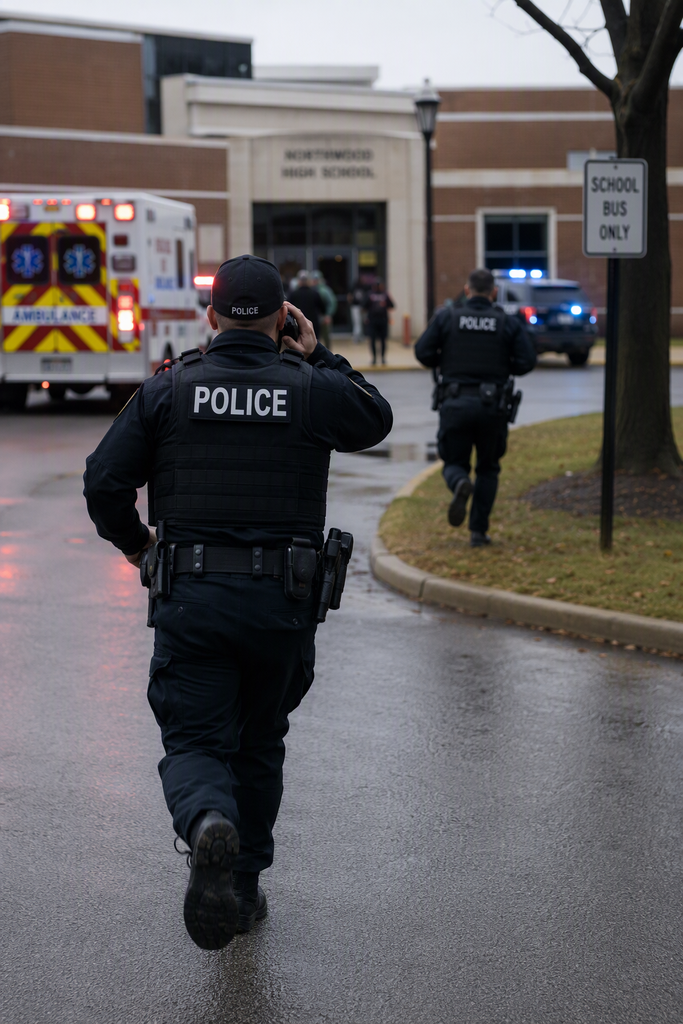
Once units arrive, they move to contact the threat while other tasks begin around them. That can include closing roads, directing parents away, and setting up command. These immediate actions create the foundation for communication and entry decisions in the next moments.
Dispatch and Communication With Responding Officers
Dispatch plays a major role in the opening minutes. A police department uses radio traffic and available systems to push detailed information to responding officers as fast as possible. That may include where shots were heard, entry points, whether the school is in lockdown, and whether cell phones or landlines are failing.
Inside the response, communication also supports school staff. Plans may include coded knock-and-announce procedures for locked rooms, warning nearby campuses, and directing parents to a reunification site instead of the danger area.
Key information often includes:
- The reported location of the active threat
- Best access points and known road closures
- Status of lockdown and secure location procedures
- Reports of wounded people needing first aid
Good communication saves valuable time. When cameras, floor plans, and site packages are available, responding officers gain better awareness before they even enter. That improves movement, lowers confusion, and helps law enforcement send the right people to the right place.
Prioritizing Rapid Entry and Threat Assessment
Rapid entry is now central to law enforcement response. The sooner officers make contact with an active shooter, the sooner the attack may end. That is why modern tactics favor immediate response instead of waiting outside for a full tactical element.
Still, quick entry does not mean careless movement. Officers perform threat assessment on arrival, using sound, witness reports, cameras, and school layouts to judge where the shooter may be. They also consider barricaded doors, open areas, and the chance of more than one suspect.
So, do police always enter quickly? Current practice strongly pushes that way, but the exact route, number of officers, and timing depend on what the first officer knows and sees. Even then, the goal remains the same: move fast enough to stop the violence in progress.
Law Enforcement Engagement During the First Few Minutes
The first few minutes of an active shooter incident are tense, loud, and uncertain. Law enforcement officers are making decisions with limited facts while first responders from many agencies may be racing to the same campus. That pressure is exactly why preplanning matters.
In those early moments, police officers focus on locating the shooter, entering the building, and cutting through delay. At the same time, commanders begin organizing the larger scene. That split between direct action and scene control shapes the next stage of engagement.
Strategies for Immediate Confrontation of Active Shooters
Immediate deployment of law enforcement means officers push toward the sound or likely location of the active shooter without waiting for perfect conditions. This change grew from hard lessons after earlier school attacks. The intent is clear: fast confrontation can shorten the event.
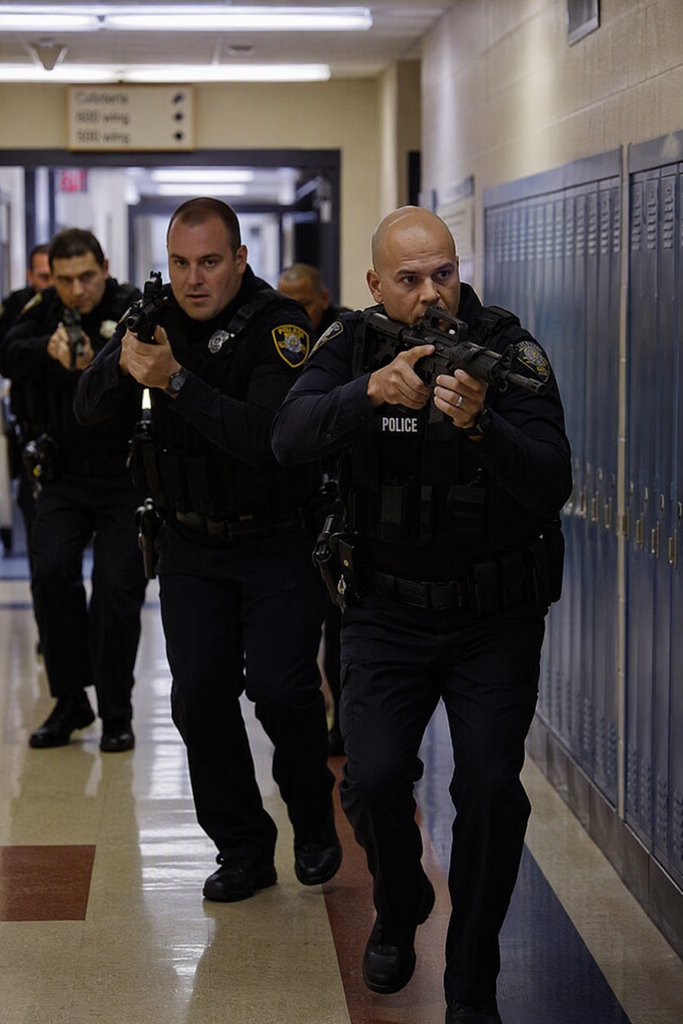
Police officers may enter alone, in pairs, or in a small contact team, depending on who arrives first. While a larger team is still preferred, modern practice accepts smaller numbers when imminent danger to potential victims is clear. The first officer often has major decision-making responsibility.
Confrontation is the priority, not a full building sweep at the start. Officers move past lower-priority tasks because every second matters while acts of violence continue. After the attacker is stopped, attention shifts to wounded people, first aid, and a more methodical search of the campus.
Role of Patrol Teams and Tactical Units
Patrol teams are usually the first law enforcement agencies put into action at a school shooting. They arrive before specialized assets, make entry, and move toward the threat. In many cases, that early movement matters more than waiting for tactical units to gear up.
Tactical units still have an important role. Once enough personnel are on scene, they can support room clearing, rescue operations, secondary searches, and management of complicated areas. They may also help if doors are barricaded or if the building layout creates special risks.
Campus security and school-based personnel can assist by sharing keys, maps, camera access, and local knowledge. That support helps patrol teams and tactical units avoid delay. It does not replace police action, but it can improve access, direction, and overall control during the response.
Coordination With School Staff and Security Personnel
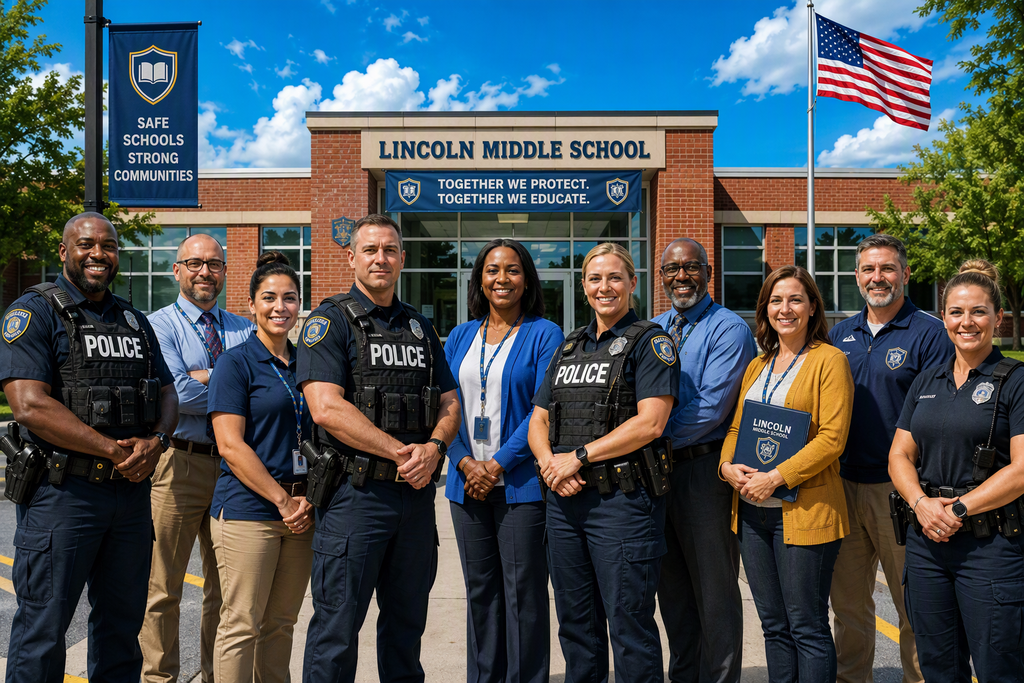
Strong active shooter response depends on work done before the crisis. Law enforcement and school officials improve outcomes when they agree on lockdown steps, command post locations, staging areas, and reunification plans. School security is part of that preparation, not an afterthought.
Prevention matters too. Agencies review building layouts, emergency plans, reporting systems, and threat concerns before violence starts. These proactive steps help schools and police move with less confusion when every second counts. The next sections show how that coordination works in practice.
Collaborating With School Resource Officers
School resource officers can be a key bridge between the campus and law enforcement. The compiled information supports placing highly trained, armed personnel in schools, with strong preparation in de-escalation, intelligence collection, dispute resolution, life-safety medical response, and active threat response.
That collaboration is most effective when the police department and schools train together. School resource officers know the campus layout, daily routines, access points, and people on site. In a crisis, that local knowledge can save valuable time for arriving officers.
Their contribution may include:
- Sharing keys, floor plans, and camera access
- Guiding officers to a safe place or likely suspect location
- Helping school staff follow lockdown or movement procedures
To work well, these officers must be carefully selected, well trained, and regularly evaluated. A weak security presence does little. A strong one supports prevention, faster access, and better coordination during the event of an active shooter.
Communication Protocols With Teachers and Students
Communication with teachers and students during active shooter situations needs to be simple and direct. Schools may use lockdown announcements, coded procedures at doors, visible placards for medical need, and reunification instructions once areas are cleared. Law enforcement must give appropriate information without adding confusion.
There is also a practical issue: cell phones and landlines may become overloaded. That is why planning cannot depend on one tool. Schools and police need backup methods, including radio support, shared plans, and clear expectations for what staff should do in a secure location.
During the response, school security and staff help keep messages consistent. Teachers may lock doors, turn off lights, move students out of view, or lead them away from open areas if that is the safer option. Police then use those conditions to move room by room with less uncertainty.
Evolving Police Procedures and Lessons Learned
Police procedures for active shooter events have changed a great deal since Columbine. The biggest shift is simple: law enforcement response now emphasizes immediate action by the earliest arriving officers. That move came from seeing how delay can increase loss of life.
Recent failures also pushed agencies to revisit command, communication, and training. Best practices now focus not only on entry, but also on planning with schools, sharing information, and testing whether procedures actually work under stress. Those lessons continue to shape the tactics used today.
Key Changes in School Shooting Response Tactics
The official approach to a school shooting has clearly changed over time. Earlier models often involved waiting for SWAT or assembling a larger team before entry. Today, a police department is trained to send officers in sooner, even if only one or two are available.
Another major change involves school planning. Active shooter response now includes site surveys, designated command posts, staging areas, road closure plans, and parent reunification points. These best practices reduce chaos outside the building while officers work inside it.
Schools have changed as well. Lockdown procedures, barricade options, room identification methods, and alternative movement away from the threat all appear in current planning. The overall lesson is that response is no longer just about brave entry. It is about preparation, coordination, and faster decisions at every stage.
Training, Drills, and Ongoing Evaluation for Law Enforcement
Law enforcement officers need repeated training for school attacks because these events move fast and create extreme stress. The compiled information highlights immediate response sessions, team movement, force-on-force simulations, and school-based exercises as core parts of preparation.
The alerrt program is specifically noted as a strong source of active shooter training available to departments. That matters because officers must practice more than entry. They also need drills for communication, command, medical response, and coordination with fire, EMS, and school officials.
Ongoing improvement is just as important as initial training. Agencies should review what worked, what failed, and what needs to change after drills or real incidents. Evaluation keeps police procedures current and grounded in lessons learned. Without regular testing, even a good plan can break down when real pressure hits.
Conclusion
In summary, understanding police procedures during school shooting incidents is vital for enhancing safety protocols and ensuring effective responses. The evolution of these procedures reflects the ongoing commitment to protecting our students and staff. By improving coordination between law enforcement and school personnel, we can create a more secure environment conducive to learning. Through continuous training and drills, both officers and school staff can better prepare for emergencies, leading to quicker and more efficient responses. Staying informed about these protocols can empower communities to engage in necessary discussions about safety measures. Remember, knowledge is a crucial step toward prevention and preparedness. If you have further questions or need assistance, don't hesitate to reach out.
Frequently Asked Questions
Do police always enter school buildings quickly during shootings?
Current practice strongly favors immediate response. Law enforcement is trained to move toward an active threat and confront a school shooter as fast as possible. Still, the exact entry depends on what officers know, where the danger area is, and how quickly they can safely reach the threat.
How do police communicate with students and teachers in an emergency?
Communication may happen through school announcements, coded door procedures, dispatch updates, and directions from officers or staff. Law enforcement tries to give teachers and students appropriate information without causing added confusion. Backup methods matter because phones and other systems can fail during a crisis.
Has the official protocol for school shooting response changed in recent years?
Yes. Law enforcement response has shifted from waiting for larger tactical teams to faster entry by the first arriving officers. Active shooter response now includes more planning with schools, better command structure, and stronger best practices. Regular evaluation also plays a bigger role in improving police procedures.
https://www.powerdms.com/policy-learning-center/tag/funnel-tofu