Master Advanced Police Tactics for Modern Law Enforcement
 admin001
Essential Advanced Police Tactics for Modern Law Enforcement
Key Highlights
- Modern law enforcement needs advanced skills for fast-changing patrol demands.
- Strong officer safety habits guide vehicle stops, planning, and high-risk responses.
- Experienced patrol officers benefit most from a hands-on training program.
- Attendees train for shooting and non-shooting situations under stress.
- Communication, threat analysis, and assessment help officers make better field decisions.
- Online and scenario-based courses build confidence for daily duty work.
Introduction
Modern law enforcement asks a lot from patrol officers. They must think clearly, move safely, and respond to risk in seconds. That is why advanced tactics matter. Good training sharpens judgment and supports officer safety in both routine and high-risk calls. From vehicle stops to building searches, today’s patrol work calls for more than basics. With the right preparation, patrol officers can handle pressure better and return to duty with greater confidence.
Advanced Patrol Tactics and Officer Safety
Advanced patrol tactics help law enforcement respond with more structure and less guesswork. A focused training program teaches patrol officers how to assess threats, plan movements, and reduce exposure during changing incidents.
During vehicle stops, that preparation improves officer safety by promoting awareness, communication, and control. Officers learn to work through risk before acting. That means safer positioning, clearer commands, and better decisions under pressure. The next sections break down how these tactics work in practical field settings.
Effective Vehicle Stop Procedures for Law Enforcement
For law enforcement officers, effective traffic stop tactics center on structure, awareness, and control. The compiled training material highlights vehicle stops, vehicle takedowns, operational planning, and communication as key parts of advanced patrol work. That makes the stop less reactive and more deliberate for patrol officers.
In practice, officer safety improves when officers use a repeatable framework before contact. Courses such as proactive patrol webinars and vehicle takedown training stress confidence, behavioral awareness, and decision-making in real patrol environments.
- Assess the vehicle, occupants, and surroundings before approach.
- Use clear communication to keep the stop organized and controlled.
- Apply scenario-based methods so patrol officers can respond to sudden changes.
These steps are effective because they build safer habits instead of relying on instinct alone.
Enhancing Officer Safety with Modern Patrol Techniques
Modern patrol techniques improve officer safety by teaching patrol officers to read risk early and act with purpose. In the Monroe County course, students train in situational risk and threat analysis, operational planning, and vehicle-based defensive tactics. Those advanced skills support safer responses before a threat grows.
Just as important, the training places officers in stressful physical and mental environments. That matters because real incidents rarely unfold in calm conditions. Repeated practice helps patrol officers stay focused when pressure rises.
Another benefit comes from blending shooting and non-shooting situations. Officers do not just train for one kind of outcome. They learn to shift between observation, communication, movement, and force options based on what the scene presents. That wider preparation strengthens officer safety during vehicle stops and beyond.
Defensive and Arrest Control Tactics
Defensive and arrest control tactics in law enforcement go beyond simple physical control. A strong training program develops advanced skills for weapons-based entanglements, aggressive deadly behavior response, and close-contact encounters where decisions must happen fast.
Basic methods often focus on standard procedures. Advanced tactics add stress exposure, scenario work, and more complex problem-solving. Officers practice what to do when the subject, location, or weapon threat changes quickly. The following sections compare these approaches and highlight useful defensive methods for modern duty work.
Comparing Advanced vs Basic Police Techniques
In law enforcement, basic techniques build a starting point. They teach standard handling, routine movement, and core firearms work. Advanced skills expand that foundation by preparing officers for higher risk, faster change, and more demanding environments. That difference has a direct effect on officer safety.
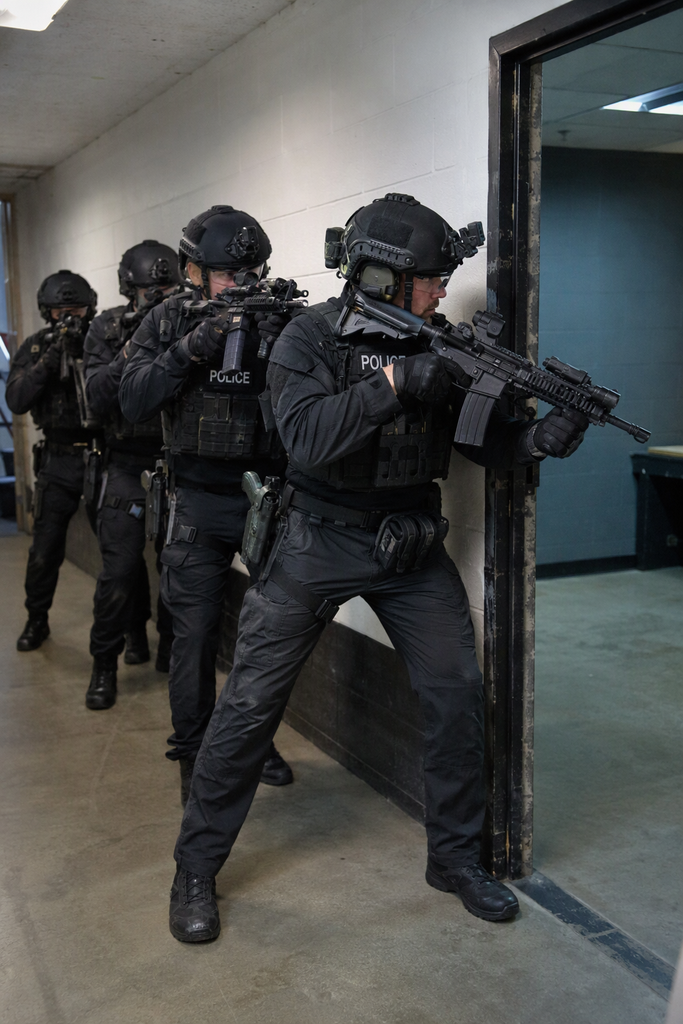
The Monroe County course shows this shift clearly. Training includes basic and advanced handgun manipulation, basic and advanced rifle shooting, weapons-based entanglements, and aggressive deadly behavior response. Students also progress through practical skills-based exercises instead of only classroom review.
| Training Area | Basic Focus | Advanced Focus |
|---|---|---|
| Firearms | Core handling and shooting | Manipulation under stress and complex scenarios |
| Contact events | Standard control methods | Weapons entanglements and defensive reactions |
| Decision-making | Routine response steps | Threat analysis and operational planning |
This approach helps officers move from simple technique execution to safer judgment in real encounters.
Recommended Defensive Tactics for Modern Officers
For modern law enforcement officers, recommended defensive tactics are the ones named in the compiled courses and reinforced through practice. The strongest options are not random moves. They are skills tied to common duty risks, especially close contact, vehicle incidents, and sudden aggression.
A useful training program includes both technical drills and scenario work. That mix helps officers apply advanced skills under pressure rather than only performing them in ideal conditions.
- Weapons-based entanglements and defensive tactics for close-range threats
- Vehicle-based defensive tactics for stops, takedowns, and confined spaces
- De-escalation methods that support control while protecting officer safety
These tactics stand out because they match real patrol demands. They also fit the broader goal of helping officers respond safely in both shooting and non-shooting situations.
Integrating Communication and Tactical Assessment
Communication and tactical assessment work best when they are used together. Law enforcement officers need more than movement skills. They need to read the scene, share what they see, and keep everyone aligned. That supports officer safety and cleaner decision-making.
Advanced skills become more effective when officers understand both the risk and the message being sent during an encounter. Assessment guides action, while communication keeps the response controlled. The next two sections show how situational awareness and clear communication support modern field tactics.
Situational Awareness in Police Operations
Situational awareness is one of the clearest building blocks in advanced law enforcement training. It means noticing threats, reading changes, and adjusting before conditions get worse. For patrol officers, that skill affects officer safety in traffic stops, building entries, and contact with aggressive subjects.
The Monroe County course outlines several key components that support this. Students train in situational risk and threat analysis, operational planning, building and room clearing tactics, field medical training, and aggressive deadly behavior response. These areas help officers build a fuller picture of the scene.
That matters because awareness is not just looking around. It is linking what you see to what you do next. When patrol officers learn to assess location, behavior, equipment, and timing together, they can act earlier, communicate better, and reduce unnecessary exposure during operations.
The Role of Communication in Advanced Tactics
Communication gives advanced tactics structure. For law enforcement officers, it helps turn observation into coordinated action. The compiled courses repeatedly connect communication with safety, especially during vehicle takedowns, patrol contacts, and supervisor-led planning. A good training program treats communication as a tactical tool, not just a courtesy.
When officers communicate clearly, they reduce confusion, improve timing, and maintain control. That strengthens officer safety because each action is tied to a shared understanding of the threat and the plan.
- It supports safer vehicle operations by keeping roles and commands clear.
- It strengthens tactical superiority during planning and live scenarios.
In advanced tactics, assessment tells officers what is happening. Communication helps everyone respond the same way. Used together, they support better decisions in fast-moving events.
Training Programs and Skill Development for Officers
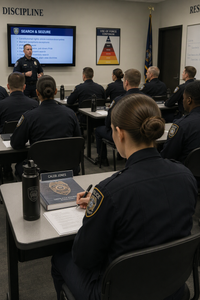
A good training program builds advanced skills through repetition, pressure, and realistic tasks. The Monroe County course is designed for experienced officers and asks attendees to arrive ready for intensive hands-on work in stressful physical and mental conditions.
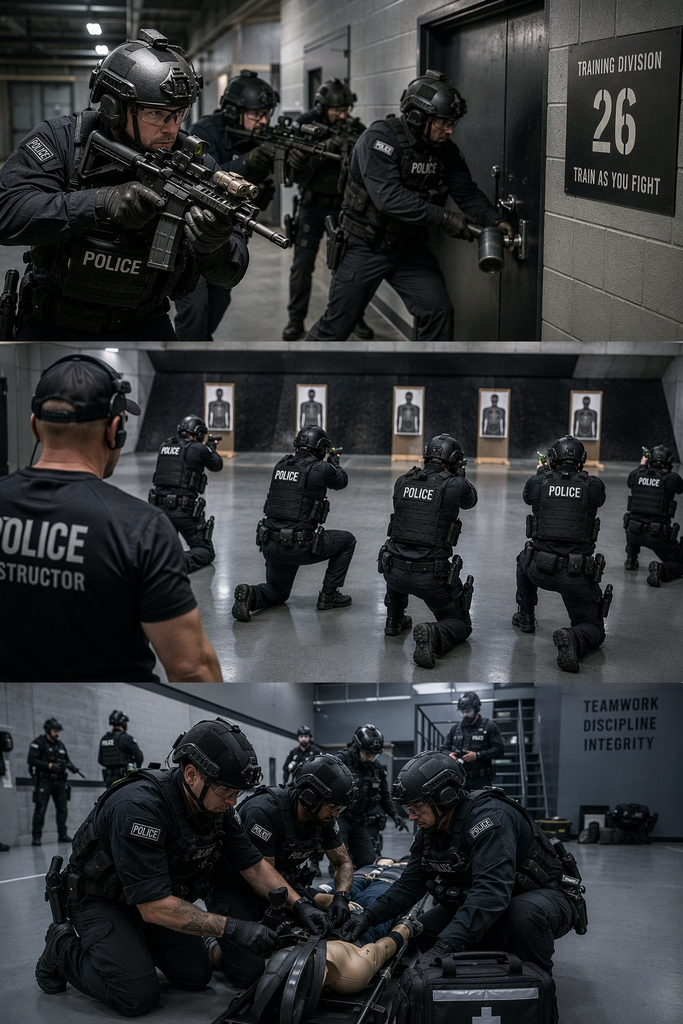
That approach matters because skill development is not passive. Attendees must progress through practical exercises and meet attendance standards. Courses like these help officers strengthen performance in risk analysis, weapons handling, vehicle tactics, and response planning. The next sections cover the main topics and the skills officers should develop.
Core Topics in Advanced Police Tactical Training
The core topics in an advanced police tactical training program are clearly outlined in the Monroe County material. For law enforcement personnel, the focus is on practical readiness, safer decision-making, and performance under stress. These advanced skills are built through both live drills and realistic scenarios.
The course covers a wide spread of operational needs, showing that modern patrol work requires more than firearms accuracy alone. Officers must assess risk, move through structures, handle vehicle events, and respond to serious threats.
- Situational risk and threat analysis with operational planning
- Building and room clearing tactics plus vehicle stops
- Handgun and rifle skills, field medical training, and deadly behavior response
Together, these topics create a rounded training program. Each area supports the others, helping officers prepare for daily duty and high-risk incidents alike.
Essential Skills Officers Should Master
Law enforcement officers should master the advanced skills that appear again and again across the compiled courses. These are the abilities that transfer directly to patrol, investigations, stops, searches, and tactical response. A solid training program turns those skills into habits.
Some skills are technical, such as handgun manipulation, rifle work, and surveillance tasks. Others are judgment-based, including behavioral analysis, questioning strategies, de-escalation, and operational planning. Both types matter because field situations rarely stay simple for long.
- Threat assessment, communication, and controlled decision-making
- Vehicle tactics, defensive responses, and practical scenario performance
Mastery also means applying skills under stress. That is why hands-on exercises, live instruction, and realistic role-play are so valuable. They help officers use what they know when conditions are demanding.
Online Courses and Support from Specialized Organizations
Online learning gives law enforcement more ways to build advanced skills without waiting for a full in-person block. Specialized providers can extend a training program through webinars, seminars, and focused topic courses that support patrol and investigative work.
The compiled information shows how this support works in practice. Officers can access live online instruction, structured frameworks, and targeted subjects that strengthen field performance. In the next sections, you will see the types of courses available and how specialized organizations help expand tactical training options.
Types of Online Advanced Police Tactics Courses
Law enforcement officers can find online or instructor-led learning in several focused areas. Based on the compiled material, these courses are built to strengthen advanced skills that support patrol, investigations, and decision-making. Some are fully tactical, while others sharpen communication and case development.
One clear example is the proactive patrol webinar, which teaches a structured framework for citizen contacts and traffic stops. Other learning options include seminars and topic-based investigative instruction that can support tactical field work.
- Proactive patrol webinars focused on stops, awareness, and control
- Interview and interrogation seminars with practical exercises
- Electronic and social media investigations for evidence development
These options broaden a training program by letting officers build knowledge in specific areas. That flexibility can help agencies train more personnel across different assignments.
How Organizations like NTOA Enhance Tactical Training
Organizations enhance law enforcement training by creating access to specialized instruction, experienced instructors, and realistic practice. The compiled examples show this through hands-on courses, live webinars, scenario-based learning, and programs designed for both patrol and investigative roles. A strong training program is easier to sustain when agencies can choose from multiple formats.
Another key benefit is course variety. Officers can train in surveillance, undercover work, de-escalation, vehicle takedowns, supervisor planning, and firearms-related tactics. That range helps agencies match training to actual duty needs.
Support also improves when organizations focus on confidence and safe performance. Scenario work, practical exercises, and instructor-led coaching help students apply lessons in daily assignments. In that sense, organizations like NTOA strengthen tactical readiness by making quality training more available and more usable.
Conclusion
In conclusion, embracing advanced police tactics is vital for modern law enforcement officers. Not only do these tactics enhance officer safety and effectiveness during critical situations, but they also foster better communication and situational awareness within the community. By investing in training programs and utilizing resources from specialized organizations, officers can equip themselves with the skills necessary to adapt to the complexities of today’s policing environment. Remember, the safety of both the officers and the public relies on continuous learning and adaptation. If you're ready to enhance your skills, consider exploring our online courses designed specifically for law enforcement professionals.
Frequently Asked Questions
What are the main benefits of advanced police tactical training?
Advanced police tactical training helps law enforcement improve officer safety, threat assessment, and practical response under stress. A strong training program builds advanced skills through realistic exercises, planning, and communication work. For attendees, the biggest benefit is being better prepared for both routine calls and high-risk incidents.
How do advanced tactics improve response in high-risk scenarios?
Advanced tactics help law enforcement respond with more structure in high-risk situations. Patrol officers learn advanced skills such as threat analysis, vehicle tactics, and operational planning. For attendees, that means quicker decisions, clearer actions, and stronger officer safety when an incident becomes dangerous or unpredictable.
What tools and resources help officers learn advanced police tactics?
Law enforcement officers learn advanced tactics through hands-on courses, live webinars, seminars, scenario-based exercises, and practical skills testing. A good training program also uses instructor guidance and realistic patrol environments. These resources help patrol officers and other attendees build advanced skills they can apply on duty.
https://anytimepolicetraining.com/course-category/apc
https://dynamicforms.ngwebsolutions.com/Submit/Start/0069762d-6689-46b7-9eb1-61c053b6f986