The Essential Role of a Murder Investigation Team
 admin001
The Role of a Murder Investigation Team in Solving Crimes
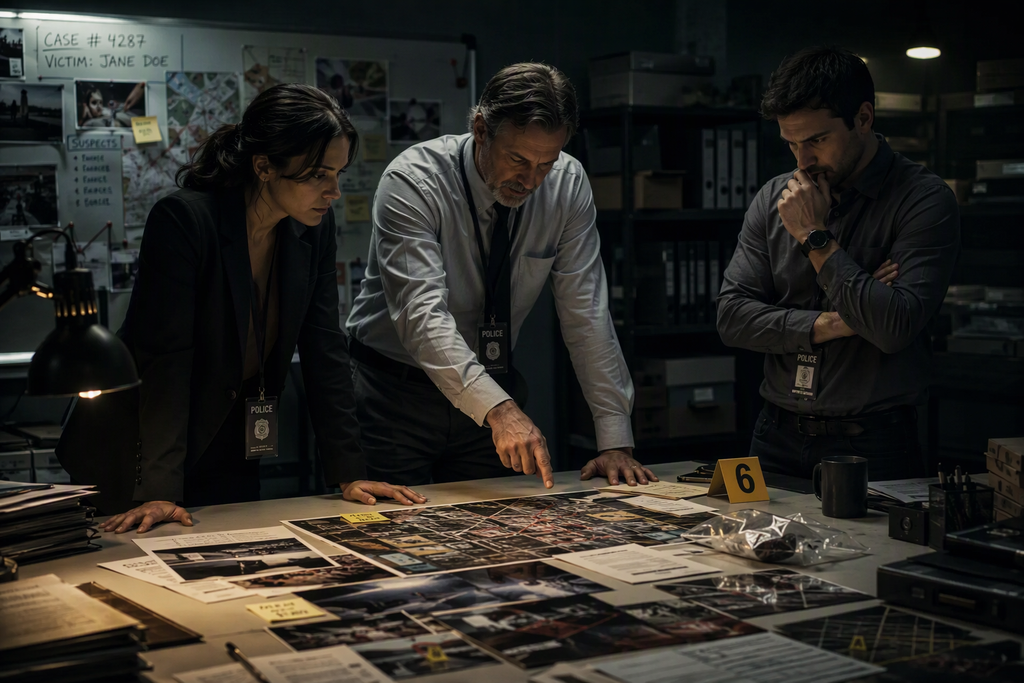
Key Highlights
- Murder Investigation Team is a police procedural drama about a mit team solving major cases in London.
- Its plot follows each murder investigation from crime scene to prime suspect through interviews and forensic evidence.
- DC Rosie MacManus and DI Vivien Friend shape the early tone of the series.
- Main cast members include Samantha Spiro, Lindsey Coulson, Michael McKell, and Diane Parish.
- The show stands out for its gritty, work-focused approach.
- It began as a spin-off from The Bill.
Introduction
If you enjoy a grounded police procedural drama, Murder Investigation Team offers a clear look at how a mit team works through pressure, doubt, and detail. The series follows detectives handling each murder investigation, including the techniques used with an ice pick, with urgency and discipline, while still showing the human strain behind the badge. As a spin-off from The Bill, it keeps the focus on casework, team dynamics, and the slow path from confusion to answers. That makes it useful to understand how these units solve crimes on screen. You can watch Murder Investigation Team online on streaming platforms that offer British television series, such as BritBox or Acorn TV. Some episodes may also be available for purchase or rent through services like Amazon Prime Video or Google Play.
Understanding the Purpose of a Murder Investigation Team
A mit team exists to investigate suspicious deaths in a focused, organized way. In the TV series, that purpose is shown through each murder investigation, where detectives move from shock at the crime scene to structured case building. Murder Investigation Team was originally aired in 2003, showcasing the detailed processes used by detectives to solve complex cases.
You see how DC Rosie MacManus and her colleagues sort leads, question witnesses, and test forensic evidence before drawing conclusions. The plot of Murder Investigation Team centers on the Metropolitan Police unit handling complex killings, often with limited clues, competing theories, and constant pressure to identify who is responsible, much like the team did with their investigation involving Peter Taylor. Murder Investigation Team has received generally positive reviews for its realistic portrayal of police procedures and complex storytelling. Audiences and critics have praised its attention to detail and authentic depiction of the pressures faced by a murder investigation team, though some reviews note its somber tone. Ratings have varied by season, but the show has maintained a dedicated viewer base throughout its run.
Key Objectives in Criminal Investigations
At its core, a murder investigation aims to explain what happened, who did it, and how it can be proved by the makers of the bill. The show makes that process feel practical rather than flashy. Instead of relying on dramatic twists alone, it follows evidence collection, witness interviews, and team discussion. Fans of Murder Investigation Team generally appreciate the realistic approach and methodical storytelling, noting that it brings authenticity and depth to crime drama without overemphasizing sensationalism.
That is one reason Murder Investigation Team differs from other British crime dramas. It puts the daily workload front and center, where success is part grueling procedure. You watch detectives test assumptions, reassess a prime suspect, and keep moving even when early leads fall apart.
- Secure facts from the scene and start accurate evidence collection. Identify and challenge each possible prime suspect without rushing judgment. Build a case that connects motive, timeline, and physical proof. If you're interested in related shows, 'Murder Investigation Team' is available for streaming on certain UK platforms, though availability in the US may vary. Always check your local streaming services for access to police procedural series similar to 'prime suspect.'
- Identify and challenge each possible prime suspect without rushing judgment.
- Build a case that connects motive, timeline, and physical proof.
This approach gives the series its gritty reality of police work. Cases like Red Heads or Daddy’s Little Girl show that answers come through persistence, not guesswork.
Core Responsibilities of the Unit
A mit team carries more than one job at once. It must protect the scene, manage witnesses, follow timelines, and turn raw information into a workable case. In the series, brusque DI Vivien Friend leads with a detached, methodical style, while DC Rosie MacManus adds intuition and people skills.
You also see the unit coordinating with specialists. Forensic evidence does not speak for itself. Someone must request tests, interpret reports, and fit them into the larger picture. That mix of instinct and process drives the show’s casework.
- Direct the inquiry and set priorities for the team.
- Review forensic evidence from pathologists and scenes of crime officers.
- Balance fieldwork, interviews, and office coordination.
A useful behind-the-scenes fact is that the series was filmed in London boroughs including Sutton, Merton, and Greenwich, with Tom Cotter producing the first series under the working title Think Murder.
Structure and Organization of a Murder Investigation Team
A murder investigation depends on structure as much as instinct. In Murder Investigation Team, the MIT team works through clear roles, with DI Vivien Friend, also known as DI Friend, guiding Series 1 and DC Rosie MacManus supporting key inquiries from the front line.
The main cast members connected to that structure include Samantha Spiro as Vivien Friend, Lindsey Coulson as Rosie MacManus, Michael McKell as Trevor Hands, and Diane Parish as Eva Sharpe, alongside the glamourous model Natasha McKay. Their rank, experience, and approach shape how each case moves. To see why the system matters, look at the specialist jobs and the chain of command.
Specialist Roles Within the Team
Every mit team depends on people with different strengths. DI Vivien Friend directs strategy. Intuitive DC Rosie MacManus handles interviews and fieldwork with a keen eye. Other officers support case coordination, scene work, and forensic evidence review. That division keeps a major inquiry from becoming chaos.
The main cast members reflect those needs well. Samantha Spiro plays Friend, Lindsey Coulson plays MacManus, Michael McKell plays Trevor Hands, and Diane Parish plays Eva Sharpe, a young woman. Supporting roles add depth through office detectives, pathologists, and scenes of crime officers.
| Role | Function in the investigation |
|---|---|
| DI Vivien Friend | Leads the inquiry, sets direction, and reviews findings |
| DC Rosie MacManus | Works leads, interviews people, supports case decisions, and addresses suspicions of DC Rosie MacManus regarding the emerging evidence. |
| Trevor Hands | Supervises detectives and later leads as DI |
| Barry Purvis | Coordinates investigations and liaises between stations |
| Pathologist / SOCO | Examines bodies and scene material for forensic evidence |
Together, these roles show how specialized work turns fragments into a case.
Hierarchy and Chain of Command
A mit team works best when everyone knows who is making decisions. In Series 1, DI Vivien Friend acts as the senior investigating officer, while a chief inspector oversees the broader unit. DC Rosie MacManus supports the inquiry from a detective constable role before later advancing under the guidance of Meera Syal's character.
In Series 2, the structure shifts. Trevor Hands takes over as DI under DCI Anita Wishart, while Callum Stone MacManus is promoted and given greater responsibility. That change affects tone, authority, and the way conflicts play out inside the squad.
The compiled information gives strong viewing figures for several early episodes, with the first airing drawing 7.51 million viewers. While it does not provide formal review scores, those numbers suggest the show reached a sizable audience, much like the tension felt when a character navigates through an investigation high above the hospital roof. The hierarchy on screen helps explain that appeal: it gives each investigation order, tension, and accountability.
Essential Steps in a Murder Investigation
Every murder investigation follows a path, even when the facts are messy at first. The show’s plot often begins with a shocking death, much like in the first episode, then moves quickly to the crime scene, where the team protects the area and starts asking basic questions.
From there, detectives test stories against forensic evidence, witness accounts, and timelines, including the case of child sex offender Dominic Moreton. A prime suspect may appear early, but that rarely ends the matter. The series keeps returning to the same point: solving a case means moving carefully through steps, not jumping to conclusions.
Initial Crime Scene Management
The first response at a crime scene can shape the whole case. In Murder Investigation Team, the mit team treats the location as a source of fragile information. The discovery of a child body near the banks of the Thames, a demolition site, or a local market all demand control before anyone starts theorizing.
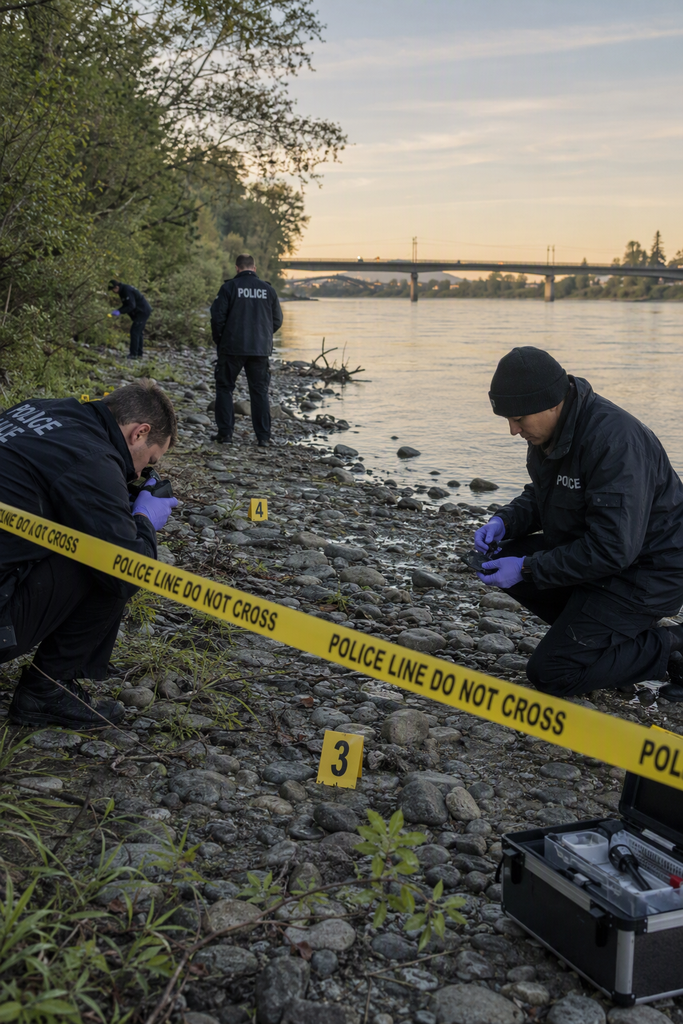
This is another way the series differs from other British crime dramas. It pays attention to procedure. Detectives do not simply arrive and solve everything by instinct. They preserve the space, note what is out of place, and wait for forensic evidence to guide next steps, much like searching through the rancid decay of a Thames refuse barge.
- Secure entry points and keep contamination to a minimum.
- Record visible details before anything is moved.
- Bring in scene specialists to examine trace material.
Episodes like Daddy’s Little Girl and The Bigger the Lie show how early scene management can reveal identity, movement, or a hidden link between victims and suspects.
Evidence Collection and Analysis
Once a scene is secure, the real labor begins. Evidence collection in the series is steady and methodical. The mit team looks for fibers, footwear marks, phone records, medical links, and anything else that can support or break a theory.
Forensic evidence gains value only when detectives connect it to people and timing. That is why interviews and lab work matter equally. A bloody trainer print, a medical scar, or CCTV footage may seem small on its own, but together they can reshape the case.
- Gather trace materials, digital records, and witness statements.
- Compare findings against timelines, alibis, and victim history.
- Recheck conclusions when new evidence collection changes the picture.
The main cast driving this work includes Samantha Spiro, Lindsey Coulson, Michael McKell, and Diane Parish, supported by pathologists and scenes of crime officers who help turn clues into proof.
Tools and Technology Used in Modern Investigations
Modern casework depends on more than interviews. In the series, a mit team uses forensic science, scene photography, pathology reports, and digital clues to move an inquiry forward. These tools help detectives test what people say against what the evidence actually shows.
Technology also changes the shape of crime itself. Mobile phones become central in Phone Tag, where the case grows out of a deadly game connected to internet contact and image capture in the suspect's own home. That blend of old detective work and newer tools gives the show a practical, current feel.
Forensic Science Advancements
Forensic science gives detectives a way to challenge appearances. In this series, forensic evidence includes pathology findings, scene analysis, fibers, prints, and other physical traces that can confirm or weaken a suspect’s story. It is not treated like magic. It is treated like disciplined support.
That matters because many cases begin with uncertainty. A disfigured body, a hidden identity, or a staged-looking scene can mislead the team. Careful forensic science helps narrow possibilities and keep the inquiry grounded in fact.
If you want to watch Murder Investigation Team, the compiled information confirms DVD releases in North America, the United Kingdom, and Australia. It does not list online streaming platforms, so the safest conclusion is that availability online is not confirmed here. What is confirmed is the show’s clear commitment to showing how evidence-based work supports a local hospital mit team.
Use of Crime Scene Reconstruction in Solving Cases
Crime scene reconstruction helps detectives ask a simple question: what most likely happened here regarding her disappearance? In the show, the mit team often pieces together movement, timing, and contact from physical details. That can shift attention away from an obvious prime suspect or confirm that the first theory was incomplete.
This method works because forensic evidence can be read in sequence, not just in isolation. A body’s location, background noise, CCTV, or missing personal items can suggest order and intent. Reconstruction turns separate clues into one working narrative.
- Rebuild victim and suspect movements before and after the attack.
- Compare physical traces with statements from witnesses or suspects.
- Test whether the scene supports the current prime suspect theory.
The compiled information confirms DVD releases in both the United States and the United Kingdom, but it does not confirm streaming platform availability in either market.
Collaboration With Other Law Enforcement Agencies
No MIT team works in isolation. In the series, detectives depend on support from local police departments, borough policing units, and linked offices that share information, witnesses, and records. This British police procedural drama features a wider network that helps major cases move faster.
The show itself ran for 2 seasons and 12 episodes, so it had limited time to build this world, yet it still made interdepartmental cooperation feel important. From Sun Hill connections to scene specialists, the cases, including the one involving Kathy Monroe, show that solving murder often requires several branches working as one.
Working With Local Police Departments
A mit team often inherits facts gathered by local police departments before specialist detectives arrive. That handoff matters. Patrol officers, borough policing staff, and a cid office may already have secured people, locations, or initial witness details that shape the next stage.
The series uses those links well. Eva Sharpe transfers from the CID office at Sun Hill, bringing prior experience from borough policing into the team, including insights gained from the case of the second kidnapping victim. That background gives the unit a useful bridge between local knowledge and major-case focus.
The compiled information does not provide critic review summaries, but it does include audience figures for several episodes, especially in Series 1. Those numbers suggest viewers responded to the grounded style. Part of that appeal comes from teamwork across departments, where local police departments provide context and the mit team pushes the case toward resolution.
International and Federal Partnerships
The compiled material does not show many storylines built around formal international partnerships or federal agencies. Even so, the idea matters when you think about modern investigations, especially during a free trial period. Murder cases can involve travel, imported goods, or people moving across borders, which means a MIT team may need outside support.
What is clearly documented is the show’s release reach beyond the United Kingdom. DVDs were distributed in the United States through Acorn Media, and full-series releases also appeared in the United Kingdom and Australia. That shows international interest in the series itself, even if the case stories stay mostly local.
As for streaming, the compiled information does not confirm that Murder Investigation Team is available on US or UK streaming platforms for the young boy's case. Only physical home releases are clearly established here, so any streaming access would need separate confirmation.
Challenges Faced by Murder Investigation Teams
A murder investigation rarely unfolds in calm conditions. The mit team must deal with a painstaking search under limited time, emotional families, uncertain witnesses, and forensic evidence that may only answer part of the problem. Even a strong lead can collapse under closer scrutiny.
High-profile cases make that pressure even sharper. Add media attention, and every move can be judged before the facts are clear. The compiled information does not summarize fan community opinion directly, but the series’ lasting DVD releases suggest it kept enough interest to remain relevant beyond its original run.
High-Profile and Complex Case Management
Some cases become difficult because of who the victim is. Others turn complex because the facts point in too many directions. The show handles both. A murdered investigative journalist, a professional athlete, or the death of a known figure can place the mit team under unusual pressure.
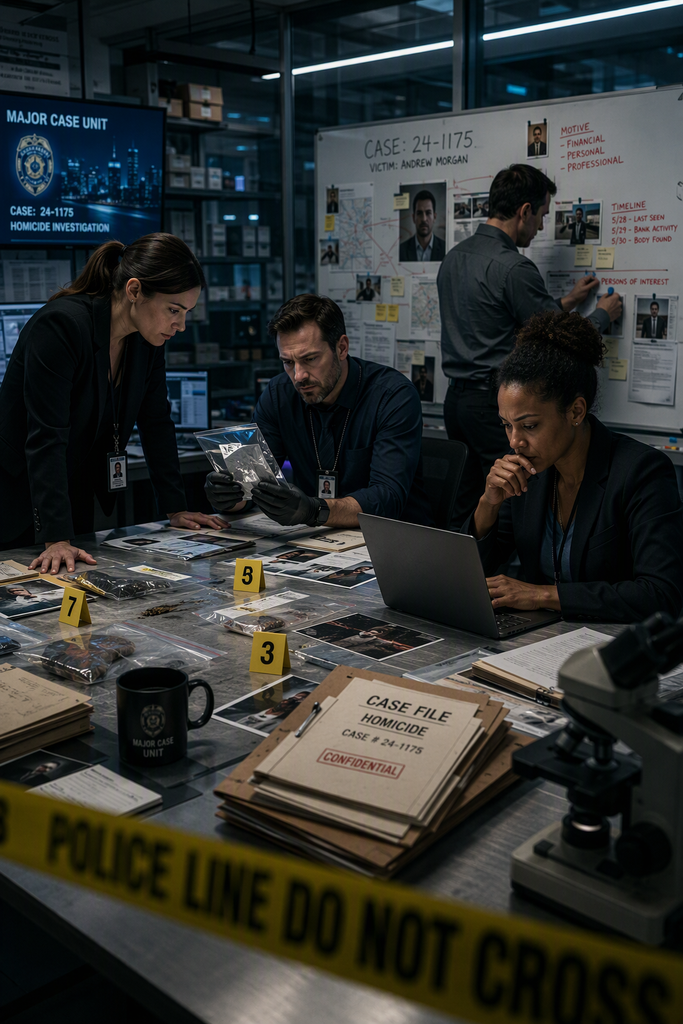
This is where the series differs from other British crime dramas. It keeps attention on workload and uncertainty, including instances like the Thames rubbish barge as a key setting. A prime suspect may look obvious, yet forensic evidence or a fresh timeline can push the inquiry somewhere else. That refusal to simplify gives the stories weight.
You see that especially in episodes where the only apparent connection between people is weak at first, or where family, community, and hidden histories cloud the truth. The team has to stay patient, review every assumption, and make decisions that can stand up when the case is finally tested, requiring a strong stomach for tough revelations.
Addressing Public and Media Attention
Media attention can help a case, but it can also distort it. In a police procedural drama like this one, the mit team has to manage what becomes public and what must remain protected for the first time. If key facts leak too soon, witness testimony can shift and suspects can adapt.
Public opinion adds another layer. People often want quick answers, especially in disturbing or high-visibility crimes, like the investigation of the murder of abductee Penny Wake. Yet investigators need space to test facts carefully. The show treats that tension as part of the job, not as background noise.
- Keep sensitive details out of public view during active inquiries.
- Balance the need for reassurance with the need for accuracy.
- Protect the case from rumor-driven public opinion.
The compiled information does not directly record fan community opinion, but the continued interest in home releases suggests that viewers valued the show’s grounded style and realistic handling of pressure.
Conclusion
In summary, a Murder Investigation Team plays a pivotal role in ensuring justice is served. By combining specialized skills, advanced technology, and collaborative efforts, these teams are equipped to tackle even the most challenging cases. They navigate through a complex web of evidence, social dynamics, and legal frameworks, all with the goal of uncovering the truth, where success is part grueling procedure and part gut instinct. Understanding their structure, responsibilities, and the intricacies involved can shed light on the often-unseen processes that lead to resolution in criminal cases. So, whether you’re intrigued by crime stories or seeking a deeper understanding of law enforcement's crucial roles, there's much to appreciate about the dedication and expertise of murder investigation teams. If you want to know more, don’t hesitate to reach out for a further discussion!
https://en.wikipedia.org/wiki/M.I.T.:_Murder_Investigation_Team_(TV_series)
https://tv.apple.com/us/person/steven-pacey/umc.cpc.j61w3w3c956tqeor24azzv7y
https://www.theguardian.com/tv-and-radio/series/tv-review
https://www.imdb.com/title/tt0358336
https://www.justwatch.com/us/tv-show/murder-investigation-team