Essential DEA Law Enforcement Requirements for New Agents
 admin001
Essential DEA Law Enforcement Requirements for Beginners

Key Highlights
- A DEA special agent serves in law enforcement for the Drug Enforcement Administration, a federal law enforcement agency focused on public safety and drug laws.
- Basic entry rules include age, U.S. citizenship, a driver’s license, relocation readiness, and employment eligibility.
- The hiring process includes the application process, testing, panel interview, drug test, medical examination, and background investigation.
- Strong report writing, critical thinking, manual dexterity, and interpersonal skills matter.
- New hires complete basic agent training at the DEA Academy.
- Education, work experience, information systems, or foreign language skills can strengthen your path.
Introduction
If you are exploring a career in law enforcement, becoming a Drug Enforcement Administration special agent may already be on your radar. It is a serious role with clear standards, structured training, and a long hiring path. For beginners, the process can feel hard to sort out at first. This guide breaks down the main DEA requirements in simple terms, so you can understand what the agency looks for and how you can prepare for the next step.
Understanding the Role of DEA Law Enforcement in the United States
The Drug Enforcement Administration is an official government organization in the United States under the Department of Justice. As a federal law enforcement agency, it supports public safety by enforcing drug laws and addressing the illegal drug trade and drug trafficking.
For special agent candidates, the role calls for critical thinking, report writing, and the ability to handle sensitive information. The application process, hiring process, background investigation, drug test, medical examination, and top secret security clearance all matter. Next, you will see what the agency does and how the position is structured.
Overview of the Drug Enforcement Administration (DEA)
The Drug Enforcement Administration is a federal law enforcement agency in the United States. It is an official government organization that works under the Department of Justice and focuses on enforcing drug laws tied to drug trafficking and the illegal drug trade. For many people interested in criminal justice, it is one of the best-known federal paths.
A special agent is a sworn law enforcement officer within this law enforcement agency. Special agent candidates must meet employment eligibility rules and move through a formal application process and hiring process before selection.
The agency also protects sensitive information and relies on secure systems, security clearance standards, and trusted handling of confidential sources. A background investigation and drug test are part of that path. If selected, new hires move into basic agent training to prepare for field duties.
Key Functions and Responsibilities of DEA Agents
A special agent with the Drug Enforcement Administration supports public safety through federal law enforcement work tied to drug laws. This law enforcement officer role combines investigation, coordination, and accountability. It is not just about arrests. It also involves handling sensitive information with care.
Common responsibilities include:
- Investigating activity connected to drug trafficking and the illegal drug trade.
- Supporting undercover operations when needed.
- Working with confidential sources under strict rules.
- Completing report writing and case-related communication.
- Using critical thinking and manual dexterity in demanding situations.
- Following security clearance standards tied to top secret security clearance needs.
Before reaching the field, candidates must pass the application process, hiring process, background investigation, drug test, and medical examination. A recruitment coordinator can explain basics such as employment eligibility, the maximum entry age limit, and pay items like law enforcement availability pay and locality pay.
Basic Eligibility Requirements for DEA Law Enforcement Careers
Before you focus on criminal justice coursework or basic agent training, make sure you meet the core entry rules. The Drug Enforcement Administration expects special agent candidates to satisfy employment eligibility standards before moving ahead in the application process.
That includes age, citizenship, a valid driver’s license, relocation willingness, and the ability to obtain security clearance. A medical examination, drug test, and background investigation also play a central role. In the next sections, you will see how the maximum entry age limit, education, and work background shape your fit for this federal law enforcement agency.
Age, Citizenship, and Background Standards
Start with the nonnegotiables. To apply for a special agent role with the Drug Enforcement Administration, you must be at least 21 and no older than 36 at the time of appointment. Because this is a federal law enforcement agency position, the maximum entry age limit is tied to law enforcement retirement rules.
You also need United States citizenship, a valid U.S. driver’s license, and a willingness to relocate anywhere in the United States. A law enforcement officer in this role must be able to obtain and keep a Top Secret security clearance.
Background matters as well. Special agent candidates go through a background investigation as part of the application process, and employment eligibility is reviewed closely. If you have questions, a recruitment coordinator can clarify age-related exceptions and general standards before you move further.
Education and Experience Prerequisites
Education requirements give you more than one path. The Drug Enforcement Administration accepts applicants with a bachelor’s degree and a minimum GPA of 2.95, or a master’s, J.D., or LL.B. For some candidates, a criminal justice degree can fit well, though the agency does not limit applicants to one degree program.
Another route is relevant work experience. That can include helping with investigations, analyzing information, writing reports, assisting court or law enforcement officer activity, and presenting findings in official settings.
There is also a special skills track. Three or more years of substantive work experience plus a related bachelor’s degree may qualify if your background includes areas like information systems, engineering, military or technical work, accounting, maritime work, or verified foreign language fluency. These details matter throughout the hiring process and panel interview stage.
Essential Qualifications and Skills Needed
Meeting the minimum rules is only part of the picture. A strong special agent candidate also shows the day-to-day skills needed for federal law enforcement work. The Drug Enforcement Administration looks for abilities that support investigations, communication, judgment, and trust.
You may build these skills through criminal justice study, a criminal justice degree, prior work, or other training. Manual dexterity, critical thinking, interpersonal skills, report writing, and careful handling of confidential sources all matter. The next sections highlight the core competencies and the backgrounds that can help you stand out.
Core Competencies for DEA Agents
The Drug Enforcement Administration expects each special agent to bring strong personal and professional habits into law enforcement work. These skills support basic agent training, field performance, and the handling of sensitive information. They also matter when a background investigation and Top Secret security clearance review your suitability.
Core competencies include:
- Written and oral communication.
- Attention to detail and memory.
- Critical thinking and sound judgment.
- Interpersonal skills and teamwork.
- Integrity, honesty, flexibility, and self-management.
- Problem-solving under pressure.
A law enforcement officer may use these abilities in report writing, coordination with a law enforcement agency, work involving confidential sources, or even undercover operations. Some applicants also strengthen their profile through a criminal justice degree, foreign language ability, information systems knowledge, or prior federal criminal investigation training.
Preferred Educational Backgrounds and Specialized Training
A criminal justice degree can be useful because it aligns naturally with law enforcement work, report preparation, and investigative thinking. Still, the Drug Enforcement Administration does not restrict special agent candidates to one degree program. What matters is meeting education requirements and showing readiness for the role.
The agency also values specialized backgrounds. Information systems, telecommunications, engineering, accounting, mechanical work, maritime experience, military or technical service, and verified foreign language fluency can strengthen your application process profile.
There is also a training angle. Applicants who already completed a federal criminal investigation training program through another federal law enforcement agency may qualify for a shorter residential training path instead of the full basic agent training. That can matter during the hiring process, though all standards still apply under the Department of Justice.
Physical and Medical Fitness Standards
Physical readiness is a real part of the job. A Drug Enforcement Administration special agent must be able to handle the demands of a federal law enforcement agency and complete the basic agent training program. That is why the DEA requires excellent physical condition and careful medical screening.
Applicants face a physical task assessment, a medical examination, and review of issues that could affect safe duty performance. A recruitment coordinator can explain how these steps fit with the background investigation, drug test, security clearance, and even age-related questions such as the maximum entry age.
Physical Fitness Assessment for Applicants
The physical task assessment is designed to measure whether a special agent applicant can handle the rigors of the basic agent training program. In plain terms, the Drug Enforcement Administration wants candidates in excellent physical condition before training begins.
Fitness screening works alongside the broader hiring process. It does not replace the background investigation, drug test, or security clearance review. Instead, it confirms that you can safely perform the physical side of law enforcement work.
Expect the process to focus on readiness for training and duty, including:
- Overall excellent physical condition.
- Ability to withstand special agent training demands.
- Safe physical function during law enforcement tasks.
- Review of limitations through the medical review process when needed.
- Guidance from a recruitment coordinator during the application process.
Medical Examination and Health Criteria
Medical screening is detailed because the role is demanding. A Drug Enforcement Administration special agent must show sharp vision and hearing acuity, manual dexterity, and sufficient functioning of arms, hands, legs, and feet. Near vision can be corrected, and hearing standards are measured.
The agency also looks at emotional and mental stability. A law enforcement officer must be able to perform exacting duties under trying conditions and must not have a physical condition that creates a hazard to self or others.
If an applicant cannot clearly meet some physical standards, a medical review process may help determine eligibility. This medical examination is one part of the hiring process, along with the background investigation, drug test, and security clearance review. A recruitment coordinator can explain how these steps affect your application process.
Beginner’s Guide: How to Start Your Journey Toward a DEA Law Enforcement Career
If you are ready to move from interest to action, start with official websites. The Drug Enforcement Administration is an official government organization, so use a gov website and secure websites when you research openings, requirements, and forms. That helps protect your sensitive information.
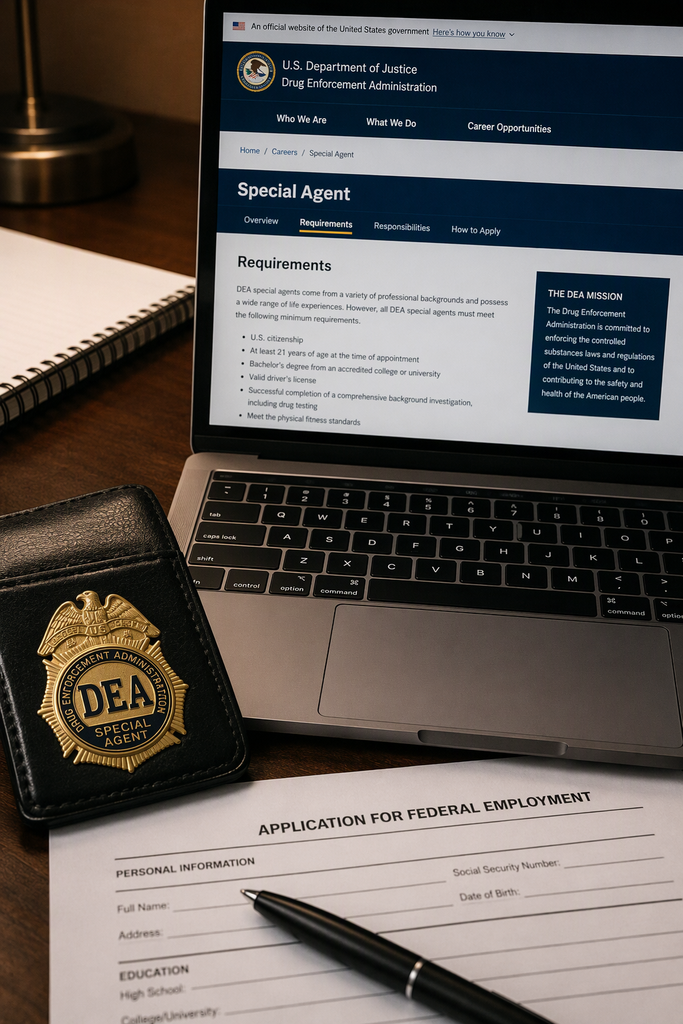
You should also prepare for a long hiring process. The application process involves employment eligibility review, testing, medical steps, a drug test, and a background investigation. A recruitment coordinator can help you understand what to gather first. The sections below walk you through the basics in a simple order.
What You’ll Need to Get Started (Documents, Resources, Preparations)
Before you begin the application process, gather the basics that support your employment eligibility. Since the Drug Enforcement Administration is a federal law enforcement agency, accuracy matters from the start. Use official websites and secure websites only.
Helpful items to prepare include:
- Proof of U.S. citizenship and identity.
- A valid U.S. driver’s license.
- Education and work history records.
- Contact details for references tied to a future background investigation.
- Any records showing special skills, such as information systems or foreign language ability.
It also helps to review the basic agent training program expectations and think ahead about the drug test and physical standards. If something is unclear, a recruitment coordinator can explain what a special agent or law enforcement officer applicant should prepare before submitting forms or sharing sensitive information.
Step-by-Step Process to Become a DEA Agent
The path to becoming a Drug Enforcement Administration special agent moves in stages. It is a structured hiring process, not a one-day event. Because this is a Department of Justice federal law enforcement agency role, each stage checks a different part of your readiness.
In general, the application process includes:
- Submit your application and required materials.
- Complete assessments and a panel interview.
- Pass the drug test and other screening steps.
- Complete medical review process requirements.
- Undergo a background investigation and security clearance review.
- If selected, attend the basic agent training program.
A recruitment coordinator can explain how these stages connect and what affects employment eligibility. Timing varies, and the full hiring process may take 12 months or longer depending on scheduling and candidate availability.
Step 1: Submit Your Application and Required Materials
Your first step is simple in theory but important in practice: complete the application process carefully. When you apply for a Drug Enforcement Administration special agent opening, use official websites and secure websites only. That protects your personal data and helps you avoid mistakes.
The forms you submit start the hiring process and give the agency an early picture of your employment eligibility. Expect to provide information on identity, education, work history, and other background details that may later support a background investigation.
Take your time and be accurate. Incomplete or inconsistent answers can create issues later when the drug test, background checks, and other reviews begin. If you are unsure what to include, a recruitment coordinator can point you in the right direction without changing the standards.
Step 2: Complete Written Assessment and Interview
Next comes the assessment phase. The Drug Enforcement Administration provides a Special Agent Test Preparation Guide to help candidates understand this part of the hiring process. It explains the phases of the selection process, including the Test of Observation and Recall, the Writing Exercise, and the structured panel interview.
These assessments check whether you can think clearly and communicate well. A special agent and law enforcement officer must show report writing ability, critical thinking, and sound judgment. You may also review test question examples before testing.
This stage is important because it measures skills needed before the basic agent training program begins. Strong performance supports your employment eligibility, though it does not replace later steps such as the background investigation, security clearance review, or handling of sensitive information.
Step 3: Pass Drug Test and Polygraph Examination
Drug screening is a major part of DEA hiring. The Drug Enforcement Administration requires applicants to disclose past and current illegal drug use and drug abuse. A special agent in a federal law enforcement agency must meet a strict standard because the job involves public trust, sensitive information, and security clearance needs.
The agency’s policy is specific. Recent marijuana use, illegal use of other drugs within stated time limits, abuse of prescription or over-the-counter substances, drug activity while holding a security clearance, and misrepresentation of drug history can all cause disqualification.
This stage is part of the larger hiring process, alongside the medical examination and background investigation. If you have procedural questions during the application process, a recruitment coordinator can clarify what happens next and what records or disclosures may be reviewed.
Step 4: Undergo Medical and Psychological Evaluations
Once testing moves forward, the medical examination becomes a serious checkpoint. The Drug Enforcement Administration reviews whether a special agent applicant is in excellent physical condition and able to perform the duties of a federal law enforcement agency role safely.
That includes vision, hearing, physical function, and emotional and mental stability. A law enforcement officer may work under pressure, so the agency needs confidence that you can meet the demands of training and later assignments.
If there is a question about a physical standard, the medical review process may be used to determine employment eligibility. This part of the hiring process works alongside the background investigation and security clearance review. A recruitment coordinator can explain timelines, but not change the medical standards themselves.
Step 5: Participate in Background Investigation and Final Review
The background investigation is one of the final steps before a hiring decision. For a Drug Enforcement Administration special agent, this review helps build a full picture of your personal history, education, work experience, and references. It supports the agency’s security clearance decision.
Because a federal law enforcement agency handles sensitive information, this review is extensive. The agency needs to know that a future law enforcement officer can be trusted in serious situations, including work that may involve confidential sources and protected records.
Timing can vary based on the type and scope of the investigation. This means the hiring process may stretch over many months. During the application process, a recruitment coordinator may give updates, but the final review still depends on verified facts and overall employment eligibility.
Training and Professional Development for New DEA Recruits
Getting hired is only the beginning. New agents in the Drug Enforcement Administration move into structured preparation built for federal law enforcement work. This training turns a selected applicant into a working special agent with the skills expected by the Department of Justice.
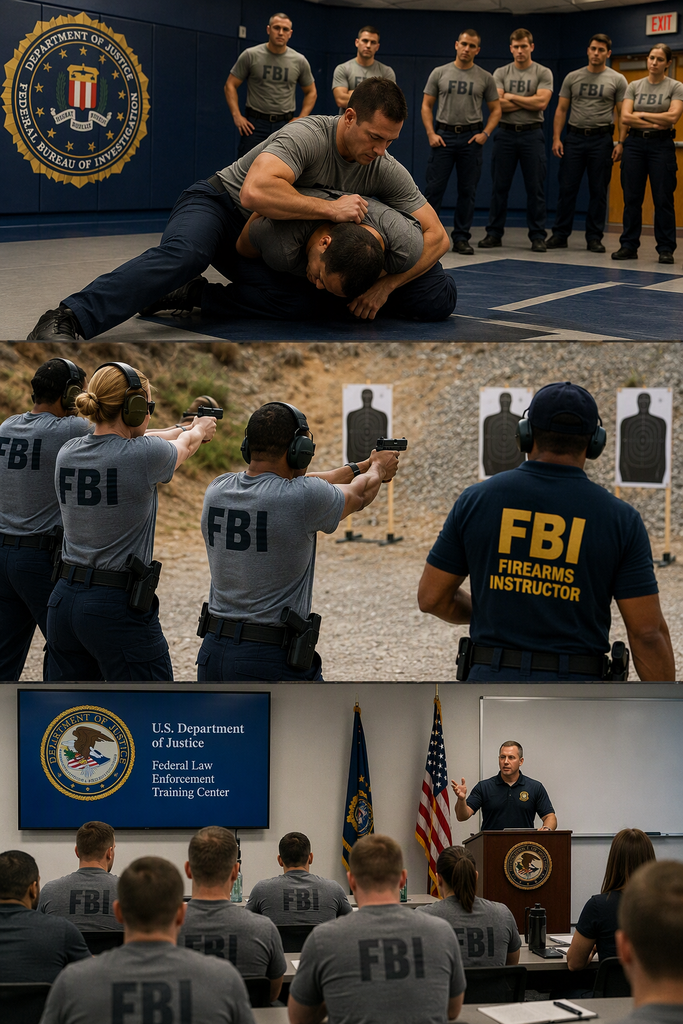
The DEA Academy plays a central role. Depending on your background, you may complete the full basic agent training program or a shorter option tied to prior federal criminal investigation training program experience. Next, let’s look at what new agents can expect in training and later growth.
DEA Academy Training Program Overview
All selected special agent candidates attend training through the Drug Enforcement Administration. The main path is the 14-week basic agent training program at the DEA Academy in Quantico, Virginia. This training prepares new agents to become entry-level members of a federal law enforcement agency.
Applicants who already completed a federal criminal investigation training program with another law enforcement agency may qualify for a 3-week residential program, if eligible records are provided. Excellent physical condition still matters, and the physical task assessment supports readiness.
| Training Element | Details |
|---|---|
| Main program | 14-week Basic Agent Training Program |
| Location | DEA Academy, Quantico, VA |
| Alternate path | 3-week residential program for certain prior federal criminal investigation training graduates |
| Key disciplines | Physical fitness, academics/legal, report writing, driver training, defensive tactics, tactical operations, firearms |
Graduation requires passing performance-based disciplines and meeting conduct expectations set during the hiring process.
Ongoing Career Advancement Opportunities
After training, growth continues. New agents in the Drug Enforcement Administration start at different grade levels based on education and experience, and many progress to GS-13 within a few years. A special agent also receives law enforcement availability pay in addition to base and locality pay.
Career strength can come from the same areas that helped during hiring. A degree program, criminal justice knowledge, information systems skill, or foreign language ability can all support advancement in a federal law enforcement agency.
The job itself also builds experience. A law enforcement officer may grow through report-based case work, operational assignments, and trusted handling of confidential sources. If you are still early in the process, a recruitment coordinator can explain entry steps first, while the DEA Academy and later assignments shape your longer path.
Common Disqualifiers and Challenges for Applicants
Many special agent candidates meet the basic interest level but miss key standards. The Drug Enforcement Administration uses a strict hiring process because this is a federal law enforcement agency role involving public trust, firearms, and security clearance access.
Problems can arise during the application process, background investigation, drug test, or medical examination. Age limits, inaccurate disclosures, and conflict-of-interest issues can also affect employment eligibility. The next two sections show what may stop selection and what you can do to present a stronger application.
Factors That May Prevent Selection
Some issues will raise concerns, and others can act as an automatic disqualifier. Because the Drug Enforcement Administration is a federal law enforcement agency, special agent candidates are reviewed carefully for employment eligibility and trustworthiness.
Common factors that may prevent selection include:
- Being outside the maximum entry age limit without a qualifying exception.
- Failing to obtain or retain required security clearance.
- Recent disqualifying drug use, drug abuse, or false drug history disclosures.
- Medical examination results showing unsafe limitations for the role.
- Conflict-of-interest behavior that clashes with the agency mission.
The application process also depends on honesty. A background investigation may uncover inconsistencies tied to work history, conduct, or handling of sensitive information. For a law enforcement officer role, accuracy and integrity matter from the first form through basic agent training and final review.
Tips for Strengthening Your Application
You cannot control every part of the hiring process, but you can improve how prepared you are. The Drug Enforcement Administration looks for special agent candidates who meet standards clearly and present complete, consistent information.
Useful ways to strengthen your application include:
- Review every answer for accuracy before submitting the application process forms.
- Build strong report writing and critical thinking skills.
- Highlight relevant education, such as a criminal justice degree or another solid academic path.
- Show verified strengths in foreign language or information systems.
- Prepare seriously for the drug test, medical examination, and background investigation.
It also helps to understand the role. A future law enforcement officer may work in demanding settings that involve confidential sources or undercover operations. If your application avoids red flags and clearly supports employment eligibility, you lower the risk of problems that can become an automatic disqualifier later.
Conclusion
In conclusion, embarking on a career with the DEA requires a clear understanding of the necessary qualifications and steps involved in the hiring process. From meeting eligibility requirements to undergoing rigorous training, each step is crucial in shaping competent agents who are well-prepared for their roles. As you navigate this journey, remember that dedication and preparation can significantly enhance your prospects. Stay informed about the common challenges applicants face and hone your application to stand out. If you're ready to take the first step towards a fulfilling career in law enforcement, consider reaching out to mentors or professionals in the field who can provide valuable insights and guidance.
Frequently Asked Questions
Do I need prior law enforcement experience to join the DEA?
No. Prior law enforcement experience is not required to become a Drug Enforcement Administration special agent. You may qualify through education, such as a criminal justice degree, or through relevant work experience and special skills. The hiring process allows more than one path into the role.
How long does the hiring process for DEA agents typically take?
The Drug Enforcement Administration states that the hiring process may take 12 months or longer. Timing depends on scheduling and candidate availability. Since this is a federal law enforcement agency role, the application process includes several stages, so patience and preparation are both important.
What career paths are available within the DEA for law enforcement personnel?
Within the DEA, law enforcement personnel can build a career as a special agent and progress through higher grade levels over time. New agents begin with formal training, then grow through field assignments, casework, and specialized skills such as foreign language, information systems, and other mission-related areas.
What disqualifies candidates from being hired by the DEA?
Several factors can disqualify candidates from DEA employment, including felony convictions, illegal drug use, dishonorable discharge from the military, or any history of misconduct. Additionally, failure to meet educational requirements or background checks can also result in disqualification.
https://www.dea.gov/office-training-programs
https://www.dea.gov/law-enforcement/office-of-training
https://www.dea.gov/documents/special-agent-test-preparation-guide