Mexican Politics: U.S. Investigation Cartel Case Impact
 admin001
How U.S. Investigation Cartel Case Affects Mexican Politics

Key Highlights
Here's a quick look at the main points of this developing story:
- The United States has indicted 10 current and former Mexican officials for alleged ties to the Sinaloa Cartel.
- The charges include drug trafficking and illegal possession of weapons.
- One of the highest-profile officials implicated is Sinaloa Governor Rubén Rocha Moya.
- Mexican President Claudia Sheinbaum has promised an independent investigation into the U.S. allegations.
- The indictments have created a political firestorm, straining U.S.-Mexico relations and impacting Mexican politics.
- President Sheinbaum has stated that she will not allow foreign governments to meddle in Mexico's affairs.
Introduction
A recent cartel investigation from the United States has sent shockwaves through Mexican politics, placing the relationship between the two countries under a microscope. The indictment of several Mexican officials has created a complex situation, blending legal battles with political maneuvering. This case raises serious questions about drug trafficking, corruption, and national sovereignty. Are you wondering how this U.S. investigation will affect Mexico's leadership and its fight against organized crime? Let’s explore the details.
U.S. Cartel Investigation Overview
The heart of the issue is a New York indictment targeting a group of Mexican officials. These charges connect them to the powerful Sinaloa Cartel, one of the world's most notorious organizations involved in drug trafficking. The United States law enforcement agencies have built a case alleging deep-rooted corruption.

This has put a spotlight on the individuals named and the broader system they operate within. The investigation outlines specific ways these officials allegedly supported the cartel's criminal activities. We will look closer at the specific accusations and the timeline of this significant indictment.
Key Allegations Against Mexican Officials
The main allegations against the current and former officials are severe, painting a picture of systematic collusion with organized crime. According to the indictment, these individuals used their positions of power to help the Sinaloa Cartel operate freely.
The core accusations claim the defendants actively shielded cartel leaders from being investigated or arrested. In exchange for millions of dollars in drug money, they allegedly provided the cartel with sensitive law enforcement and military information. This allowed the cartel to continue its drug trafficking operations and commit violence without consequences.
The indictment further details that the accused officials:
- Directed state and local law enforcement to protect drug shipments.
- Allowed the cartel to carry out brutal, drug-related violence.
- Fed the cartel sensitive military and law enforcement intelligence.
Mexico's Attorney General’s Office is now tasked with reviewing the case to see if there is enough evidence to proceed, but the U.S. charges are clear and damaging.
Timeline and Scope of Recent Indictment
The situation escalated last week when the U.S. Justice Department's charges were formally unsealed. This legal action targets ten current and former officials, making it a significant move against alleged corruption within the Mexican government. The indictment of Rocha, the sitting governor of Sinaloa, is particularly notable and has drawn the most attention.
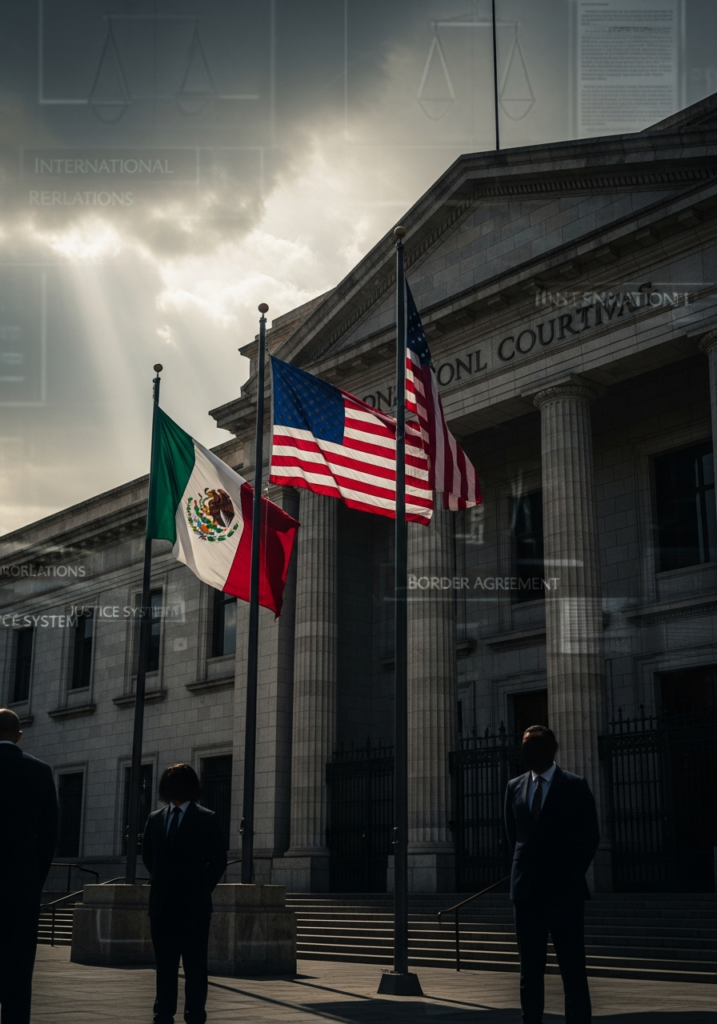
This move has prompted Mexican prosecutors to begin their own review. Law enforcement officials on both sides of the border are now navigating a politically sensitive and complex legal process. The scope of the indictment is broad, implicating officials from various levels of government.
The key officials and their alleged involvement are summarized below:
| Official/Entity | Role/Allegation |
|---|---|
| Rubén Rocha Moya | Governor of Sinaloa, accused of shielding Sinaloa Cartel leaders. |
| Mayor of Sinaloa's Capital | Implicated in the drug trafficking and protection scheme. |
| A Sinaloa Senator | Also a member of the Morena party, charged with aiding the cartel. |
| Other Officials | Included individuals not affiliated with a political party. |
Political Pressure on Mexican Leadership
The indictment has ignited a political firestorm in Mexico, placing immense pressure on Mexican President Claudia Sheinbaum. She now faces the difficult task of responding to a foreign government's accusations against members of her own political party. This balancing act involves maintaining political support from the Mexican people while addressing serious allegations of corruption.
President Sheinbaum must navigate U.S. demands to crack down on cartels while also upholding her message of national sovereignty to her base. The reactions of her administration and other political leaders are being closely watched. Next, we will explore how top officials are responding and the specific challenges the president faces.
Reactions from Top Mexican Political Leaders
The reactions from Mexico's political elite have been swift and varied. Governor Rubén Rocha Moya took to social media to categorically deny the charges, stating they "lack any basis in truth." Other accused Mexican officials from the progressive Morena party have echoed this sentiment, framing the indictment as a political attack on their left-leaning movement.
President Claudia Sheinbaum addressed the nation during her morning press conference, vowing to conduct an independent investigation. She emphasized that her government would not let foreign powers interfere in Mexico's internal affairs for political reasons. She made it clear that she would not act on the U.S. charges without a thorough review by Mexican authorities.
This stance reflects a broader strategy to project strength and sovereignty. However, it also highlights the deep political divisions and the high stakes involved for Sheinbaum's administration and the Morena party as they grapple with these serious accusations.
Sheinbaum’s Position Following the Rocha Indictment
The indictment of Governor Rocha places Sheinbaum’s government in a particularly tough spot. Rocha is not just any sitting governor; he is a top Morena official and a close ally of Sheinbaum’s predecessor and mentor. This personal and political connection makes the situation incredibly sensitive for the current administration.
Dealing with a high-ranking official from her own party who is accused of such serious crimes is a major test for President Sheinbaum. She must show that her government is committed to fighting corruption, even when it involves a close ally of Sheinbaum. Any perceived inaction could be seen as protecting the political elite, while taking strong action could create rifts within her own party.
This dilemma forces her to balance loyalty, justice, and international pressure. Her decision on how to proceed will have lasting implications for her presidency and the credibility of her anti-corruption platform.
Mexican Government Response
The Mexican government has responded with a firm promise to handle the matter internally. Mexican authorities, led by the Attorney General, have stated they will launch their own independent investigation into the U.S. allegations. This approach is meant to assert Mexico's sovereignty and ensure that any legal actions are based on their own findings.
This response involves coordinating between federal, state, and local law enforcement agencies to gather information. The government's next steps will be critical in determining the fate of the accused officials and shaping future collaboration with the U.S. We will now look at the specific steps pledged by authorities and any changes in policy.
Steps Pledged by Authorities to Address Drug Cartel Ties
In response to the U.S. Justice Department's charges, Mexican authorities have outlined a clear path forward. President Sheinbaum announced that Mexican prosecutors will conduct an independent investigation to gather their own information. The goal is to determine if there is enough evidence to support the American claims and justify pursuing arrest warrants.
The government is emphasizing a methodical and sovereign approach. President Sheinbaum has stated that if the investigation finds the U.S. charges are politically motivated and lack clear evidence, Mexico will not hesitate to protect its citizens and its autonomy.
The specific actions pledged include:
- A thorough review of the U.S. extradition request and the evidence provided.
- Conducting a separate, independent investigation led by Mexican law enforcement.
- Impeaching any sitting officials to lift their legal immunity before any major legal action can be taken by Mexican authorities.
Changes in Extradition Policy and Official Statements
The Mexican government has taken a cautious stance regarding the extradition request from the United States. The Mexican President, Claudia Sheinbaum, has made it clear that her administration will not simply hand over the accused officials. She insists on the principle of national sovereignty, stating that Mexico will make its own decisions based on its own laws and evidence.
Mexico's Deputy Attorney General, Ulises Lara, announced that the government has reviewed the extradition request but found it did not provide sufficient evidence to warrant arrests at this time. He stressed that any extradition would only be approved if Mexican authorities are provided with compelling proof of wrongdoing.
Furthermore, Lara criticized the U.S. for releasing details of the case publicly, arguing it harms the confidentiality of criminal proceedings. The Mexican president's position is firm: until there is clear evidence that a crime was committed, she will not allow a foreign government to dictate legal outcomes within her country.
Impact on Bilateral Relations and Mexican Elections
This U.S. investigation is creating significant ripples in the bilateral relations between the United States and Mexico. Accusations against officials from a foreign government are always sensitive, but this case, originating from Mexico City's northern neighbor, touches upon deep-seated issues of trust and cooperation. The indictment could alter election dynamics and the nature of U.S.-Mexico collaboration.
The fallout from these charges could impact everything from joint security operations to public perception of foreign influence. Below, we'll examine the effects on collaboration against drug cartels and the broader political landscape, including travel advisories and accusations of foreign meddling.
U.S.-Mexico Collaboration Against Drug Cartels
The recent indictments have put U.S.-Mexico collaboration against organized crime under a microscope. While both nations share a goal of dismantling powerful groups like the Sinaloa Cartel and the Jalisco New Generation Cartel, this incident introduces a layer of tension. President Sheinbaum has publicly rejected offers of U.S. military action on Mexican soil, calling it "unnecessary."
This sentiment was reinforced after a recent incident where two CIA agents died in a car crash in Mexico, highlighting the complexities and risks of joint operations. Law enforcement officials from both countries continue to work together, but the current political climate demands a careful approach.
Despite the tensions, collaboration continues in several forms:
- Intelligence sharing between agencies to track cartel activities.
- Joint efforts to disrupt drug trafficking routes.
- Targeting the financial networks that fund these criminal organizations.
The challenge lies in maintaining this crucial cooperation while navigating the political fallout from the indictments.
Effects on Travel Advisories, Election Dynamics, and Accusations of Foreign Meddling
The fallout from the U.S. investigation could extend to several areas. While the compiled information does not specify changes to travel advisories, high-profile cases involving cartels often increase scrutiny and can lead to updated guidance for travelers. The political impact on Mexican elections is more direct. The accused officials have framed the U.S. federal court indictment as a political attack, which could become a rallying cry for their supporters and influence election dynamics.
Accusations of foreign meddling are at the forefront of the Mexican government's response. President Sheinbaum has been vocal about not allowing another country to interfere in Mexico's sovereign decisions. This rhetoric is aimed at appeasing her base and asserting Mexico's independence on the world stage.
The U.S. government's action of indicting a sitting governor is seen by some analysts in Mexico as a move to back its own political rhetoric around intervention. This perception of foreign meddling could complicate diplomatic relations and shape public opinion in the run-up to future Mexican elections.
Conclusion
In conclusion, the ongoing U.S. investigation into cartel activities has significant implications for Mexican politics and governance. As pressure mounts on Mexican officials to respond effectively, the need for transparency and accountability is more critical than ever. The collaboration between the U.S. and Mexico in combating drug cartels illustrates the complexities of their bilateral relations, which will undoubtedly influence the upcoming elections and political landscape in Mexico. It is essential for citizens to stay informed about these developments, as they not only affect national policies but also the safety and well-being of communities. Stay updated and engaged in these discussions; our collective awareness can foster positive change.
https://apnews.com/article/2b16e1b751b044f3a7581df96ed41ef3
https://bsky.app/profile/verzamex.bsky.social