How 911 Emergency Response Works: Your Complete Guide
 admin001
How 911 Emergency Response Works: A Complete Guide
Key Highlights
- In the United States, a 911 emergency call connects you to trained staff focused on public safety and fast emergency assistance.
- Dispatchers first confirm the location of the emergency and your telephone number to avoid delays.
- Your call information is entered into a system so first responders can be sent quickly.
- Dispatchers ask extra questions to improve accuracy, not to slow help down.
- Different emergencies may send police, fire, or medical teams based on what is happening.
- Knowing your address and staying calm helps emergency assistance arrive faster.
Introduction
When you face emergency situations, knowing how the 911 process works can help you stay focused. This emergency number is a key part of public safety across communities, connecting callers with trained dispatchers who gather details and send help. You may only have a few seconds to explain what is happening, so it helps to understand what comes next. Once you know the basics, you can work with the dispatcher and help emergency responders reach the right place faster.
Understanding the 911 Emergency Response System
At its core, 911 is part of public safety. When you place a call, you reach trained staff at public safety answering points, or call centers, that manage emergency services and decide what type of help is needed.
In practice, the system gathers basic call details, confirms location, and routes call information for response. An official government organization or local communications center may use phone records, a computer database, and dispatcher questions to support accurate handling. The next sections explain how this system developed and how it processes each call.
Evolution of 911 and E911 Services
The basic 911 system gives people one easy phone number to reach help in an emergency. Over time, emergency communications needed more than just a voice call. Dispatchers also needed faster access to a caller’s location and callback details.
That is where E911, or enhanced 911, comes in. In simple terms, E911 adds location-related information and a phone number to help a communications center verify where help is needed. This matters when a caller is scared, injured, or unable to explain much before the end of the line goes quiet.
Today, agencies also talk about next generation improvements. These changes support newer ways to share information through modern systems, and public safety efforts continue to grow with guidance from groups such as the Federal Communications Commission.
Key Components of the Emergency Call Process
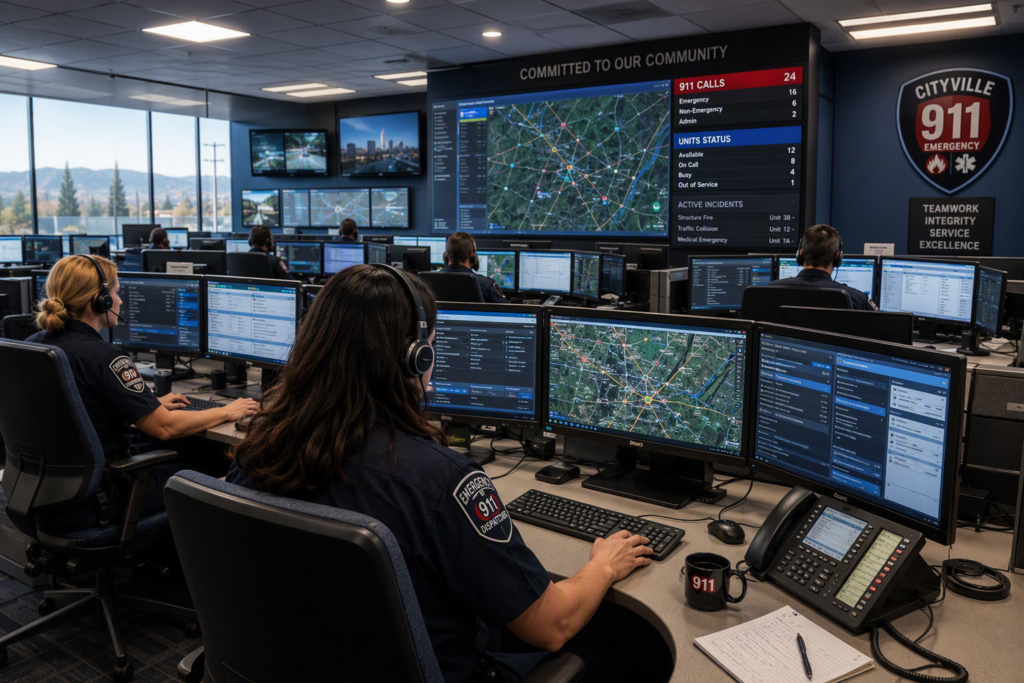
Every emergency call follows a clear process designed to move fast while still collecting the right details. At a public safety answering center, the dispatcher evaluates what is happening, enters call information, and starts the dispatch of emergency responders as soon as basic details are available.
Several parts work together during this process:
- The dispatcher confirms the location of the emergency and your callback number.
- Call information is entered into a CAD system linked to a computer database.
- The incident is routed to the appropriate sector for deployment.
- Field units are updated as the situation develops.
From there, operators decide what to send based on the nature of the incident. A medical crisis may need emergency medical help, while a crime in progress may require law enforcement. Fire, police, or specialized units can be assigned depending on risk, urgency, and available facts.
What Happens When You Call 911
The moment you place an emergency call, a trained dispatcher answers and begins assessing the situation. Their job is to keep you as calm as possible, gather the most important facts, and start emergency assistance without wasting time.
Once the basics are confirmed, the dispatcher enters the details into the system and sends the right emergency responders. Depending on what you report, they may dispatch police, fire crews, or medical teams. In some cases, you may also be kept on the line for first aid instructions or to provide more details as help is on the way.
Step-by-Step Overview of a 911 Call
If you have ever wondered what happens step by step, the process is fairly direct. Your emergency call reaches one of the local call centers, where a dispatcher asks questions, records the details, and begins directing help.
| Step | What happens |
|---|---|
| 1 | You call 911 and reach a trained dispatcher. |
| 2 | The dispatcher confirms your location and telephone number. |
| 3 | They ask about the emergency and enter details into the CAD system. |
| 4 | The incident is routed to the appropriate sector for response. |
| 5 | Units are dispatched while more questions may still be asked. |
Even after the dispatch of your call begins, the conversation may continue. That is done to improve the accurate response, not to slow it down. The clearer your answers are, the easier it is for the dispatcher to match the situation with the right responders.
How Dispatchers Handle Different Emergencies
Dispatchers do not send the same help to every caller. They listen for the nature of the emergency, ask focused questions, and decide which team should respond first. Their goal is to match the problem with the right resources as quickly as possible.
Typical response decisions may include:
- Law enforcement for crimes in progress, threats, assaults, or suspects still nearby
- The fire department for fires or incidents involving immediate property danger
- Medical responders for a medical crisis or urgent medical needs
- Non-911 referral for some animal control issues unless there is an active bite or aggression
Context matters. A traffic accident with people still on scene may need police, while a violent domestic situation may require an urgent law enforcement response. Dispatchers can also coordinate specialty units and stay in contact with crews in the field until the event is under control.
How 911 Determines Your Location
A big part of any 911 call is finding the caller’s location fast. Systems can provide location information automatically, but dispatchers still ask you to confirm it. That extra step helps avoid mistakes and supports accurate information during stressful events.
Even when technology helps, the correctness of the location of the emergency must be checked. The phone you use may not match where the incident is happening. That is why a dispatcher may ask for an exact address, intersection, or landmark. Newer tools such as GPS tracking improve this process, but your confirmation still matters.
Automatic Location Identification: Landline vs. Cell Phone
With a landline, the system may already have address details tied to the service. That can help public safety agencies see location information quickly when the call comes in. Even so, dispatchers still confirm the address and telephone number in case the record is wrong.
A cell phone can be more complex. The phone may not be at the same place listed in any account record, and the emergency may be happening somewhere other than where the caller is standing. Because of that, dispatchers ask follow-up questions to verify where help should go.
Wireless carriers and newer systems can support better location tools, but dispatcher confirmation remains important. If you do not know the exact address, give a nearby intersection, hundred block, or landmark so responders can still be sent to the right area.
Advances in Technology: Text-to-911 and GPS Tracking
Emergency communication continues to change as technology improves. Next generation systems are designed to handle more than voice calls, including text messages and other digital data that can support public safety work.
GPS tracking on wireless phones can help provide faster location details, which is useful when a caller is confused, frightened, or unable to speak clearly. Systems built around internet protocol also support newer ways of sending and managing emergency information inside call handling networks.
Still, text-to-911 is not available everywhere in the United States. Service can depend on local system capability, public safety answering equipment, and support from wireless carriers. That means a voice call remains the most reliable option unless you know text service is active in your area.
Essential Information to Provide When Calling 911
When you call 911, focus on the facts that help the dispatcher act fast. The most critical pieces of information are your location, your phone number, and what is happening. These details give the dispatcher the basic information needed to begin sending emergency help.
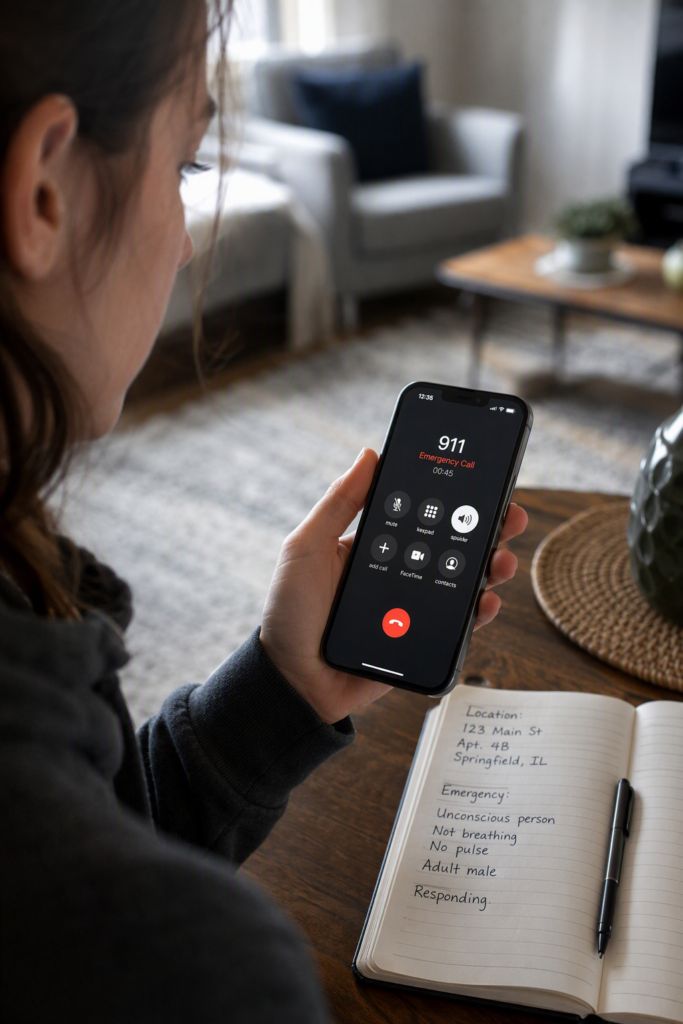
After that, be ready to share additional information. You may be asked about people involved, vehicles, injuries, or dangers nearby. The goal is to collect enough information for a safer, more accurate response. If you do not know an exact address, give the nearest intersection, landmark, or hundred block.
Questions Dispatchers Commonly Ask
Dispatchers usually begin with a few core questions. These are meant to speed things up, not hold them back. Once they have the essentials, they can start help and continue asking for details while units are on the way.
You may be asked:
- What is the location of the emergency?
- What telephone number are you calling from?
- What is the nature of the emergency?
- Can you describe the people, vehicles, or hazards involved?
After the first answers, expect additional questions based on the situation. A dispatcher may ask whether the suspect is still nearby, whether anyone is hurt, or whether there is an immediate threat to life or property. Your best approach is simple: answer clearly and let the dispatcher guide the conversation.
Do’s and Don’ts for Effective Communication
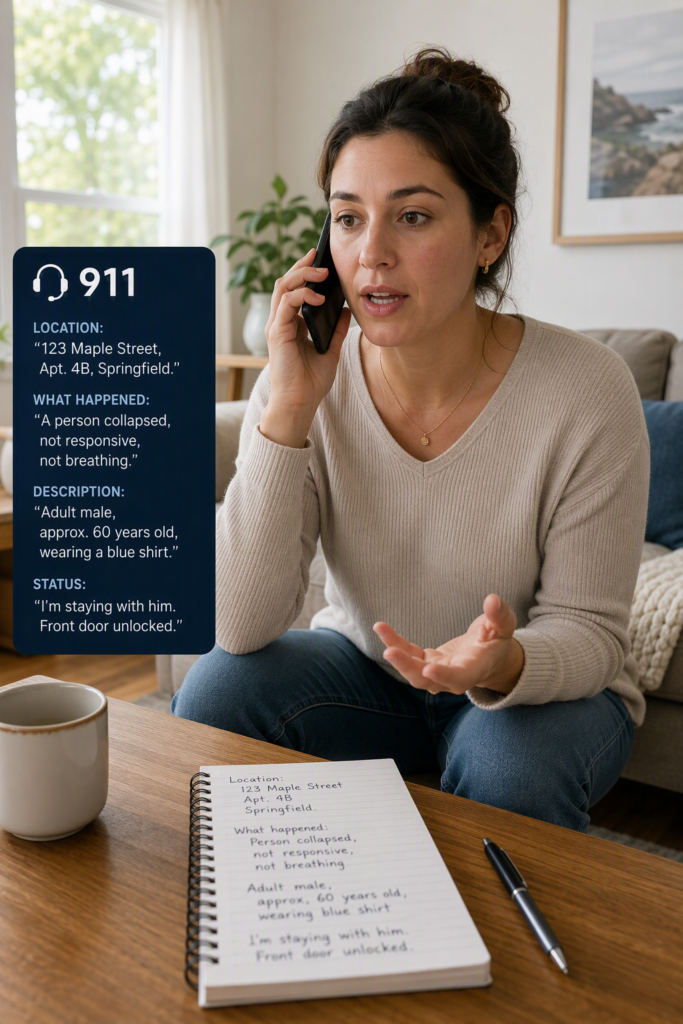
In emergency situations, how you speak can affect how quickly help gets to the right place. You do not need perfect words. You just need to stay as calm as you can, listen carefully, and give accurate information in short, clear answers.
Keep these do’s and don’ts in mind:
- Do give the correct address, phone number, and clear details about what is happening.
- Do stay on the line if the dispatcher tells you to remain there.
- Don’t hang up after an accidental dial.
- Don’t make test calls or use 911 for non-emergencies.
It also helps to avoid sharing unrelated sensitive information that does not affect the response. Stick to facts that support immediate assistance, such as injuries, threats, weapons, vehicles, or exact location details. When the dispatcher says the call is complete, free the line so others can get through.
Conclusion
In summary, understanding how the 911 emergency response works is vital for ensuring your safety and the safety of others in crisis situations. By familiarizing yourself with the process— from the moment you dial 911 to how dispatchers respond— you can be better prepared to act quickly and effectively. Remember, providing clear and concise information is essential when making that call, as it helps dispatchers coordinate the necessary response promptly. The 911 system has evolved significantly, incorporating advanced technologies to enhance our safety. Stay informed and proactive about this critical service, and don't hesitate to reach out for help when needed. If you'd like to learn more or have any questions, feel free to get in touch!
Frequently Asked Questions
What happens if you accidentally call 911?
If you make an accidental emergency call, do not hang up. Stay on the line and tell the public safety answering dispatcher it was a mistake. If you disconnect, emergency services may call back or trace the call because the official government organization must make sure no real emergency is being missed.
Are text-to-911 services available everywhere in the United States?
No, text messages to 911 are not available everywhere in the United States. Availability depends on local public safety answering systems and support from wireless carriers. As systems improve under guidance connected to the Federal Communications Commission, access may expand, but voice calling remains the most dependable choice.
What are common misconceptions about the 911 emergency response system?
One common myth is that dispatcher questions delay help. In reality, they support public safety and help an emergency communications center send the right emergency responders. Another misconception is that 911 should handle every problem. For non-emergencies, local official websites or business lines are often the better option.
https://www.fcc.gov/general/9-1-1-and-e9-1-1-services
https://masaaccess.com/learning-center