How DOPE Book Works: Precision Shooting Explained
 admin001
Understanding How DOPE Book Works for Precision Shooting
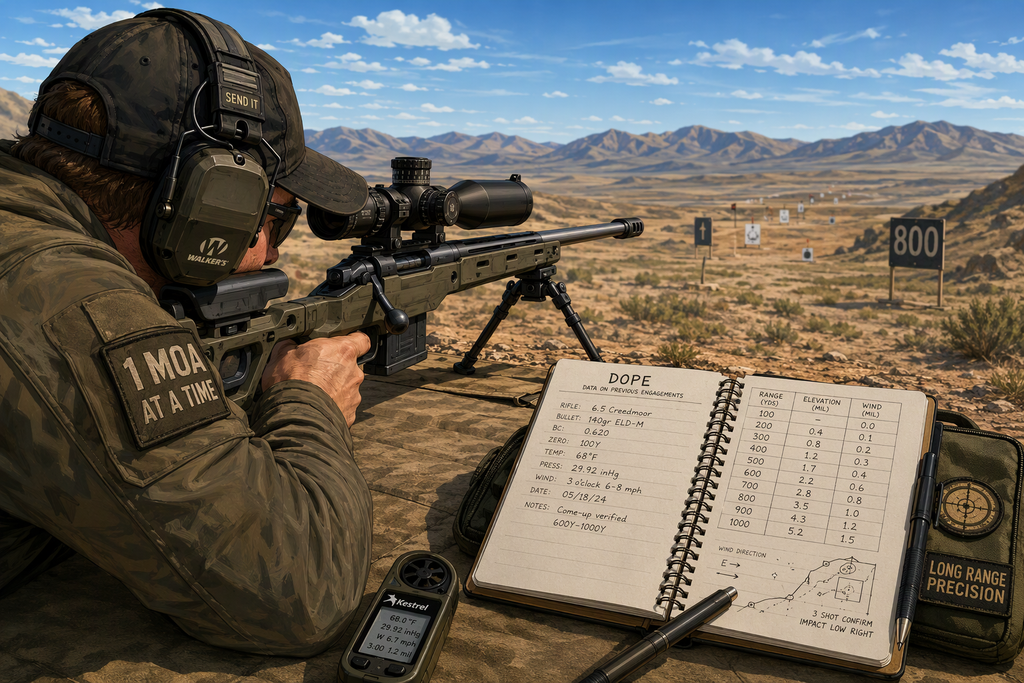
Key Highlights
- A dope book is a written record of previous engagements with your particular rifle and load.
- Its main reason is simple: give you fast access to important information before a perfect shot.
- It supports shooting skills by showing how your rifle shoots at different distances and weather conditions.
- It works as a useful learning tool at the range and in the field.
- You can record bullet drop, wind drift, and atmospheric details for next time.
- A dope book is broader than a dope card and fits more data.
Introduction
If you want steadier results with your rifle, a dope book can help. This simple tool keeps track of how your setup performs, so you do not have to rely on memory when pressure builds. The main reason shooters use a dope book is easy access to proven data from real shots. That makes it useful for practice, hunting, and competition. It also helps build shooting skills because you learn what your rifle needs under changing conditions.
The Role of a DOPE Book in Precision Shooting
In precision shooting, a dope book acts as a written record of previous engagements. It stores important information about distance, ammunition, and weather conditions, so you can make better decisions before firing.
The whole reason for keeping one is speed and confidence. Instead of guessing, you use real notes that reflect how your rifle performed before. That main reason matters when you are trying to improve shooting skills or repeat solid hits under pressure. The next sections explain what belongs in a dope book and how it differs from a dope card.
Understanding What a DOPE Book Is and Its Purpose
A dope book is a place where you store Data on Previous Engagements. In simple terms, it is a written record of your previous shots with a particular rifle and ammunition combination. It also includes the weather conditions present when you fired those shots.
For shooters, the main purpose is quick access to tested data. When you know the distance, bullet drop, and wind drift from past range sessions, you can make scope adjustments with less guesswork. That helps you stay more consistent when the shot matters.
It is also a useful learning tool. By logging results, you begin to see how your rifle shoots across longer ranges and in different conditions. You may hear the phrase dope card more often, but it is a good idea to keep track of useful information you can trust later.
How a DOPE Book Differs from a DOPE Card
A dope book and a dope card both organize shooting data, but they are not used in exactly the same way. A dope book usually holds more detail, while a dope card is often a compact summary you can keep in a convenient place for a fast check.
Here is the practical difference:
- A dope card is a physical card made for easy information during a shot and it can save you much time.
- A dope book can hold more notes from range sessions and different conditions.
- Shooters may carry a variety of different cards for warm, cold, or high elevation use.
- A dope card is better for quick reference, while a dope book supports deeper tracking.
That is why many shooters use both. The book stores the full history, and the card carries the key numbers you need right now.
Key Data to Record in Your DOPE Book
A dope book only helps if you fill it with the right information. The most useful entries create a clear record of your previous shots, your ammunition, and the conditions around each group or string of fire.
You should focus on specific pieces of information that affect impact. That way, next time you face a similar shot, you can check your notes instead of starting from zero. The following sections cover the important information to log and the formats that make it easier to review later.
Essential Ballistic Information and Conditions
Start with ballistic information that directly affects your point of impact. The compiled guidance points to ammunition, shooting distance, elevation above sea level, temperature, wind speed, and atmospheric conditions such as relative humidity. These are important factors, especially at longer ranges.
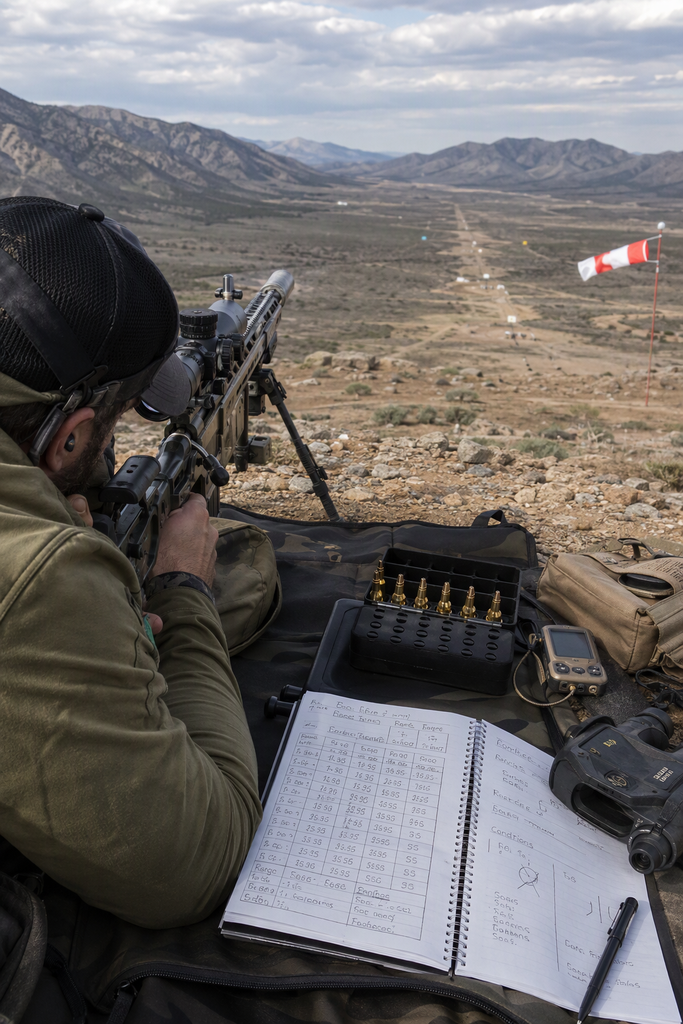
Your book should also show observed bullet drop and wind drift for each distance. If you shoot in a variety of different conditions, keep separate entries so your notes stay clear and useful. Matching your scope system matters too. A mil scope should pair with metric measurements, while an moa scope should use MOA-based measurements.
| Data Point | Why It Matters |
|---|---|
| Ammunition | Keeps results tied to one load and one particular rifle setup |
| Shooting distance | Shows where your hold or dial changed |
| Bullet drop | Helps set elevation corrections |
| Wind drift | Supports wind calls and horizontal corrections |
| Temperature and relative humidity | Captures weather conditions affecting performance |
| Elevation above sea level | Helps account for changes at higher elevations |
Recommended Logbook Formats and Templates
A good logbook format is one that keeps entries simple and readable. The source material suggests making records in spreadsheet software at home or using a downloadable template. Both options work if they let you find easy information without slowing you down.
Many shooters begin with an example card layout and expand it into a dope book. The best setup is one you will actually use for quick notes at the range and clearer review later.
Helpful format ideas include:
- A spreadsheet software table with one row for each distance and condition
- A printed template with spaces for ammunition, weather, and scope corrections
- A compact page style that can support a variety of different cards for separate conditions
If your format is clean, you will spend less time searching and more time shooting.
Using Your DOPE Book to Improve Rifle Accuracy
A dope book improves rifle accuracy by turning past results into useful information. When you review previous engagements, you can see what worked, what failed, and what changes your rifle needed at different distances.
That matters even more at greater distances, where small errors grow fast. If you return under similar conditions, your notes give you a stronger starting point next time. You are not guessing. You are building shooting skills from tested data. Now let’s look at how to read that data in the field and how often to update it.
Interpreting DOPE Data to Adjust Shots in the Field
In the field, you use your notes by matching the current shot to a past entry. Check the distance, compare the weather, and make scope adjustments based on recorded bullet drop and wind drift. Even a quick look can save time when pressure rises.
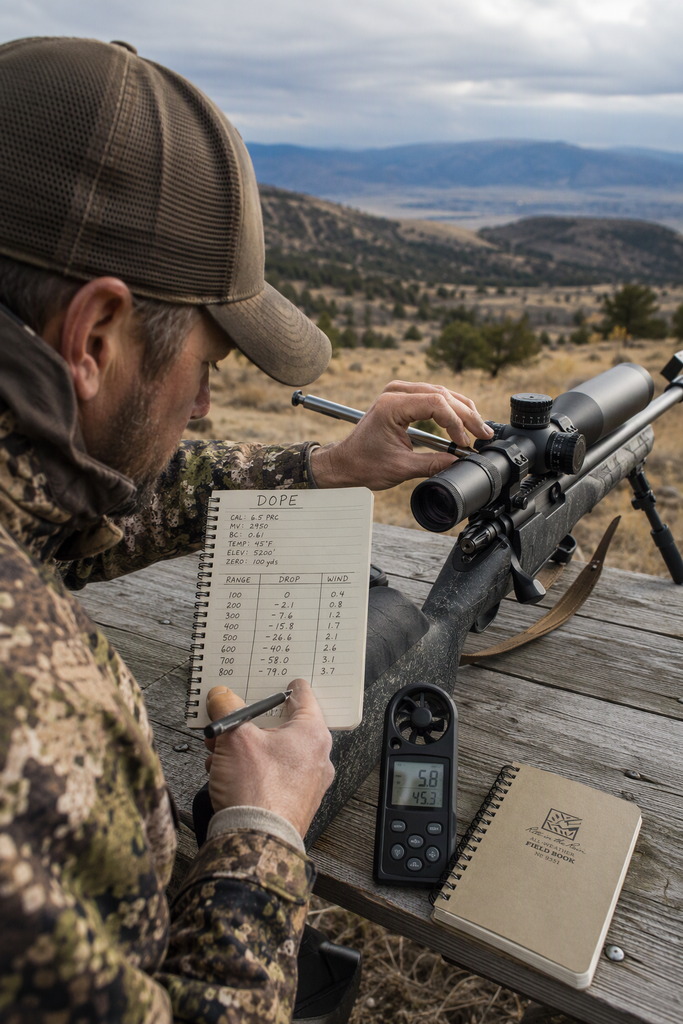
If the current conditions are close to an earlier session, your dope gives a practical baseline. That can help whether you are setting up on a target buck or shooting steel at distance. The more clearly you understand how your rifle shoots, the better your chance of greater accuracy.
Use your dope book like this:
- Match distance and approximate weather, including relative humidity if noted
- Apply the recorded elevation and wind corrections from that entry
- Confirm the system fits your rifle and optic setup, whether inspired by Savage Arms style cards or your own layout
When and How Frequently to Update Your DOPE Book Entries
Update your dope book every time you gather new, reliable data. The value of the book comes from keeping a current record of your previous shots, not from filling pages with guesses. Fresh entries are especially helpful when ammunition, distance, or weather changes.
At the range, jot down quick notes right after each group or stage. That gives you more accurate details for later use and cuts down on memory errors. A dope book only stays useful if it reflects what really happened.
The main reason to update often is simple: your next decision may depend on those notes. Keep the book in a spot with convenient access, then clean up rough entries after the session so your previous engagements stay easy to understand.
Best Practices for Maintaining a DOPE Book
Maintaining a dope book is not complicated, but a few habits make it far more effective. Clear pages, consistent labels, and smart organizing help you find useful information fast when a shot window is short.
A weatherproof setup also matters. Rain, dirt, and rough handling can ruin your notes when you need them most. If your book stays readable, it becomes a better quick reference and a stronger aid for shooting skills. The next two sections cover layout ideas and why weatherproof materials are worth using.
Organizing Entries for Quick Reference
Strong organizing makes your data easier to use under pressure. If your notes are scattered, you lose the speed advantage a dope system should provide. Group entries by rifle, ammunition, and conditions so each page gives you quick reference without confusion.
You can also place summary data where it is easy to reach. The source material suggests keeping key info in a spot with convenient access when it is time to shoot.
Useful placement ideas:
- Tape a compact summary to the rifle stock
- Fit a small card inside the lens cap of your scope
- Keep a card on a sling or lanyard for faster checks
A full book can stay in your gear, while a shorter summary handles the immediate shot. That split keeps detailed records safe and field use simple.
Benefits of Weatherproof and Simplified DOPE Books
A weatherproof dope setup gives you one big advantage: your data stays readable in bad conditions. If rain, mud, or snow hits, harsh elements can destroy plain paper fast. A weatherproof page or laminated card protects the notes you worked hard to gather.
Simplified DOPE forms help too. They reduce clutter and make the most important corrections easier to find. That matters in the field, where extra details can slow you down and do little good in the moment.
The most useful benefits are:
- A laminated card resists moisture and can handle rough use
- Simple layouts make key numbers easier to read at a glance
- Separate summaries for higher elevations or greater windspeeds keep choices clear
You can even attach a summary to a rifle sling and add temporary notes with a marker, then wipe them off later.
Conclusion
In conclusion, a DOPE book is an indispensable tool for precision shooters who want to enhance their accuracy and consistency. By meticulously recording essential ballistic data and environmental conditions, you can make informed adjustments to your shots, optimizing your performance in the field. Whether you're a beginner or an experienced shooter, maintaining an organized and updated DOPE book, which reflects what dope means in shooting, is key to achieving your shooting goals. If you haven't started using one yet, don't hesitate to explore the various formats and templates available. Remember, the journey to becoming a skilled marksman is ongoing, and your DOPE book is your trusted companion along the way. For more insights, feel free to reach out for a free consultation!
Frequently Asked Questions
Do beginners need a DOPE book, or is it just for advanced shooters?
A dope book is helpful for any beginner, not just advanced shooters. It works as a useful learning tool because it creates a record of your previous shots and shows how your rifle reacts in a variety of different conditions. That makes learning faster and more consistent.
How do simplified DOPE forms help track shooting data?
Simplified DOPE forms make tracking easier by narrowing your focus to important information only. You can write quick notes, keep the form in a convenient place, and pull easy information from it when time is short. That makes field use much more practical.
What are the top tips for keeping a DOPE book accurate?
To keep your dope book accurate, update it after range sessions, match entries to the same rifle and load, and record important factors like distance and weather. Clear notes on previous engagements, stored with convenient access, become even more valuable as you shoot at longer ranges, especially when considering long range shooting conditions.
https://savagearms.com/firearms/family/long-range
https://chrissajnog.com/front-sight-focus-instantly-improve-shooting
https://savagearms.com/blog/post/whats-the-difference-between-ffp-and-sfp