Special Reports: How Homeland Security Investigations Works
 admin001
Understanding How Homeland Security Investigations Works

Key Highlights
- Homeland security investigations is the main investigative branch handling serious threats tied to national security and crime. In recent years, the mission of homeland security investigations has evolved to address emerging threats such as cybercrime, transnational criminal organizations, and terrorism, while maintaining a strong focus on protecting national security. This official government organization works through law enforcement methods such as surveillance, interviews, arrests, and search warrants.
- This official government organization works through law enforcement methods such as surveillance, interviews, arrests, and search warrants.
- HSI special agents focus on criminal organizations, terrorism, human trafficking, fraud, and narcotics smuggling.
- It operates within ICE and works closely with other law enforcement partners.
- Many cases involve secretive steps before criminal charges appear.
- HSI also supports international operations that protect the United States.
Introduction
Homeland security plays a major role in protecting the United States from serious threats. Within the Department of Homeland Security, Homeland Security Investigations serves as a key law enforcement arm focused on crimes that can affect national security, public safety, and government systems. Its main purpose is to investigate, disrupt, and dismantle criminal groups that try to exploit U.S. customs and immigration laws. If you want to understand how these cases start and move forward, it helps to look at HSI’s mission first.
The Role and Mission of Homeland Security Investigations (HSI)
Homeland Security Investigations is the principal investigative unit of DHS. As an official government organization within the federal system, it handles major cases tied to terrorism, transnational crime, and other threats that can harm national security.
Its role is direct and practical. HSI special agents use law enforcement tools to investigate, disrupt, and dismantle networks that exploit customs and immigration laws of the United States. That mission becomes clearer when you look at its core responsibilities and its place inside ICE.
Key Responsibilities in National Security
At its core, HSI protects national security by targeting serious threats that cross borders, move money, or involve organized criminal activity. Its main purpose is not limited to one crime type. Instead, it runs criminal investigations that address terrorism, fraud, trafficking, and other conduct that can endanger the country.
In practice, HSI works with law enforcement partners at the federal, state, and local level. These efforts may also connect with removal operations when immigration-related violations overlap with broader public safety concerns.
Key responsibilities include:
- investigating and disrupting terrorist networks
- building criminal investigations involving transnational crime
- coordinating with law enforcement partners on arrests and evidence
- supporting cases tied to customs and immigration violations
- helping stop criminal groups before threats grow larger
Integration within U.S. Immigration and Customs Enforcement (ICE)
HSI operates within U.S. Immigration and Customs Enforcement as its primary investigative branch. That means it is part of a larger system inside the United States government that handles customs enforcement and immigration-related matters while also pursuing broader criminal cases.
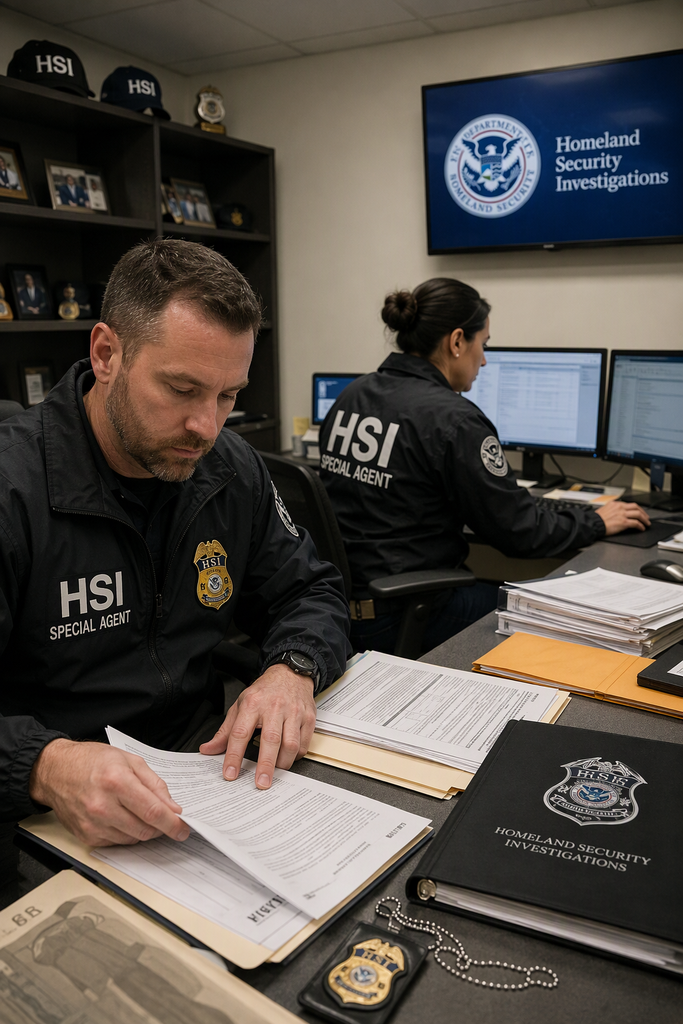
Inside ICE, HSI focuses on investigations rather than routine public-facing processing. Its work often overlaps with other federal law enforcement agencies because many cases involve cross-border conduct, hidden financial activity, or organized networks that move people, goods, or money.
You may also notice that official updates about these efforts often appear through secure websites or other government communication channels. That reflects how HSI works: as an investigative unit inside ICE with a defined mission, broad coordination duties, and a strong role in federal enforcement.
Types of Cases Handled by Homeland Security Investigations
HSI handles a wide range of serious matters, not just one narrow category of crime. Its criminal investigations often involve criminal organizations that operate across borders or use fraud, violence, or secrecy to avoid detection.
Cases can include human trafficking, terrorism, child exploitation, narcotics smuggling, money laundering, and identity theft. In many situations, law enforcement begins looking into criminal allegations long before the subject knows anything about the case. The next sections break down the major threats HSI investigates and how it supports broader operations.
Criminal Activities and Threats Under Investigation
HSI investigates many forms of criminal activity that can affect both public safety and government systems. The agency’s mission covers threats on U.S. soil and abroad, with a strong focus on serious criminal cases that often carry severe penalties if proven.
The list is broad because these matters often overlap. A trafficking case may involve false documents, money movement, and cross-border travel. A fraud case may require financial investigations alongside digital evidence and witness interviews.
Common case areas include:
- narcotics smuggling and transnational gang activity
- child exploitation and online fraud
- human trafficking and human rights violations
- money laundering, bribery, and embezzlement
- credential fraud, identity theft, and cybersecurity fraud
This mix shows why HSI is often involved when crime is organized, hidden, or linked to international movement.
High-Profile International Events and HSI’s Support
When major international events bring large crowds, travel, and commercial activity, security agencies need to watch for exploitation by criminal networks. Based on its mission, HSI supports these situations through international operations, case coordination, and intelligence-driven enforcement tied to cross-border risks.
That support is not limited to one venue or one threat. A law enforcement agency like HSI may work alongside state police and federal partners when concerns involve trafficking, fraud, counterfeit goods, or threats linked to international trade.
| Support Area | How HSI Contributes |
|---|---|
| Cross-border threats | Tracks criminal networks that move people, goods, or money internationally |
| Event-related fraud | Investigates scams, counterfeit products, and credential-related misconduct |
| Partner coordination | Works with state police, federal agencies, and foreign contacts during international operations |
| Public safety risks | Supports enforcement efforts tied to trafficking, smuggling, and organized crime |
The Homeland Security Investigations Process Explained
An HSI case can begin in different ways. The agency may open criminal investigations on its own or receive information from another state or federal office. From there, special agents gather facts quietly and use traditional methods, including interviews, surveillance, arrests, and search warrants.
If enough evidence develops, the matter may move toward criminal prosecution through the Department of Justice. Before criminal charges are filed, many people seek help from a dedicated team of federal defense attorneys because the process can stay secret for a long time.
Initial Case Assessment and Investigation Steps
A typical HSI matter starts with information about possible wrongdoing. That tip may come from another agency, a partner office, or HSI’s own findings. Once criminal allegations are identified, agents begin assessing whether the facts support a deeper investigation.
Early steps are usually quiet. Agents may interview witnesses, review records, use surveillance, and seek search warrants when needed. This can happen in cases involving credential fraud, financial misconduct, trafficking, or other serious violations. Because of that, subjects often do not realize they are under review.
Common steps include:
- receiving and screening initial information
- gathering evidence through interviews and surveillance
- obtaining and executing search warrants
- coordinating with prosecutors before formal charges
In some situations, people later seek confidential case evaluations from defense counsel after learning agents are involved. Public reports tied to a fiscal year may then show arrests or asset seizures after cases conclude.
Cross-Agency and International Collaboration Methods
HSI rarely works in isolation. Cross-agency collaboration is a normal part of its process because many investigations involve more than one jurisdiction, one database, or one type of expertise. Cases may begin with a tip from another office or grow into a joint effort.

On the domestic side, HSI works with law enforcement partners such as the FBI, DEA, U.S. Marshals Service, state police, and county sheriff’s departments. The compiled information also shows that DHS is one of the nation’s largest agencies, behind the Department of Defense, which helps explain the scale of federal coordination around major threats.
Internationally, HSI supports international operations by working with foreign partners when crimes cross borders. That approach helps investigators follow people, money, goods, and evidence beyond the United States, especially in cases involving trafficking, smuggling, fraud, or organized criminal networks.
Careers, Training, and Skills in Homeland Security Investigations
HSI depends on more than one type of professional. Its workforce includes special agents and other personnel who support large, complex cases. These roles demand strong judgment, attention to detail, and the ability to handle sensitive investigations that may involve several agencies at once.
You may also hear related professionals mentioned around HSI cases, including law enforcement officers, criminal analysts, and even a dedicated team of federal defense attorneys on the private side when people respond to investigations. To understand the field better, it helps to look at core qualifications and training expectations.
Core Qualifications and Training Requirements
Working in HSI calls for a serious professional background because the cases are often high stakes. The compiled information shows that HSI special agents are law enforcement officers who handle surveillance, witness interviews, arrests, search warrants, and referrals for criminal prosecution. That gives you a practical picture of the training requirements involved.
The core qualifications for this kind of work include investigative ability, discretion, and comfort with complex federal cases. Since HSI works inside a major law enforcement agency, team members also need to coordinate well with prosecutors and outside partners.
Useful qualifications and skills include:
- strong investigative and evidence-handling ability
- readiness for surveillance, interviews, and warrant work
- understanding of federal criminal prosecution processes
- ability to work with partner agencies on complex cases
These demands also point to varied career opportunities, from special agents to support roles tied to analysis and case development.
Conclusion
In conclusion, understanding how Homeland Security Investigations (HSI) operates is crucial for grasping the broader implications of national security. HSI plays a vital role in safeguarding the country through its comprehensive approach to investigating various criminal activities and threats. By integrating with other agencies and fostering international collaborations, HSI enhances its effectiveness in addressing complex issues. If you're considering a career in this field, remember that HSI values dedicated individuals who possess the necessary skills and training to make a difference. Stay informed and engaged with the mission of HSI, as it impacts not only national safety but also the communities we live in. If you’re interested in pursuing a career with HSI, explore the opportunities available and take the first step towards making a meaningful impact.
Frequently Asked Questions
What is the main purpose of Homeland Security Investigations?
Homeland security investigations exists to investigate, disrupt, and dismantle criminal organizations that threaten national security or exploit U.S. customs and immigration laws. Its special agents use federal law enforcement powers to handle serious cases involving terrorism, trafficking, fraud, and other major threats.
How does Homeland Security Investigations work with other agencies?
HSI relies on cross-agency collaboration in many cases. It works with foreign partners, federal law enforcement agencies, and local law enforcement partners, including the Federal Bureau of Investigation, DEA, U.S. Marshals Service, state police, and county sheriff’s departments when investigations cross borders or jurisdictions.
What career opportunities exist within HSI?
HSI offers career opportunities centered on investigative and support work. The compiled information specifically highlights special agents, who serve as law enforcement officers, and the broader need for support roles often associated with criminal analysts and case coordination inside a major federal law enforcement agency.
https://www.ice.gov/about-ice/homeland-security-investigations
https://travel.state.gov/en/international-travel/travel-advisories/global-events/middle-east.html